
Two to Three Feet
Stops doors opening over the lawn and gives room to walk past a parked vehicle.
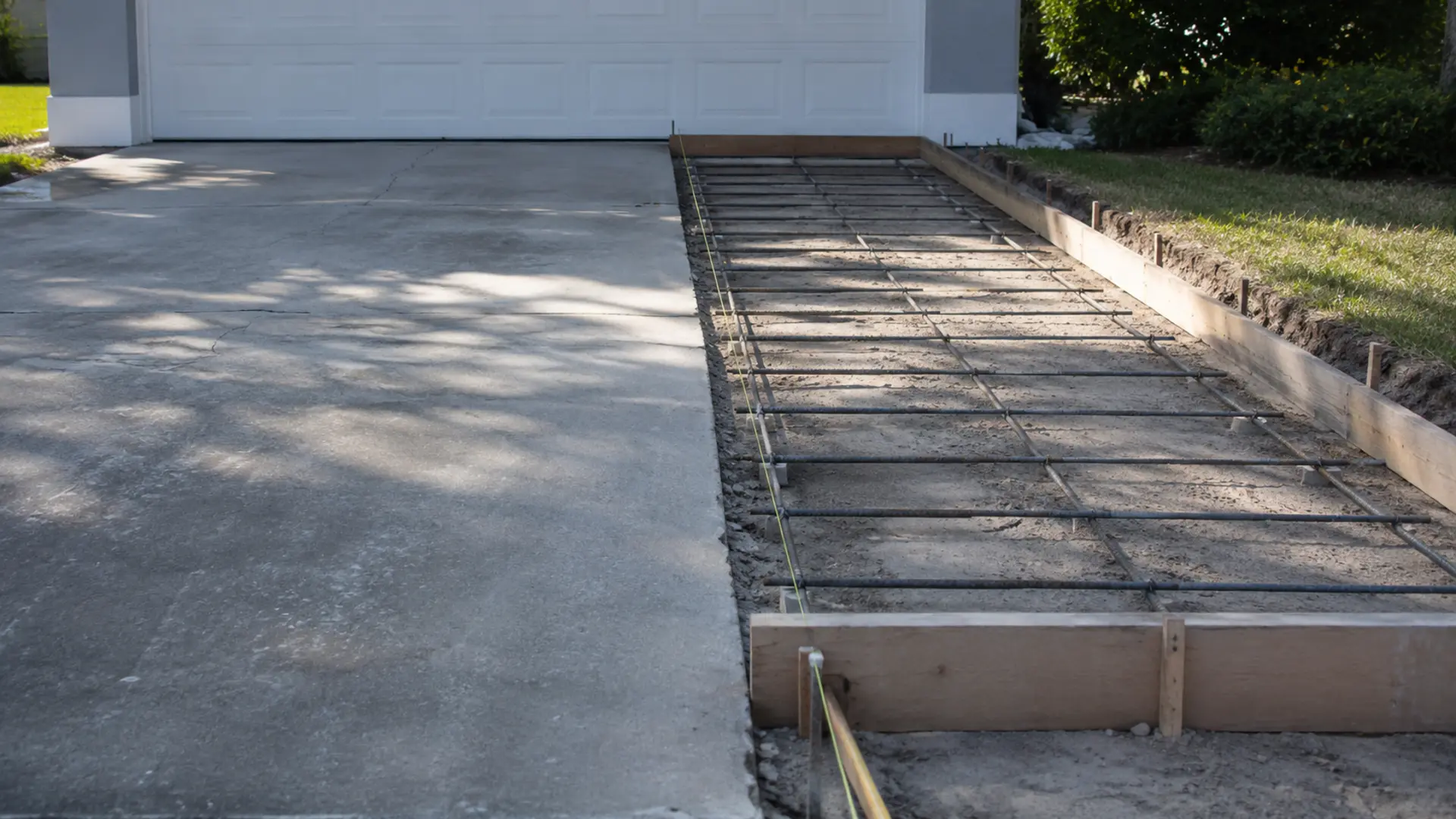
Lakeland Concrete Driveway Experts widen existing concrete driveways for homeowners across Lakeland and Polk County without touching the slab you already have. Our reputation rests on delivering every job we take on, using the best materials for the application, building to meet or exceed Florida Building Code and local requirements, and designing around your parcel rather than a standard width.
Widening is the most common request we get on older properties, because driveways built in the seventies and eighties were sized for cars narrower than what people drive now. It cannot be templated, because the limit is your side setback rather than anything about the concrete, and a narrow strip beside an established slab is the shape most likely to settle on its own schedule. We have added two-foot strips that solved door clearance on Auburndale streets and full second lanes on newer estates. Below covers how much width to add, why the strip is a hard shape to build, what limits it and what it costs.
This is how much width to add when widening a concrete driveway, and what each increment buys you in daily use. Two to three feet stops doors opening over the lawn, eight to ten gives a genuine second parking lane, and flaring only the approach often solves the turn-in for far less.
Stops doors opening over the lawn and gives room to walk past a parked vehicle.
A comfortable pass-by lane where two vehicles come and go at different times.
A genuine additional parking lane side by side, usually limited by the setback.
Widening near the street to improve the turn in and out, without a full-length strip.
Extra width only where doors open and vehicles manoeuvre, which is often enough.
Adding to each side keeps the house centred on the drive, which matters on symmetrical frontages.
A driveway widening strip is a hard shape to build because of its geometry. A two-foot strip forty feet long has a very high perimeter-to-area ratio, with an established slab on one side and freshly disturbed ground on the other. That asymmetry is why casually built widenings settle unevenly.
A two-foot strip is disproportionately affected by edge conditions on both sides.
Established slab one side, freshly disturbed ground the other. They behave differently.
Half-inch epoxy-set rebar so the strip cannot settle independently of the old slab.
The new base matches the existing base, not just the slab. Routinely skipped.
Even in a narrow trench, where it is tempting to tip and level in one go.
Six inches on the new unsupported perimeter, where wheels will eventually run wide.
Almost every concrete driveway widening is limited by something other than the concrete. Side setback is the hard boundary, lot coverage can cap it further on smaller parcels, and the widened area must not redirect stormwater onto adjoining property.
The hard limit on available width, measured to the property line rather than estimated.
Additional impervious area may be capped on smaller parcels regardless of setback.
The widened area must not redirect runoff onto adjoining property.
Work inside an easement needs specific approval and is sometimes refused outright.
Widening at the street pulls the apron in at a six-inch reinforced specification.
Irrigation and low-voltage runs sit along driveway edges more often than owners expect.
This is the tie-in detail and the new strip specification for a concrete driveway widening. The line most often skipped is base depth, matching the existing base rather than just the slab thickness is what stops the strip developing its own settlement line.
A concrete driveway widening is two to three days on site for a typical residential job. It starts with measuring to the property boundary and checking the setback, because that decides what can actually be built before anything is drawn.
Available width measured to the property boundary and checked against the setback.
Application submitted and 811 marks services, particularly irrigation along the edge.
Cut square and straight, removing crumbled material so dowels grip sound concrete.
Dug to the existing base depth rather than to whatever is convenient.
Limerock compacted in lifts, dowels drilled and epoxy set, outer form flush to the old surface.
Concrete placed and finished to the existing texture, joints aligned, seven day cure.
Concrete driveway widening cost is good value because you keep the slab you already have. Here is what drives it, the colour limitation nobody enjoys hearing, and the decision most people are actually weighing, whether to widen at all or replace the whole driveway.
Widening is good value because you keep the slab you already paid for. Cost is driven by width, the length of the tie-in, whether the base needs deeper excavation to match, and whether the work reaches the right-of-way. A narrow strip has a high perimeter-to-area ratio, so a two-foot addition rarely costs half what a four-foot one does, much of the work is the same regardless of width.
Straight answers, including the ones that talk you out of spending money.
Until you reach the side setback for your parcel, which is the hard limit in nearly every case. On a typical Lakeland lot that allows two to six feet comfortably. We measure to the property line and check before drawing anything.
Not if it is doweled and the base matches. Half-inch dowels epoxy set at twelve to eighteen inch centres tie it to the existing slab so they share load. The other half is matching base depth, since a shallower base will settle regardless of dowels.
Yes, wherever the existing spacing allows. Continuing the joint lines keeps the driveway reading as one surface and avoids a joint terminating against solid concrete in the old slab, which concentrates stress there.
Yes, and it is often smarter. Flaring the approach near the street improves the turn in and out; widening only at the garage end gives door clearance. We look at where the width is actually needed rather than defaulting to the full run.
Not at first. New concrete cures lighter than a driveway weathered for twenty years and darkens gradually without matching exactly. On a full-length strip this is more visible than on a patch. Staining the whole driveway afterwards is the reliable route to uniformity.
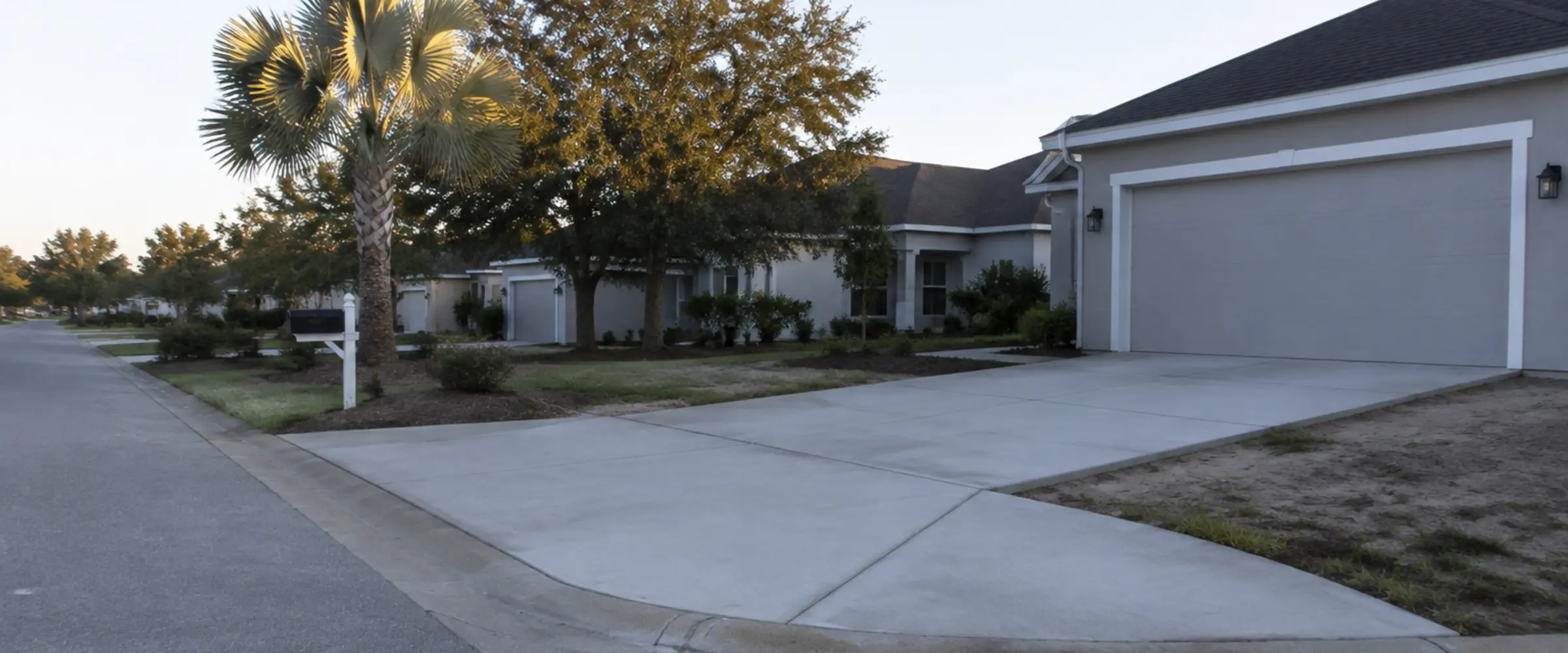
We will measure to your property line, confirm the setback, and tell you exactly how much width you can add.
863-734-6623