
Silane / Siloxane Penetrating
Soaks in and repels water from within. Appearance unchanged, no film to peel.
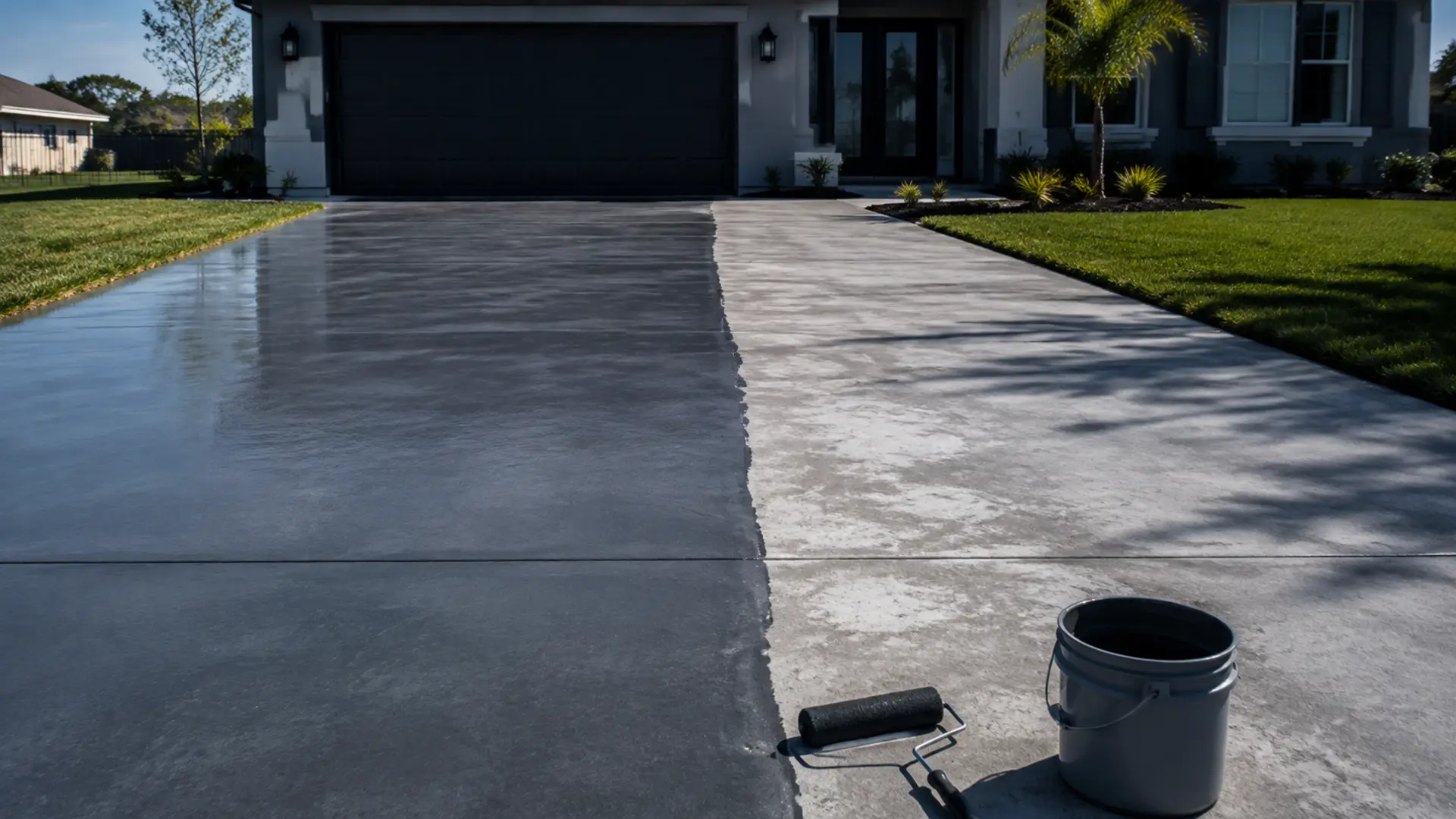
Lakeland Concrete Driveway Experts seal concrete driveways for homeowners and commercial owners across Lakeland and Polk County. We have earned our reputation by delivering on every job we take on, specifying the right sealer for the slab in front of us rather than a one-size product, working to meet or exceed manufacturer and code requirements, and writing the schedule around your driveway and this climate.
Sealing is where most driveway money gets wasted, because the wrong product on an unprepared slab produces a worse result than doing nothing at all. It cannot be templated: a plain grey slab, a stamped decorative surface and a driveway under dense oak canopy each need a different specification. We have sealed new pours at twenty-eight days, stripped and redone cloudy coatings somebody applied over damp concrete, and talked homeowners out of sealing plain driveways that did not need it. Below covers the sealer types, what sealing actually protects against here, the failures we fix, and how often it genuinely needs doing.
Choosing the right family of concrete driveway sealer matters far more than choosing a brand. Penetrating silane and siloxane soak into the pore structure and repel water from within without changing how the slab looks. Acrylics form a film on top that deepens colour, adds sheen and shields pigment from UV. Which one your driveway needs depends entirely on whether it is plain or decorative.
Soaks in and repels water from within. Appearance unchanged, no film to peel.
A film that deepens colour and adds sheen. The right choice over stamped or coloured work.
Lower odour and easier around planting, with a slightly shorter service life in this sun.
Used over exposed aggregate to lock the matrix tight without burying the stone texture.
Blended in for driveways under live oak canopy where algae returns fastest.
Micronised polypropylene in the top coat. Invisible, and you can feel it underfoot.
The threats a driveway sealer protects against in Central Florida are not the ones the product is marketed against nationally. There is no freeze-thaw here and no de-icing salt. What there is instead is relentless UV, year-round humidity that grows algae on any damp slab, iron-bearing well water and oil that soaks straight into open concrete.
Sun chalks topical sealers and any pigment beneath, which is why the cycle is shorter here.
Year-round humidity means no dormant season. A mildewcide slows recolonisation noticeably.
Well-water irrigation leaves orange banding. Sealed, it becomes a surface problem you can wash off.
A sealer buys you time to clean a spill before it soaks into the pore structure.
Repeated soaking drives water into the slab. A penetrating repellent keeps it out.
Hot asphalt tracked in on tyres lifts far more easily from a sealed surface.
A large share of our sealing work is fixing somebody else's. Nearly every failure below comes from the same root cause: a coating applied to a slab that was not clean, not dry or not ready for it. Stripping a failed sealer costs considerably more than the original application did, which is why the preparation matters more than the product.
Moisture trapped under the film. The commonest failure in a humid climate by far.
Applied too heavily, or in direct sun so the surface skinned before it could release.
Sealed over a previous incompatible coating, or over a slab that was never cleaned.
A glossy film with no grip additive. Stripped and recoated with anti-skid blended in.
Coated before 28 days, trapping mix water and interfering with the cure.
Algae and oil locked permanently under the coating. Only strip and redo will fix it.
These are the products, coverage rates and site conditions we work to when sealing a concrete driveway. The one that catches people out is moisture, sealing a slab that is not dry through traps water under the film, and in Central Florida humidity that is the single most common cause of a cloudy, blistered driveway.
Applying a driveway sealer takes a few hours. Everything that happens before it decides whether the coating lasts two years or five. Identifying any existing sealer, deep cleaning, treating algae and oil, neutralising and then waiting for the slab to dry through are all steps that get skipped on a cheap job and show up within a season.
We establish whether the slab has been sealed before and with what.
Surface cleaner, algae treatment and degreasing, because anything left gets sealed in.
Rinsed to neutral pH, then left to dry through, which in humidity can mean a day or more.
Spalls patched and joint sealant checked, since sealing over a failed joint locks it in.
Rolled or sprayed at the specified rate and cross-applied. Over-application causes cloudiness.
Foot traffic in hours, vehicles after a day or two depending on product and weather.
Realistic concrete driveway sealing intervals and costs for this climate, rather than the ones printed on the tin. National packaging is written for milder conditions, and treating it as gospel is why so many Polk County driveways look chalky by year five.
Decorative surfaces want resealing every two to three years here, because the sealer is protecting pigment from a UV load that barely lets up. Plain concrete with a penetrating repellent runs a four to five year cycle. Both are shorter than the intervals printed on national packaging, which is written for milder climates, and treating the label as gospel is why so many Polk County driveways look chalky at year five.
Straight answers, including the ones that talk you out of spending money.
Every two to three years for stamped, stained or coloured concrete, and four to five for plain concrete with a penetrating sealer. Both are shorter than national packaging suggests because the UV load here is close to continuous.
Plain grey concrete that you want to look unchanged takes a penetrating silane or siloxane. Stamped, stained or coloured work needs a UV-stable acrylic film to protect the pigment. Choosing an acrylic purely for the sheen on plain concrete is fine, as long as you know you have signed up for a cycle.
Not for twenty-eight days. New concrete needs that time to reach design strength and release most of its mix water. Sealing early traps moisture, which causes cloudiness and blistering, and it interferes with curing at the point the slab most needs it.
A film-forming acrylic does make a surface slicker when wet, which matters when it rains most summer afternoons. We add a micronised anti-skid additive to the final coat as standard on decorative and sloped driveways. It disappears in the finish and you can feel it underfoot.
Usually. Cloudiness almost always means moisture trapped under the film or sealer applied too heavily. Some products can be re-solvated and re-levelled; otherwise it needs stripping and reapplying onto a properly dried slab. We would look at it before recommending either.
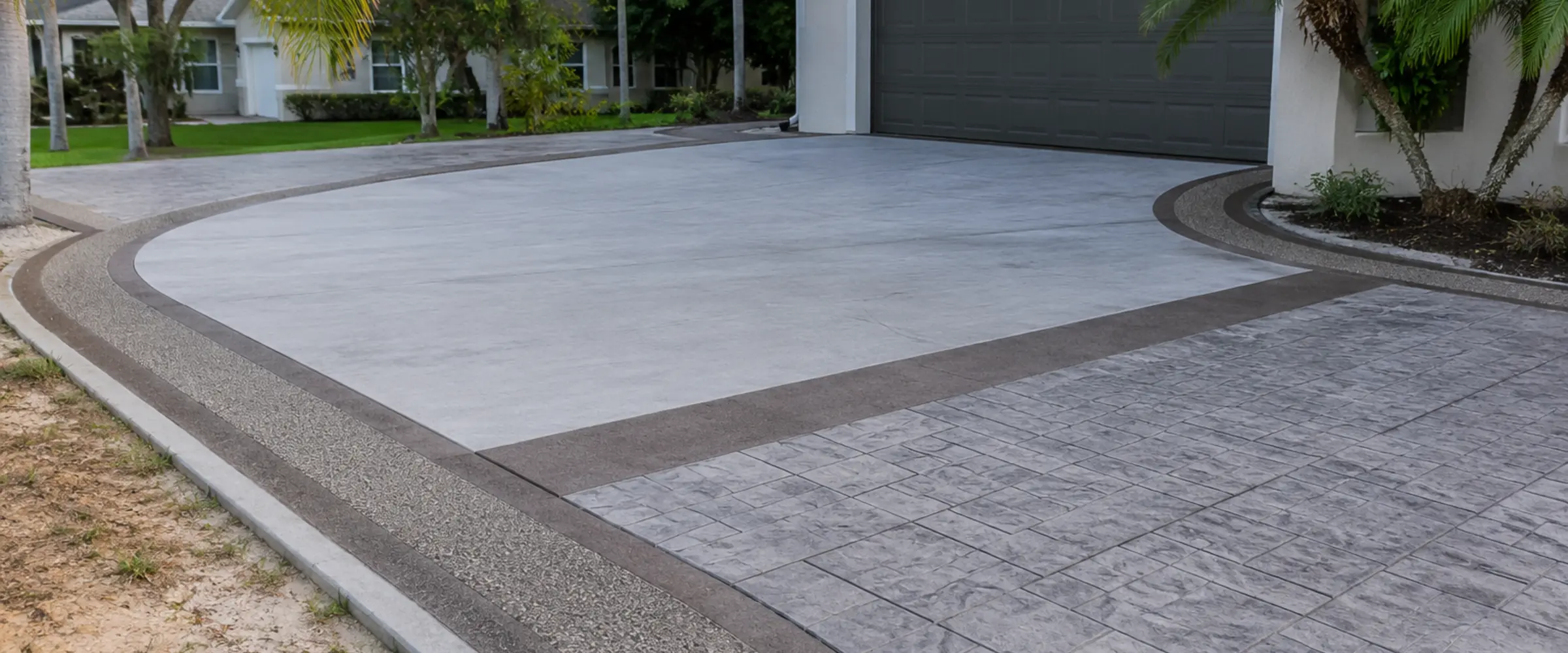
We will tell you which sealer your slab actually needs, and whether it needs one at all.
863-734-6623