
Trench and Channel Drains
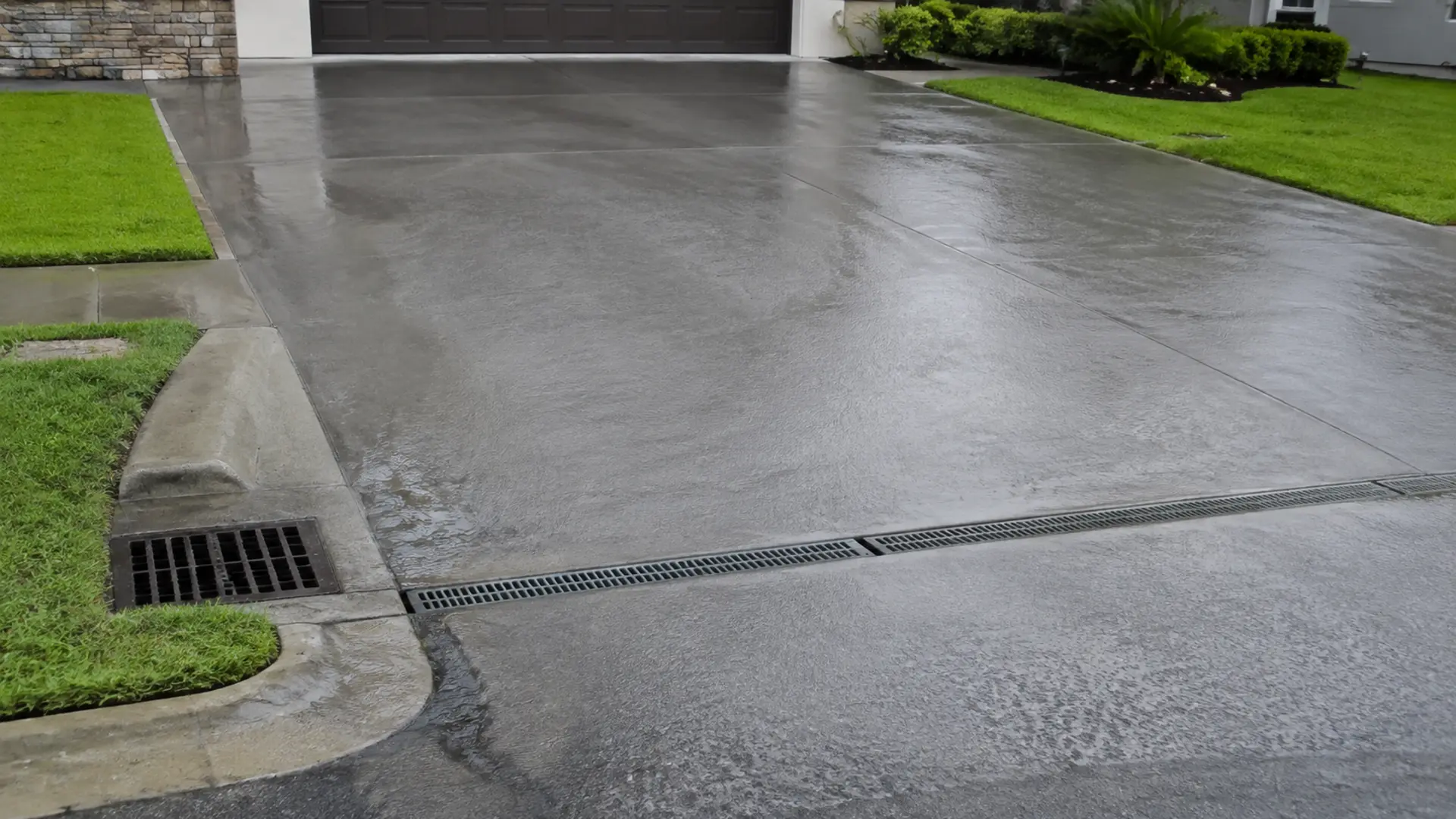
A linear polymer channel with a grate, cast into the slab across the drive.
Lakeland Concrete Driveway Experts design and install concrete driveway drainage for homeowners and commercial owners across Lakeland and Polk County. We have earned our reputation by delivering on every job we take on, specifying the system around the fall on your site, meeting or exceeding code and manufacturer requirements, and confirming a legal outfall before anything is cut.
Drainage is the one job that genuinely cannot be templated, because it is designed backwards from the discharge point rather than forwards from the problem. Where water can legally and effectively go determines the whole system, and near the Lakeland lakes a high wet-season water table limits what the ground will accept. We have cut channel drains into existing slabs at garage thresholds, set catch basins on lots that fall the wrong way, and told people plainly that re-grading was the better answer than adding a drain. Below covers the solutions, where water is allowed to go, what makes a drain keep working and how it is sized for a Florida storm.
These are the concrete driveway drainage solutions we install, and most driveways need one or two rather than all of them. A channel drain across the garage threshold, a catch basin where water converges, or a flush slot drain where you would rather not see a grate at all. Sometimes the right answer is simply re-grading the fall.
A linear polymer channel with a grate, cast into the slab across the drive.
A box with a sediment sump where water naturally converges rather than sheeting across.
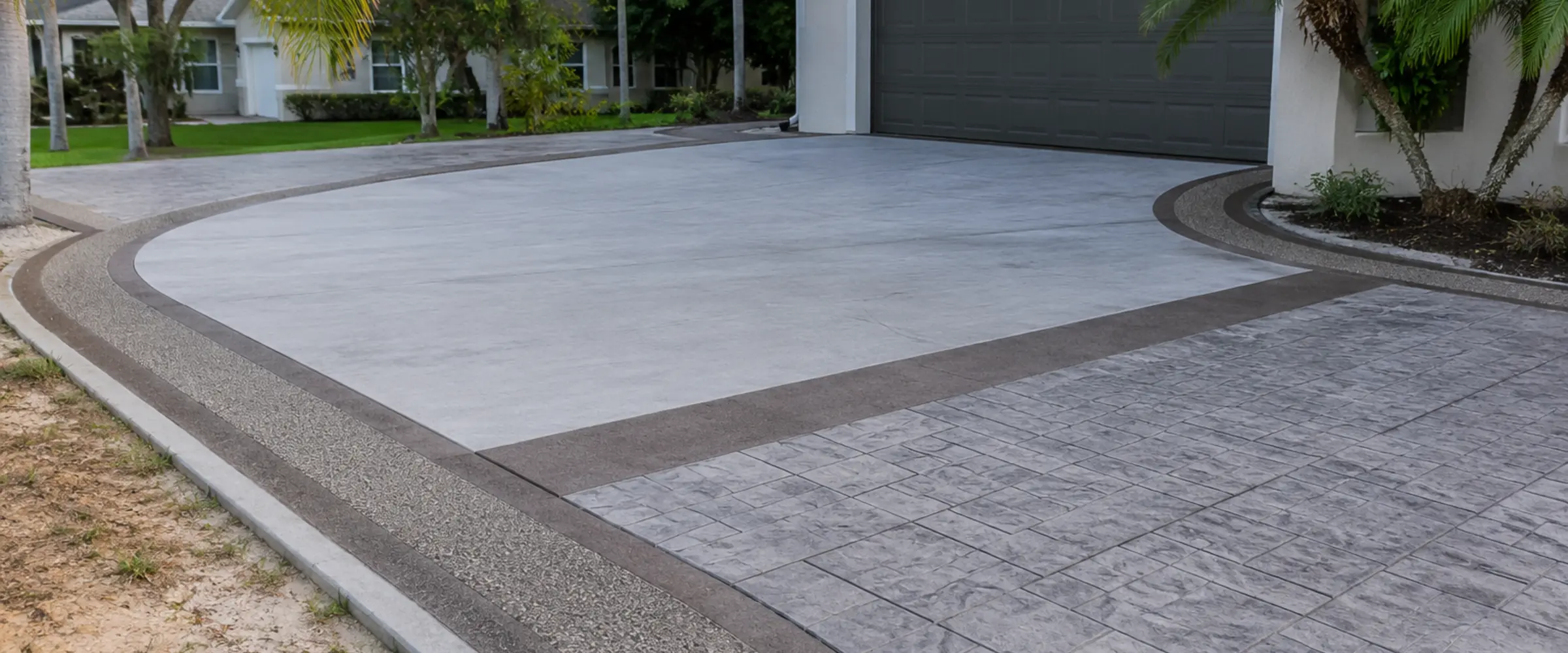
A narrow flush slot with no visible frame, which suits stamped and decorative driveways.
Perforated pipe in gravel alongside the drive, intercepting flow before it reaches the slab.
Where fall allows, simply shaping the drive and edging water to the street.
Sometimes the correct fix, where the original slab was built with the wrong fall.
Driveway drainage water has to discharge somewhere legal and effective, and that outfall is designed first, everything else follows from it. A swale, an on-site retention area or an approved connection, and never onto a neighbouring property. Near the Lakeland lakes a high wet season table also limits what a soakaway can accept.
The most common outfall here, piped in solid PVC at a minimum one percent fall.
Where the lot has a retention area capable of taking the volume.
Where a municipal connection exists and approval can be obtained.
Discharge must not be directed onto adjoining property. This is not negotiable.
Work inside a drainage easement requires specific approval and is sometimes refused.
Near the Lakeland lakes a wet-season table reduces what a dry well can accept.
Most failed driveway drains failed on installation detail rather than product choice. The grate has to be load rated because vehicles cross it daily, the channel has to be concrete-haunched along its full length or the assembly works loose, and the outlet pipe has to be solid rather than perforated.
A grate under daily vehicle traffic is structural. Class A or B for residential.
The channel supported continuously along its length, or the whole assembly rocks loose.
Never perforated. Perforated outfall discharges water back under the slab it protects.
One percent minimum, two preferred, set to a string line rather than by eye.
Catch basins with a sump, because oak litter here will silt a plain box within a season.
At direction changes and along long runs, so the system can actually be maintained.
These are the components, falls and load ratings behind a concrete driveway drainage system. The one that catches people out is outlet pipe: perforated pipe used as an outfall line simply discharges collected water back into the ground beneath the driveway it was installed to protect.
Installing driveway drainage into an existing slab is routine work, just more disruptive than casting it into a new pour. A slot is saw cut across the driveway, the trench excavated to fall, the channel bedded and haunched, and concrete repoured tight to both sides.
We survey the fall across the site and identify where water actually collects in a storm.
Where the water can legally and effectively go. This constraint drives the whole design.
On an existing driveway, a slot is cut across the slab and the trench excavated to fall.
Channel sections bedded and concrete haunched continuously so nothing can work loose.
Solid pipe laid to a string line at minimum one percent fall, with cleanouts where needed.
Concrete placed tight to both sides of the channel and finished to match the driveway.
Driveway drainage here is sized for peak storm intensity rather than annual rainfall, and getting that wrong is what produces a drain that overflows every August. A Central Florida microburst delivers several inches in an hour, and live oak leaf drop will silt a plain basin within a season.
Systems here are sized for peak intensity rather than annual rainfall. A summer microburst can put several inches down in an hour, and a channel sized on average figures will simply be overtopped when it matters. That means adequate channel width, adequate outlet diameter and, crucially, adequate fall on the outfall line, a correctly sized channel discharging into an under-falled pipe backs up just as readily as an undersized one.
Straight answers, including the ones that talk you out of spending money.
A channel drain cast across the threshold is the standard solution, piped to a swale or retention area. Where there is no fall to an outfall, the alternatives are re-grading the surface or replacing the affected section to build in proper fall. We look at levels first, because a drain with nowhere to discharge solves nothing.
Yes. A slot is saw cut across the slab, the trench excavated, the channel set and haunched to fall, the outlet run, and concrete repoured tight to both sides. More disruptive than casting one into a new pour, but routine work.
Lift the grate and clear the channel a few times a year, more often under live oak canopy where leaf drop is heavy. Catch basins with sumps need emptying periodically. A silted drain performs exactly like no drain, so this part depends on you.
To a swale, an on-site retention area or an approved connection, and never onto a neighbouring property. Work within a drainage easement needs specific approval. We establish where a legal and effective outfall exists before designing anything.
A standard grate is visible, though a black or grey ductile grate reads as a deliberate detail. If appearance matters, a slot drain gives a narrow flush line with no visible frame, which suits stamped and decorative work. It costs more and has slightly less capacity.
We shoot the levels, find where the water can legally go, and design backwards from there.
863-734-6623