
Florida River Rock
Rounded, tan through grey-brown. The softest look and the most common local choice.
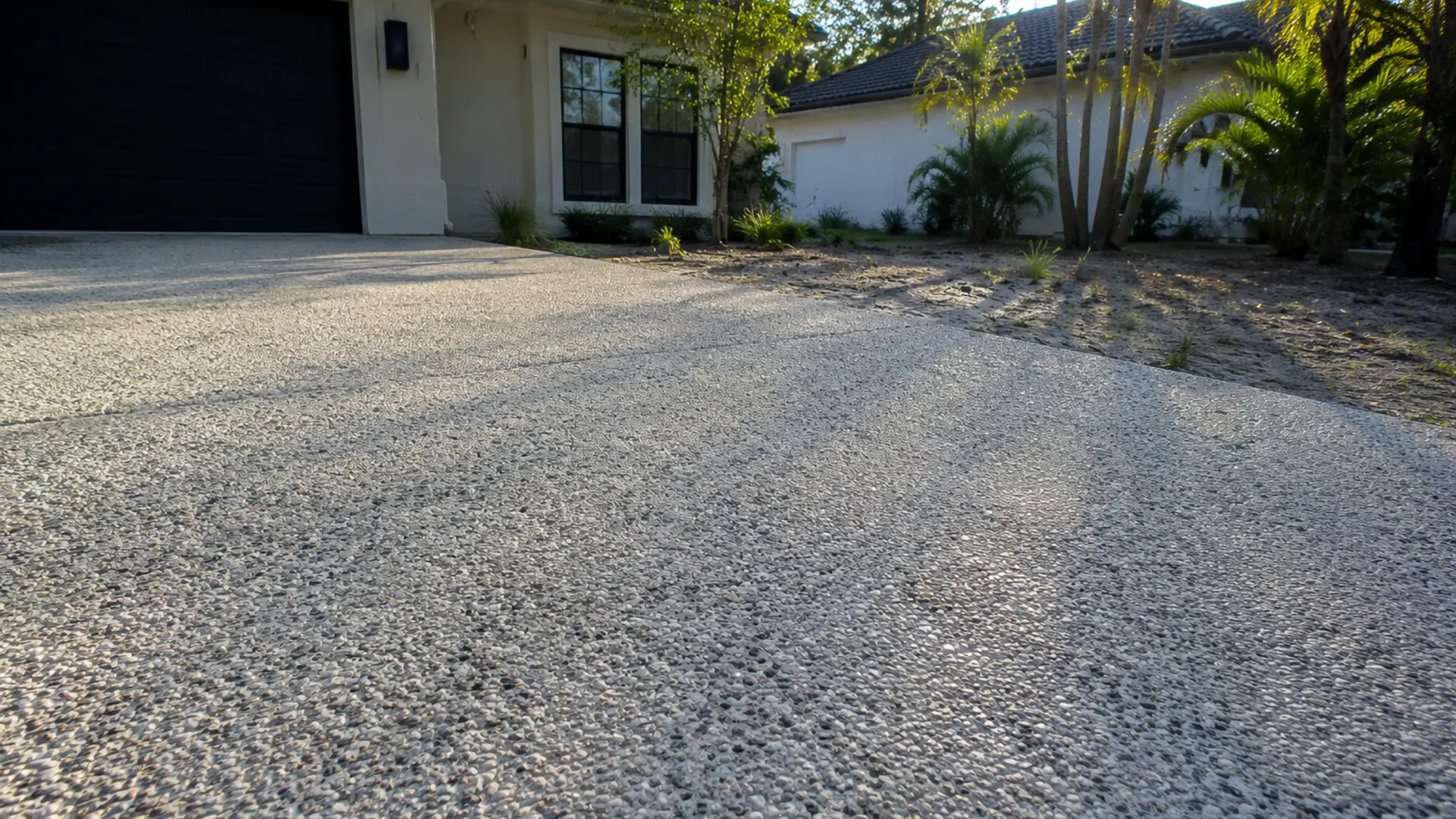
Lakeland Concrete Driveway Experts pour exposed aggregate driveways, aprons and entry courts for homeowners across Lakeland and Polk County. We have built our reputation on delivering every project we take on, using the best materials for the application, meeting or exceeding Florida Building Code, and writing each specification around the property, the slope and the Central Florida ground beneath it.
Exposed aggregate cannot be ordered from a card, because the stone you choose is the finished colour of the driveway and the exposure depth changes how you live with it. We have poured light-exposure drives that sweep like a smooth slab and deep-exposure approaches on sloped ridge lots where traction mattered more than tidiness. What follows covers the aggregate options, how much texture to specify, why the finish suits this climate, how it is poured and washed out, and what it costs to run over a decade.
The stone is the finished colour of an exposed aggregate driveway, so it is chosen the way you would choose a countertop rather than a construction material. River rock, pea gravel, crushed granite and deliberate salt-and-pepper blends all read completely differently, and the cement matrix around them can be grey or pigmented to shift the whole tone.
Rounded, tan through grey-brown. The softest look and the most common local choice.
Small and uniform, giving an even fine-grained field with no dominant stones.
Angular with more sparkle and contrast. Reads modern and holds colour well in the sun.
Dark and light stone mixed deliberately. Hides staining and tyre marks best of all.
Crushed sea shell for a coastal look that also reflects heat and runs cooler underfoot.
The paste between the stones tinted charcoal or buff instead of standard grey.
Exposure depth is agreed before the pour rather than decided during the wash, because the retarder is specified for a target depth. It changes how the driveway lives with you: light exposure stays close to flat and sweeps easily, deep exposure gives maximum grip but collects sand and oak debris. Medium is where most driveways land.
Barely opened. Nearly flat, easy to sweep, kind to bare feet, with just a hint of stone.
The usual choice for a driveway. Real grip and visible stone, still clears with a blower.
Maximum texture and traction. Holds more sand and oak debris, so it needs washing more often.
A textured band framing a smoother field, putting the grip where cars turn.
Medium to deep on the incline, lighter on the flat, so traction sits where it is needed.
Lighter exposure where people walk barefoot, matched in colour to the drive.
Exposed aggregate suits Central Florida driveways for practical reasons well beyond appearance. It has the highest wet traction of any finish we offer, which matters during the daily summer storm and on the sloped lots toward the Lake Wales Ridge. It hides tyre marking, the colour cannot fade because it is the stone itself, and it runs on a longer sealing cycle than stamped work.
The best wet traction of any finish we offer, which matters on any sloped approach.
Hot asphalt tracked in on tyres barely shows against a textured, multi-toned surface.
The colour is the stone itself, so relentless UV has nothing to bleach out.
Three to five years rather than the two to three a stamped driveway needs.
Lighter stone blends reflect rather than store heat on an unshaded frontage.
No pattern to line up, so a routed crack or a replaced section is far less obvious.
This is what the slab and the exposure process are built to on an exposed aggregate driveway. The figure that matters most is wash pressure against retarder dwell: cut too deep and less than half the stone stays embedded, which is what causes aggregate to work loose under tyres years later.
The pour itself is standard on an exposed aggregate driveway; everything decorative happens overnight and the following morning. A chemical retarder holds the top layer of cement paste soft while the slab sets, then the surface is washed to reveal the stone that was in the mix all along. Timing that wash correctly is the whole skill.
Samples looked at on site against your roof and veneer, and exposure depth agreed.
Compacted limerock base, rebar grid tied and chaired, forms set to a 2 percent fall.
The 4,000 PSI mix placed, screeded and floated flat, with the stone evenly distributed.
A chemical retarder is sprayed across the surface, holding the top paste soft overnight.
A small area is opened first to check depth, then the full slab is washed at a fan tip.
Control joints saw cut, then a high-solids clear acrylic sealer once cured.
Exposed aggregate driveway cost sits between a broom finish and stamped concrete, and the upkeep is lighter than either decorative alternative. Here is what you are signing up for over the next decade, including where it beats stamped work and the one place a smooth finish is easier to live with.
Exposed aggregate sits between a broom finish and stamped concrete on price. It costs more than plain grey because of the aggregate specification, the retarder and the wash-out stage, and less than stamped because there is no colour hardener, release agent or stamping labour inside a tight set window.
Straight answers, including the ones that talk you out of spending money.
At light to medium exposure, no more than a coarse broom finish. Deep exposure with larger river rock is a different story and we would not specify it where people cross barefoot. For a driveway, medium is the usual landing point.
Not if the exposure depth was right. Stones pop out when the paste has been washed too deep and less than half the stone is still embedded. We test the depth on a small area before opening up the full slab.
Every three to five years, which is a longer cycle than stamped concrete. The colour comes from the stone rather than a pigment, so UV fading is not the issue. Sealing here keeps the matrix tight and resists oil.
Slightly cooler in practice. The texture breaks up the surface and lighter stone blends reflect more than a flat grey slab. On a west-facing drive in July it is noticeable, though not dramatic.
More easily than stamped work. There is no pattern to line up, so a routed and sealed crack largely disappears into the texture. Matching a full panel is harder since aggregate blends vary between loads, so we note the mix details on file.
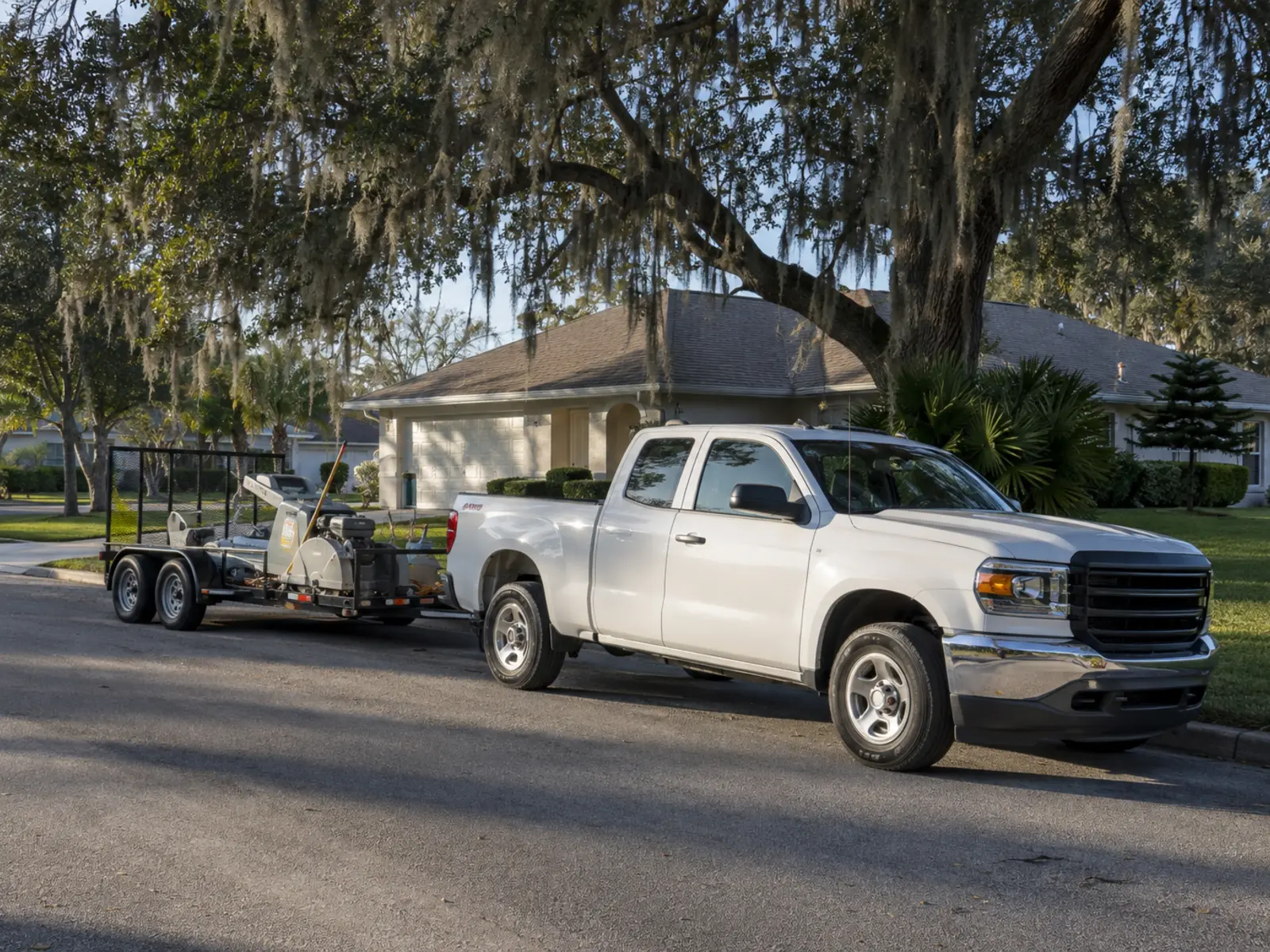
We will bring aggregate samples out and look at them against your roof and veneer before you decide anything.
863-734-6623