
Black Algae and Mould
Killed at the root with a hypochlorite solution and dwell time, not just blasted off.
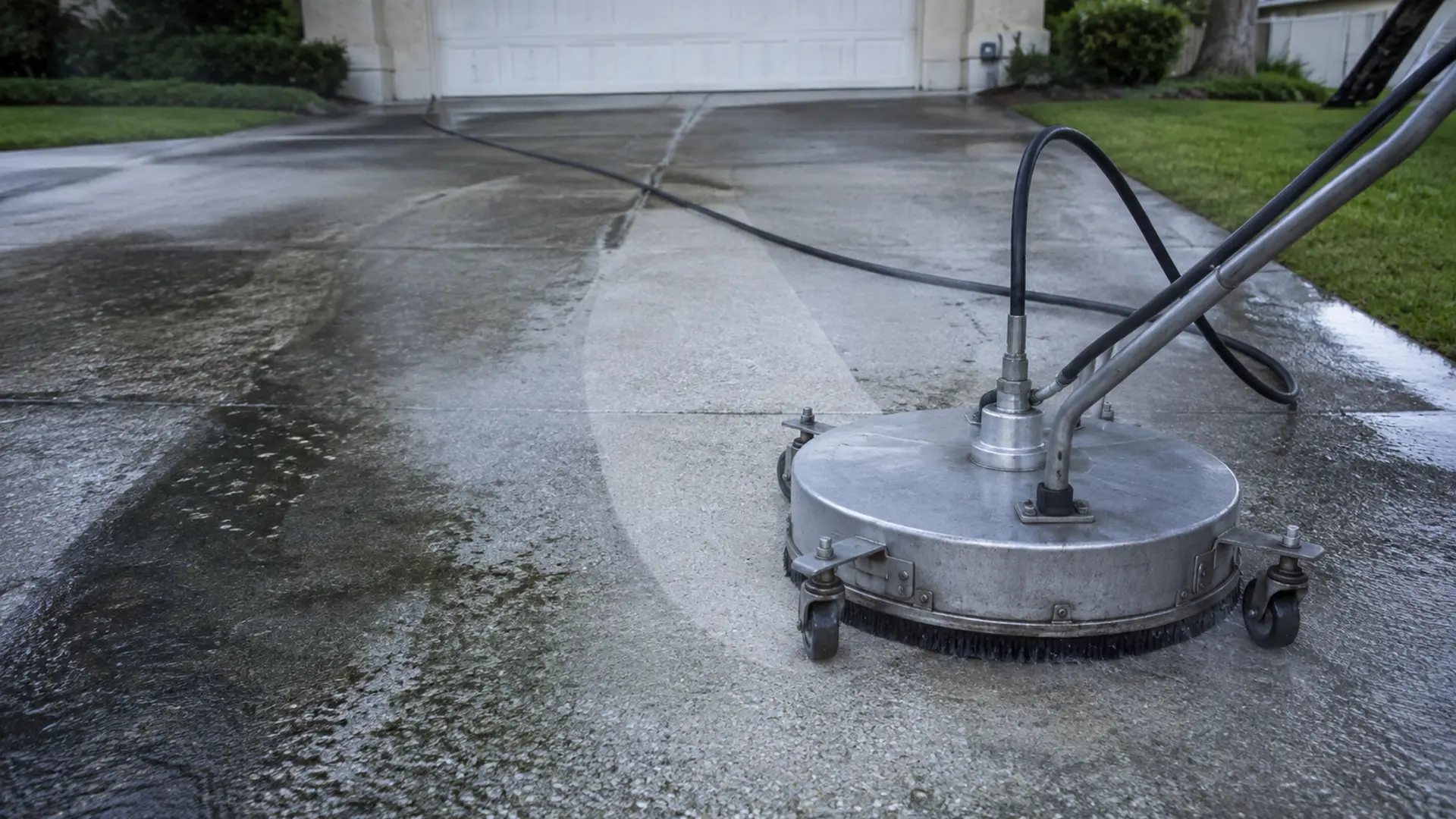
Lakeland Concrete Driveway Experts clean concrete driveways for homeowners, landlords and commercial owners throughout Lakeland and Polk County. Our reputation rests on delivering every job we take on, using the right chemistry for the staining in front of us, working within safe pressures for concrete, and treating the property and planting around the slab with the same care as the driveway itself.
The green and black staining on Florida driveways is not dirt, it is living growth, and that is why pressure alone never keeps it away for long. No two driveways here need the same treatment either: a slab under dense oak canopy, a frontage in full sun and a drive banded orange by well-water irrigation all call for different chemistry. We have restored rental properties between bookings, stripped years of algae off shaded east Lakeland drives, and cleaned decorative slabs at reduced pressure to protect the sealer. Below covers what we remove, how we protect your property, why driveways here go green so fast, and how often cleaning is genuinely needed.
Driveway pressure washing removes far more than dirt, and different stains need different chemistry. Pressure on its own handles the easy half. Black algae and lichen are living growth that has to be killed at the root, oil needs an alkaline degreaser, and orange iron staining from well-water irrigation needs a reducing agent that pressure will never touch.
Killed at the root with a hypochlorite solution and dwell time, not just blasted off.
Tougher and more embedded than algae. Needs treatment and patience rather than more pressure.
Alkaline degreaser with agitation. Fresh drips lift fully; baked-in ones improve but may shadow.
From well-water irrigation. Treated with a reducing agent, since pressure does nothing to it.
Hot asphalt tracked in on tyres, lifted with degreaser and hot water.
Metal furniture and lawn feed both leave stains that need a chemical, not a nozzle.
The chemistry that kills algae at the root is not friendly to St. Augustine turf, so protecting your property is a genuine part of the job rather than an afterthought. Beds get saturated before anything is mixed, sensitive planting is covered, and the whole area is flushed down afterwards so no residue is left to burn grass.
Planting saturated before anything is applied, so it cannot absorb solution.
Anything close to the slab edge is sheeted for the duration.
Even coverage at a fixed standoff, which also keeps overspray off the house.
Edges and joints done by wand at a safe distance where the cleaner cannot reach.
Slab and surrounding landscaping flushed with clean water so no residue is left behind.
Never used close to concrete. That is what carves permanent tracks into a surface.
The staining pattern on a Polk County concrete driveway tells you something about the conditions on your lot. Year-round humidity means algae has no dormant season here, and slabs that never see direct sun stay damp for hours after rain. Where the green appears first is usually where the canopy is thickest or the sprinklers reach.
Year-round warmth and humidity mean algae colonises damp concrete in any month.
Shaded slabs stay wet for hours after rain, and that is where growth appears first.
Sprinkler heads hitting the driveway keep a strip permanently damp and fed.
Decomposing oak debris holds moisture directly against the surface.
An open pore structure gives growth somewhere to root that a sealed slab does not.
Less direct sun, slower drying, and a noticeably shorter interval between cleans.
This is the equipment, chemistry and pressure we work within when cleaning a concrete driveway, including what we will not use. A turbo or zero-degree nozzle held close to concrete cuts visible tracks and strips cement paste, and that damage is permanent.
A concrete driveway pressure washing job is two to four hours on a standard residential driveway. The order matters more than the equipment: treat chemically first and allow proper dwell, then wash. Reverse those and you have removed what you can see and left the organism in the pores to return within weeks.
Beds pre-wet and vulnerable planting covered before any chemical is mixed.
Hypochlorite solution applied across the slab and given time to kill at the root.
Oil, rust and iron staining each handled with the right chemistry rather than pressure.
Overlapping passes at consistent standoff, so the finish is even with no striping.
Wand work at controlled distance where the surface cleaner cannot reach.
Slab and landscaping flushed clean so nothing is left to burn turf or dry as residue.
How often a driveway needs pressure washing in Polk County comes down to how long the slab stays damp after rain rather than how much traffic crosses it. Twelve to eighteen months suits most properties, closer to annually under heavy oak canopy. A few small habits change that interval considerably.
Most Lakeland driveways want cleaning every twelve to eighteen months. Under heavy oak canopy, or where irrigation overspray keeps a strip permanently damp, closer to annually is realistic. A driveway in full sun on a well-drained lot can comfortably go longer. The variable is how long the slab stays wet after rain, not how much traffic crosses it.
Straight answers, including the ones that talk you out of spending money.
Every twelve to eighteen months for most properties, closer to annually under heavy oak canopy or where irrigation hits the slab. What decides it is how long the surface stays damp after rain rather than how much traffic it carries.
A surface cleaner at appropriate pressure will not. What damages concrete is a turbo or zero-degree nozzle held close, which cuts visible tracks and strips cement paste. That damage is permanent, which is why we use a shrouded surface cleaner on the main field.
Because it is a living organism rather than dirt. Pressure removes what is visible but leaves the root structure in the pores, so it recolonises within weeks. Pre-treating with a hypochlorite solution and allowing dwell time is what makes a clean last a year.
Fresh drips usually come out entirely with an alkaline degreaser and hot water. Oil that has soaked in and baked through several summers has penetrated deep and often leaves a shadow. We will get a real improvement and tell you honestly beforehand if full removal is unlikely.
With the right precautions, yes. Beds are saturated before any chemical is applied, sensitive plants are covered, and everything is flushed afterwards. Sodium hypochlorite at working strength will damage St. Augustine turf if allowed to pool, so managing the rinse is part of the job.
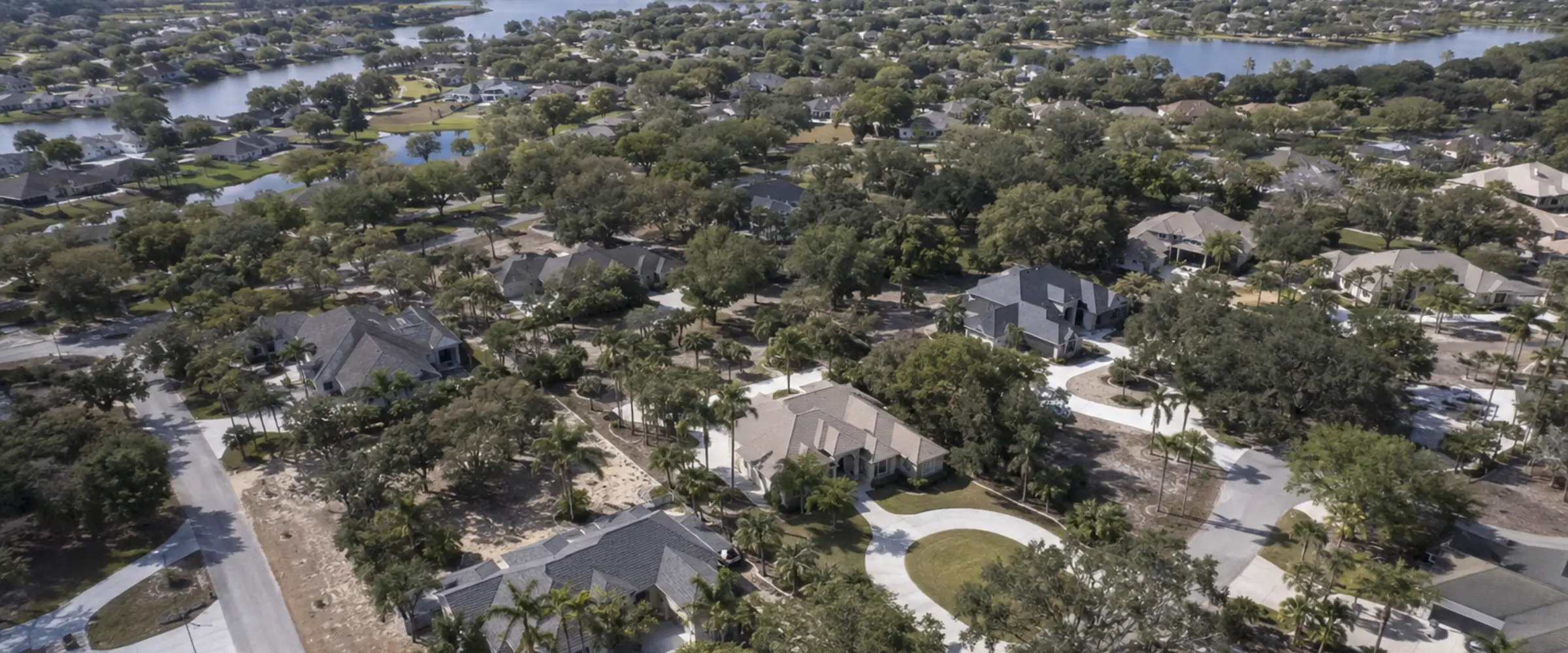
We treat the growth at the root before we wash, so it stays clean for a season rather than a fortnight.
863-734-6623