
Slant Curb
An angled face, the most common landscape profile. Retains mulch well and is easy to trim against.
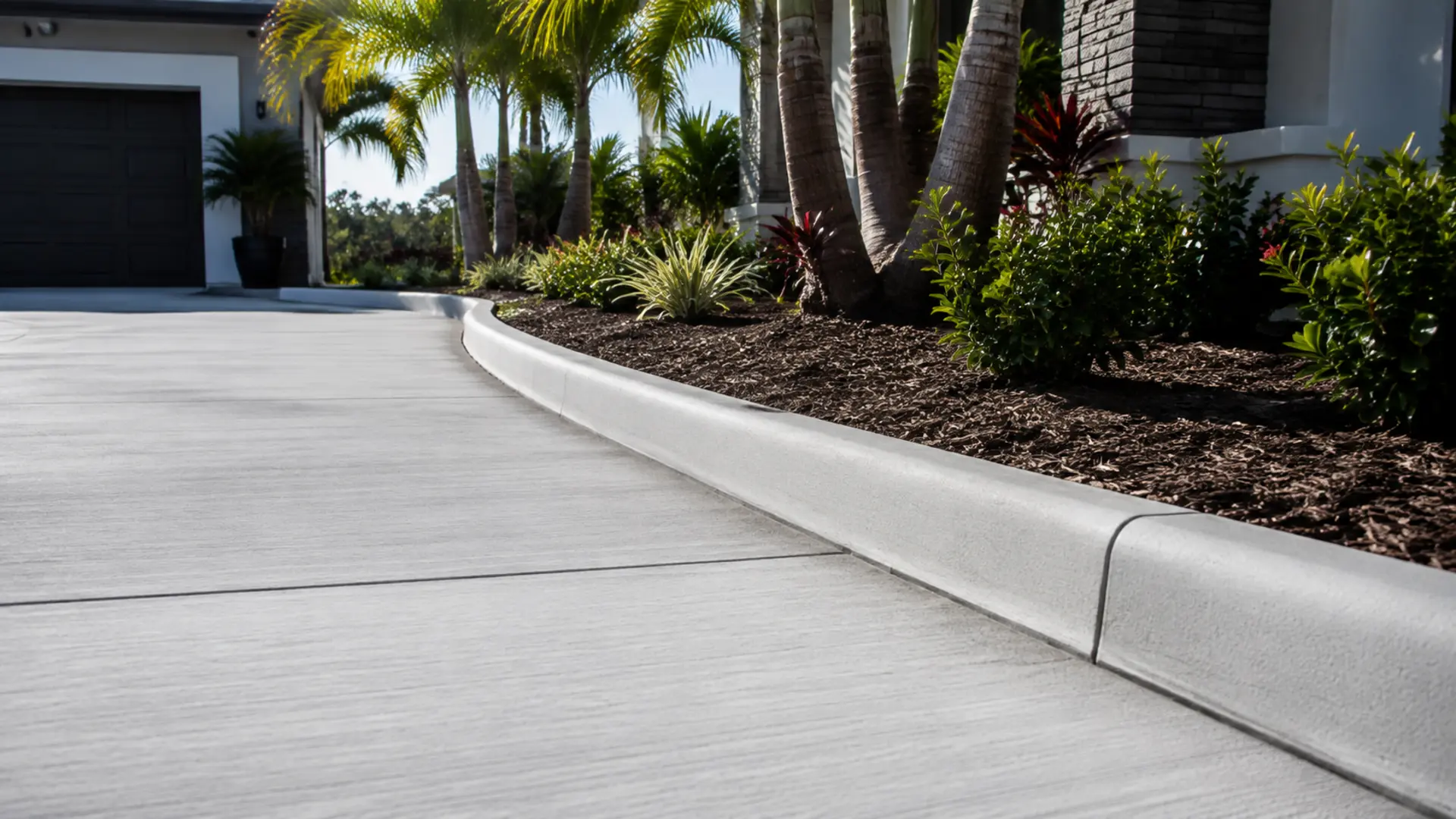
Lakeland Concrete Driveway Experts install continuous extruded concrete driveway edging and curbing across Lakeland and Polk County, on new pours and along existing driveways. Our reputation rests on delivering every job we take on, using the right profile for the job rather than a default, and building to meet or exceed code and best practice.
Curbing is bought for how it looks and earns its keep structurally, which is why the profile is chosen against the job rather than a catalogue. On sandy Central Florida sub-grade the driveway edge is the weakest part of the slab, and every storm takes a little more base material out from under an unrestrained perimeter. We have run mower curb along long rural approaches so the lawn edge is cut in the same pass, ribbon curb defining decorative frontages, and slant curb protecting edges we had just rebuilt. Below covers the profiles, what a curb is actually doing, where it earns its cost and how it is placed.
Concrete driveway curb profile choice is functional as much as visual. A slant curb retains mulch and is easy to trim against, a mower curb has a flat top wide enough to run a wheel along so the lawn edge is cut in the same pass, and a ribbon curb defines the line without a raised barrier.
An angled face, the most common landscape profile. Retains mulch well and is easy to trim against.
A flat top wide enough for a mower wheel, so the edge is cut in the same pass as the lawn.
A flush or near-flush band defining the driveway line without creating a raised barrier.
A vertical face with a defined top edge. The most architectural profile.
Any profile with a brick or stone texture rolled into the face, tying to a decorative drive.
Integral pigment so the edge contrasts deliberately or matches the driveway it borders.
Most people buy concrete driveway edging for how it looks and get the structural benefit as a bonus. On sandy sub-grade the driveway edge is the weakest part of the whole slab, and a curb set into a trench is a physical barrier against base material migrating out sideways storm after storm.
Stops base sand migrating sideways from under the slab edge, storm after storm.
Runoff hits the curb at the transition rather than working on the concrete edge.
Stops bed material washing across the driveway every time it rains hard.
Gives a driveway a finished edge instead of a ragged transition into St. Augustine turf.
Particularly useful along the new edge of an extension or widening.
Can be shaped to direct water along the drive toward a defined discharge point.
These are the situations where concrete driveway curbing earns its cost and we would actively recommend it rather than simply offer it. Sloped drives where runoff moves fastest, long rural approaches with hundreds of feet of unsupported perimeter, and any driveway where an edge has already been rebuilt once.
Runoff velocity is highest, so unsupported edges erode fastest. The clearest case for it.
Hundreds of feet of unsupported perimeter with nothing holding the base in.
Repairing a crumbled edge without protecting it means doing the same work twice.
Where mulch and bed soil currently wash onto the slab after every storm.
Tight turn-ins and narrow drives, where tyres regularly track over the edge.
Protecting the freshly disturbed ground along the outer edge of new work.
This is how a continuous extruded concrete driveway curb is placed. It goes down in one pass with no cold joints along the run, then control joints are tooled every three to four feet so shrinkage cracks land on those lines rather than appearing at random.
Most residential concrete driveway curbing runs are completed in a single day. The step that decides whether it lasts is the trench: cut to a consistent depth and compacted so the curb bears evenly along its whole length.
Curb line laid out in paint, allowing for profile width and any mower clearance you want.
A shallow trench cut to consistent depth and the base compacted so the curb bears evenly.
Low-slump concrete placed through the profile die in one pass, with no cold joints.
Control joints tooled every three to four feet so shrinkage cracks form on those lines.
Surface broomed, troweled or stamped, with integral colour where specified.
After a day or two, beds are backfilled and the lawn edge dressed back to the curb.
Concrete driveway curbing is priced by the linear foot and is one of the cheaper things we do. The comparison that actually matters is against rebuilding a crumbled edge, undercutting, doweling, re-forming and repouring is considerably more work per foot than laying a curb in the first place.
Curbing is priced by the linear foot and is one of the cheaper things we do. Set against it is the cost of rebuilding a crumbled driveway edge, which involves undercutting to sound material, doweling, re-forming, correcting the base beneath and repouring, considerably more work per foot than laying a curb in the first place. On a sloped or long driveway, curbing very often pays for itself once.
Straight answers, including the ones that talk you out of spending money.
Decades. It is a low-slump fibre-reinforced section on compacted ground with no traffic load on it. Early failures come from a poorly compacted trench or irrigation discharging onto one spot and eroding the base, both of which are avoidable.
It substantially reduces it, which is the main structural reason to fit it. The curb is a lateral barrier against base material migrating out from under the slab edge, and it takes the erosive force at the transition. On sloped drives the difference is most noticeable.
Yes, and it is one of the more cost-effective improvements to an older drive. The curb is trenched in along the existing edge with no work needed on the slab. It is often done alongside an edge rebuild, so the repaired edge is protected going forward.
Yes, tooled every three to four feet. A continuous concrete section shrinks as it cures and will crack somewhere. Tooled joints decide where, so cracks land on a clean line rather than randomly along the run.
It can be integrally coloured and given a broom, troweled or stamped texture, so matching a decorative driveway is realistic. Matching a weathered older slab exactly is not, for the same reason any new concrete never matches old.
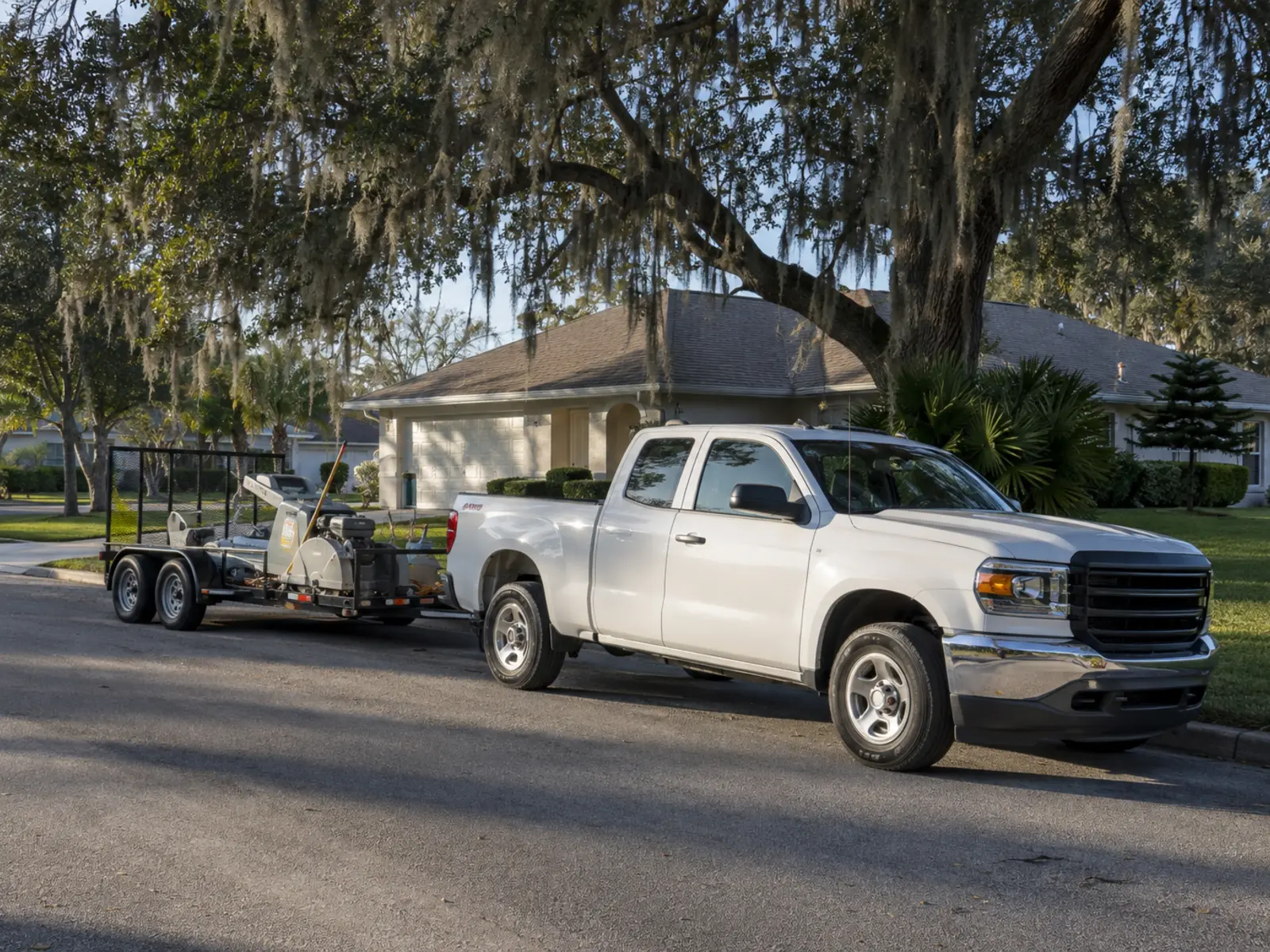
A continuous curb costs a fraction of rebuilding a crumbled edge twice. We will walk the run and price it by the foot.
863-734-6623