
Stamped Border
A cobble or ashlar band around the perimeter, framing a plainer field and hiding the lawn edge.
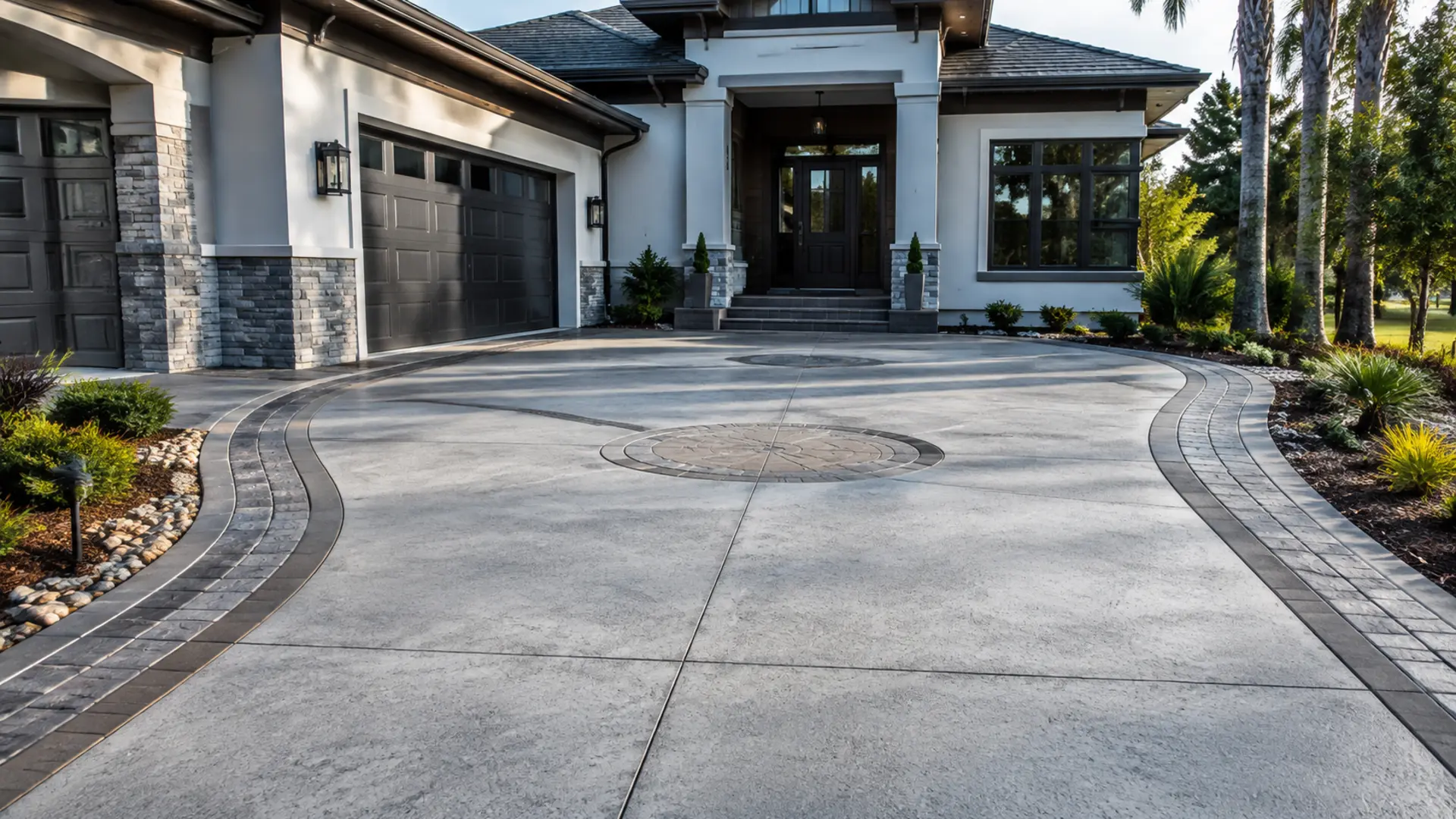
Lakeland Concrete Driveway Experts design and pour decorative concrete driveways for homeowners and commercial owners across Lakeland and Polk County. We have built our reputation on delivering every project we take on, using the best materials for the application, meeting or exceeding Florida Building Code, and designing each layout around the property rather than a catalogue.
A decorative driveway is a layout rather than a finish, which is exactly why it cannot be templated. A plain field with a stamped border, a stained band tracking the walkway, score lines breaking a wide expanse into proportion, an aggregate apron where cars turn, each is something we do individually, assembled for one specific house. We have framed plain fields with cobble borders on suburban frontages and cut scored medallions into estate entry courts. What follows covers the elements we combine, designing around your elevation, where the budget goes and how it is built.
A decorative concrete driveway is an assembly of elements rather than a single finish. Most use three of these, a field, a border and one accent. Two reads restrained and intentional. More than four starts competing with the house, particularly on a standard suburban frontage where the driveway is already the largest surface in view.
A cobble or ashlar band around the perimeter, framing a plainer field and hiding the lawn edge.
Shallow saw cuts dividing a wide slab into rectangles or a diamond grid, aligned to the joints.
A colour band tracking the walkway, tying the driveway to the front door not the garage.
A textured section at the street, adding grip exactly where cars pivot and slow.
A scored or stamped feature on a circular drive or wide entry court, cut to drawing.
An extruded edge in a second colour, defining the driveway line against planting.
A decorative driveway should answer the elevation behind it rather than arrive from a catalogue. Border colour is drawn from the stone or brick already on the house, scale is set by the frontage width, and a stained or scored band can pull attention toward the front door rather than the garage.
Border colour drawn from the stone or brick on the house, not chosen in isolation.
Barrel tile pushes warm; architectural shingle usually wants something cooler and quieter.
Large-format elements on a wide drive, tighter detail on a narrow period frontage.
A stained or scored band that visually pulls attention to the entrance, not the garage.
Borders sized so mulch beds and planting read as intentional against the edge.
Every band and border still has to carry a two percent fall. Detail must never dam water.
A decorative concrete driveway budget is driven by technique count and linear detail rather than area alone. Each additional finish means a separate set-up and its own window in the pour sequence, and borders are labour-heavy per square foot, a long border can cost more than a large plain field.
Each additional finish means a separate set-up and its own window in the pour sequence.
Borders are labour-heavy per square foot. A long border can cost more than a large field.
A single integral pigment is cheap. Stain accents and a second hardener add materials and time.
Rectangular panels are quick. Curves, radial layouts and medallions need setting out by hand.
A UV-stable acrylic with anti-skid on a two to three year cycle. Budget for it upfront.
A day of layout work before excavation, which is what stops the result looking accidental.
This is the structural slab under all the decorative work. The detail that matters most is joint layout: control joints are placed first at eight to ten feet, then the decorative elements are drawn onto that grid, so every visible line on the finished driveway is there for a reason.
On a decorative concrete driveway the layout stage decides whether the result looks designed or assembled. We set the structural joint grid first, lay the borders and bands onto it to scale, and you approve the drawing before anything is poured, because once concrete is placed the layout is permanent.
Frontage, setback, fall and the colours already on the house all recorded on site.
Structural joints laid out first at eight to ten feet, because they are permanent.
Borders, bands and panels drawn to scale onto that grid, then approved by you.
Compacted limerock base, forms set to the drawing, rebar tied and chaired.
The field poured and finished, then each decorative element worked in its own window.
Score lines and control joints cut, seven day cure, then sealed with anti-skid.
A decorative concrete driveway occupies more of the frontage than almost anything else you can spend on outside, so it moves kerb appeal more than comparable work elsewhere. Here is an honest view of that value, including where we would hold back on complexity.
On most Florida homes the driveway is the largest single surface you see from the street, larger than the front elevation itself once you include the apron. That means it moves kerb appeal more than almost any other exterior spend of comparable size. Whether it converts to resale value depends on the neighbourhood and how well the design suits the house, and we would rather design something proportionate than oversell it.
Straight answers, including the ones that talk you out of spending money.
Three is usually the sweet spot: a field, a border and one accent. Two looks restrained and intentional. Four or more starts competing with the house, particularly on a standard suburban frontage where the driveway is already the biggest surface in view.
Yes, and you approve it. We set out the control joint grid first, then lay the decorative elements onto it to scale, so you can see exactly where every line will fall. Once concrete is placed the layout is permanent, so this is not a formality.
Some can. Score lines can be cut into a sound slab, and stains and borders applied over it. Stamping cannot without an overlay. None of it fixes a slab that has cracked or settled, and decorative work on a failing driveway is money spent twice.
Somewhat. Any driveway carrying pigment and a decorative sealer wants resealing every two to three years here. The structural slab underneath needs nothing beyond what a plain driveway needs, so think of it as maintaining a finish rather than a driveway.
It changes kerb appeal more than almost any comparable exterior spend, because of how much of the frontage it occupies. Whether that converts to resale depends on your neighbourhood and whether the design suits the house.
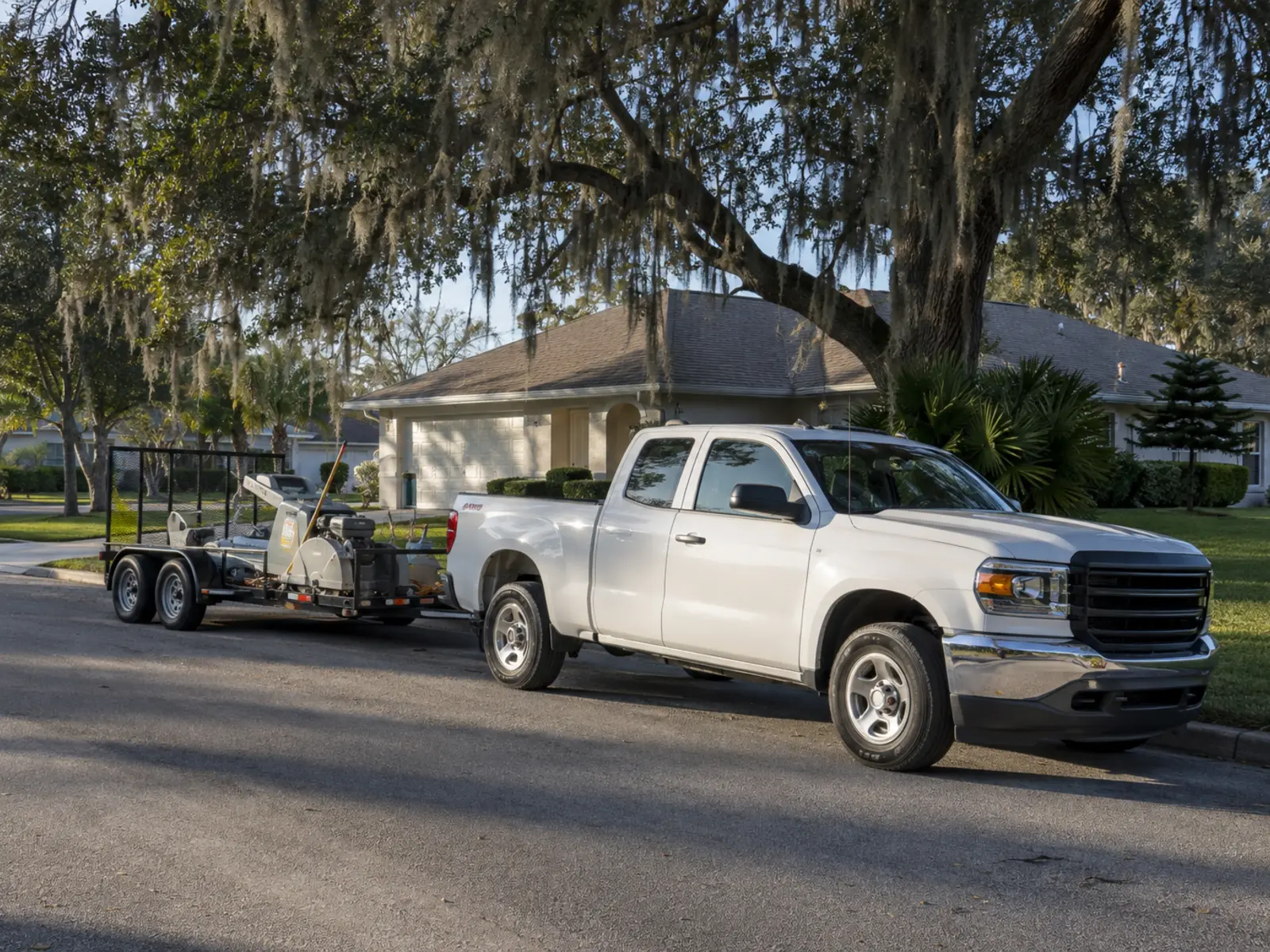
We will measure, look at the colours already on your elevation, and draw a layout for you to approve before anything is poured.
863-734-6623