
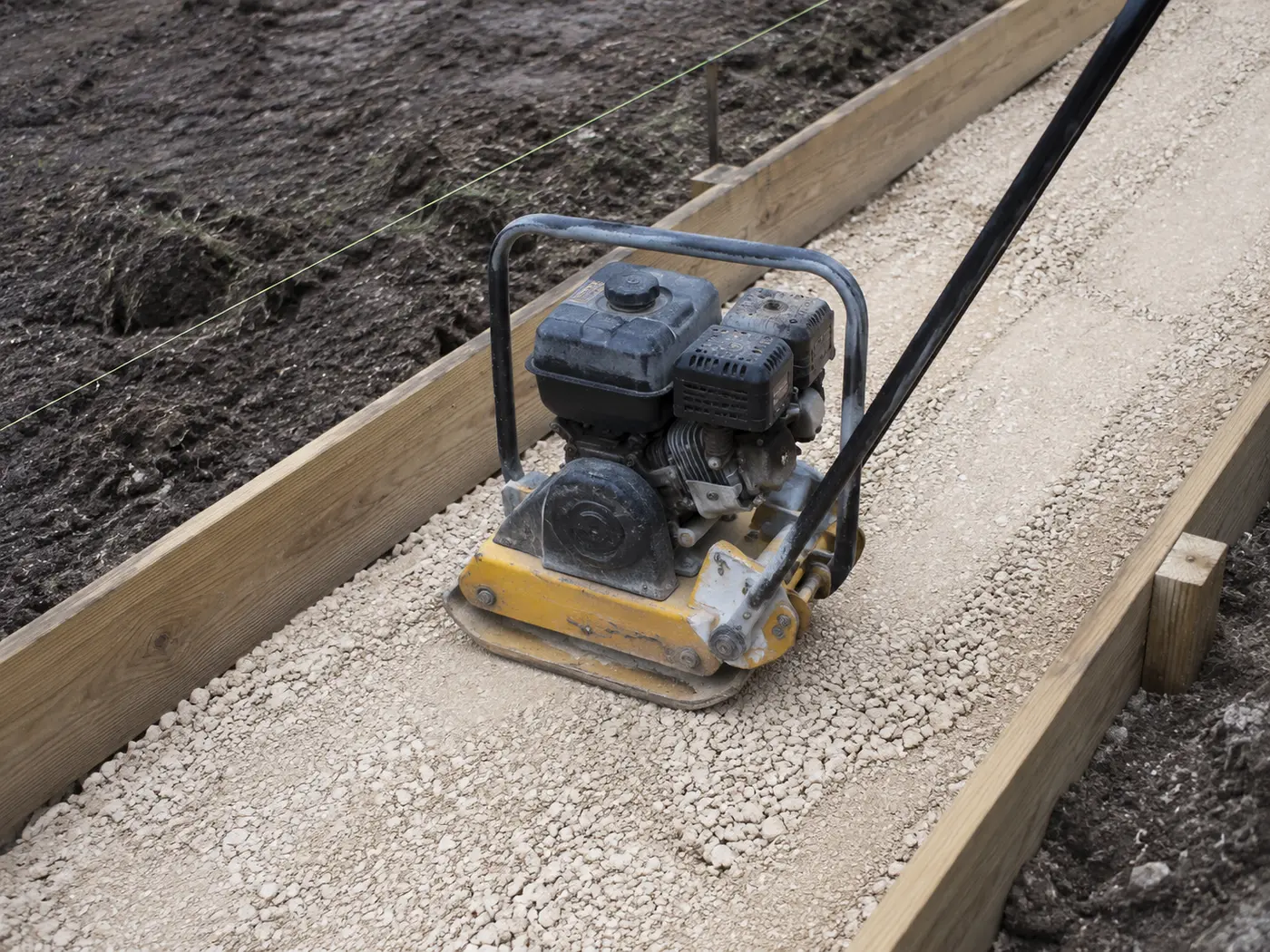
New Concrete Driveway Installation
Full build from excavation through cure: 4 in compacted limerock base, #3 or #4 Grade 60 rebar on 18 in centres, 3,500–4,000 PSI ready-mix with polypropylene micro-fibre, finished to a 2 percent cross-slope.

Lakeland FL Concrete Driveways is a concrete driveway contractor serving homeowners, landlords, builders, property managers and commercial owners across Lakeland and Polk County. We pour new driveways, replace failed ones, repair and restore slabs worth saving, and install decorative finishes, stamped, exposed aggregate, stained, salt finish and polished, alongside heavier structural work including RV and boat pads, right-of-way aprons, circular drives, drainage and commercial approaches.
We have built a reputation across Polk County by delivering on every project we take on, for repeat clients and first-time ones alike, and by turning what people picture for their space into something they actually get. Every job is planned the same way: the best materials for the application, construction that meets or exceeds Florida Building Code and local requirements, and a specification written around your site, the type of property, what parks on it, and the Central Florida ground and weather it has to survive. That is what delivers work of a genuinely higher standard at a fair price.
If you are planning a new concrete driveway, replacing one that has failed, or adding width and parking space, this is the work we do most: residential and commercial installation, full replacement with the sub-grade rebuilt underneath, doweled extensions and widening, targeted panel repours, and demolition with haul-off to Polk County recycling. Built properly it lasts decades rather than seasons, carrying modern truck weight and shedding a summer downpour away from your garage on a 2 percent cross-slope. What decides the specification is your side setback, what actually parks on the slab, the finish you want to maintain, and whether the ground needs remediation first. We survey the site, handle the permitting and inspection, and itemise the groundwork so you can see exactly what it costs.
Full build from excavation through cure: 4 in compacted limerock base, #3 or #4 Grade 60 rebar on 18 in centres, 3,500–4,000 PSI ready-mix with polypropylene micro-fibre, finished to a 2 percent cross-slope.
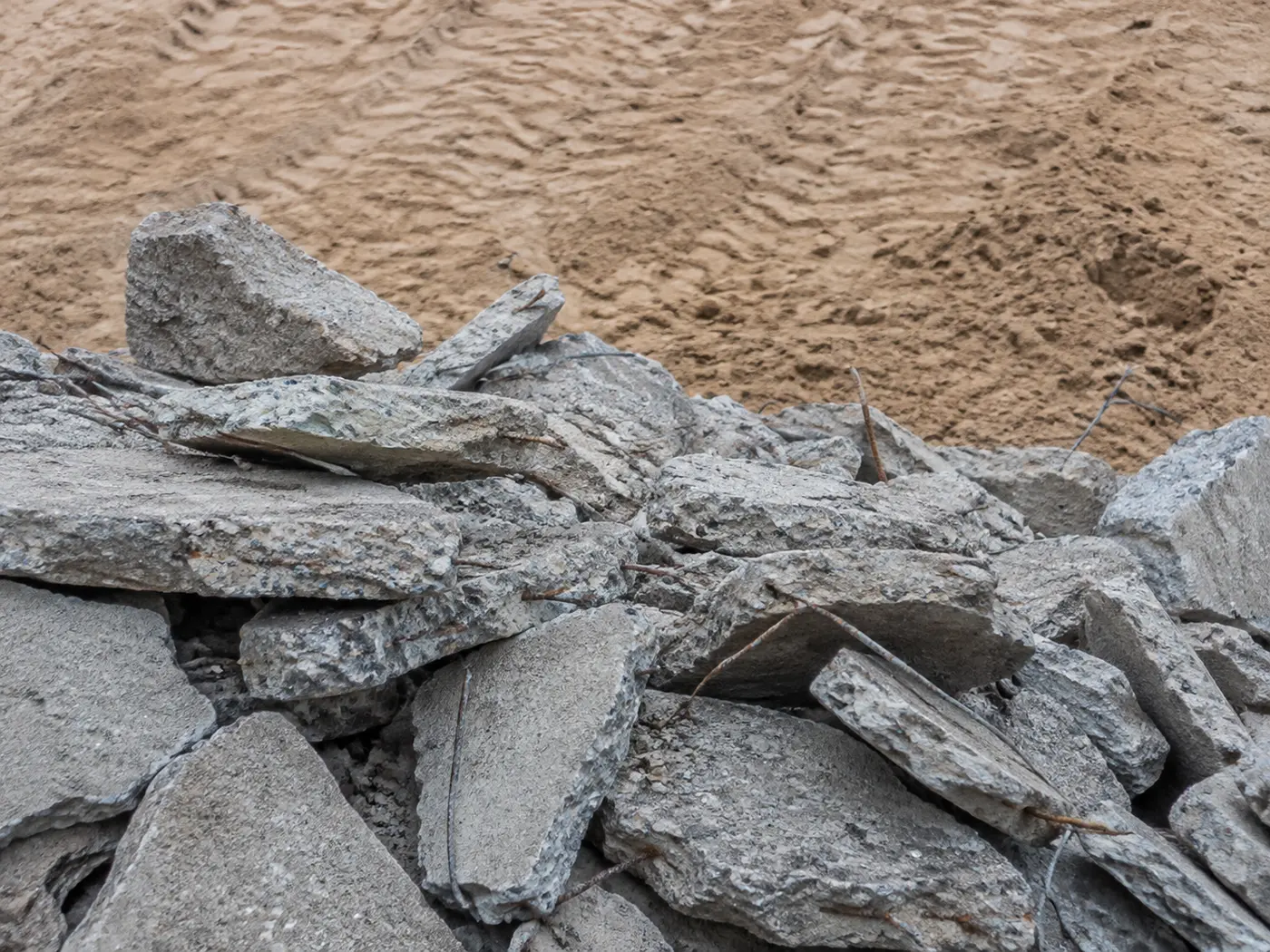
Hydraulic breaking and haul-off of the failed slab, sub-grade remediation where soft or organic material is found, then a new 4 to 6 in engineered slab with a compressible isolation joint at the garage apron.
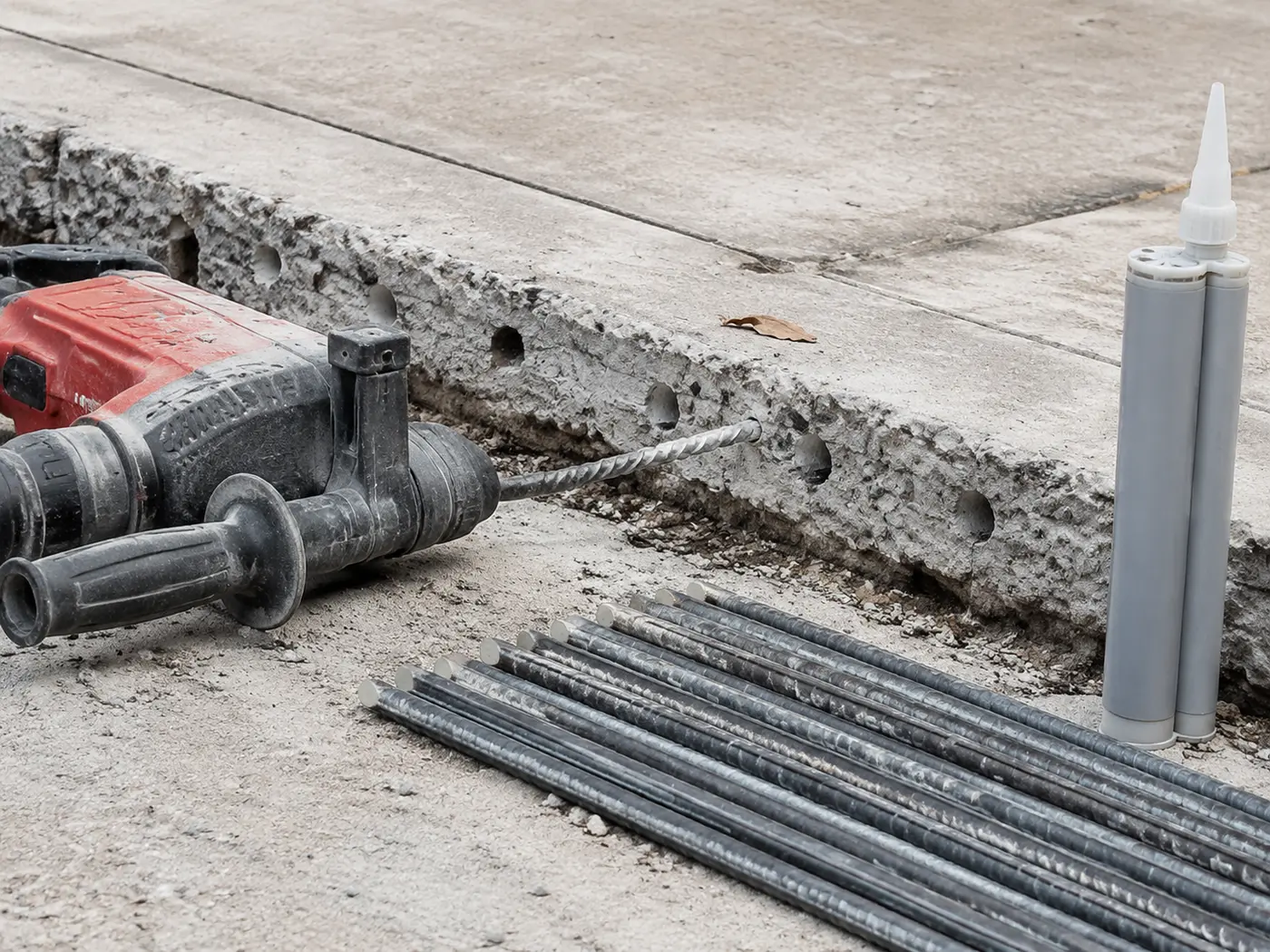
Parking pads and side lanes tied into the existing slab with 1/2 in rebar dowels epoxy-anchored 6 to 8 in deep on 12 to 18 in centres, so old and new share load instead of settling independently.
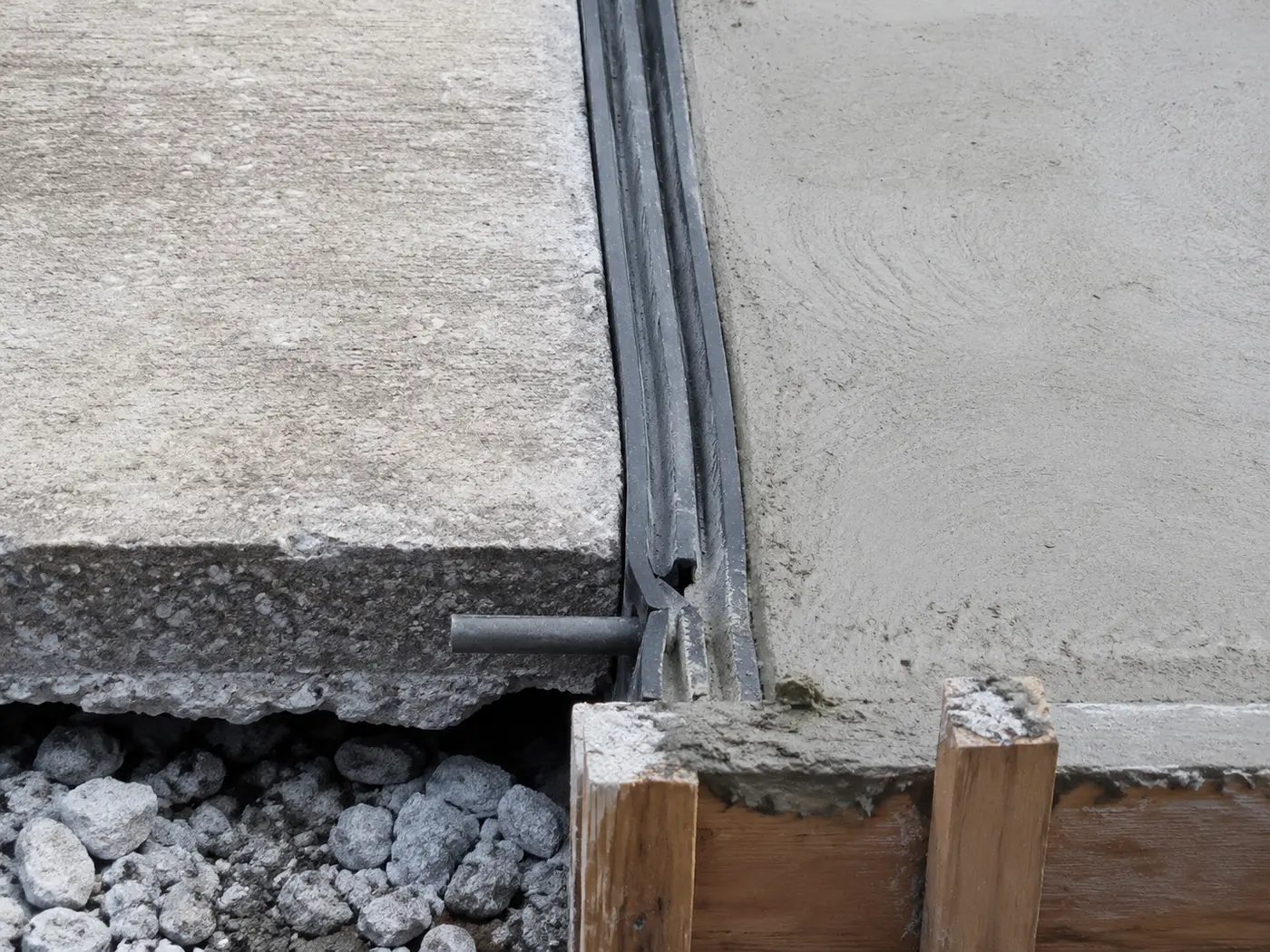
Two to ten feet added along one or both sides, limited by your side setback, with the new base matched to the existing base depth so the strip does not develop its own settlement line.
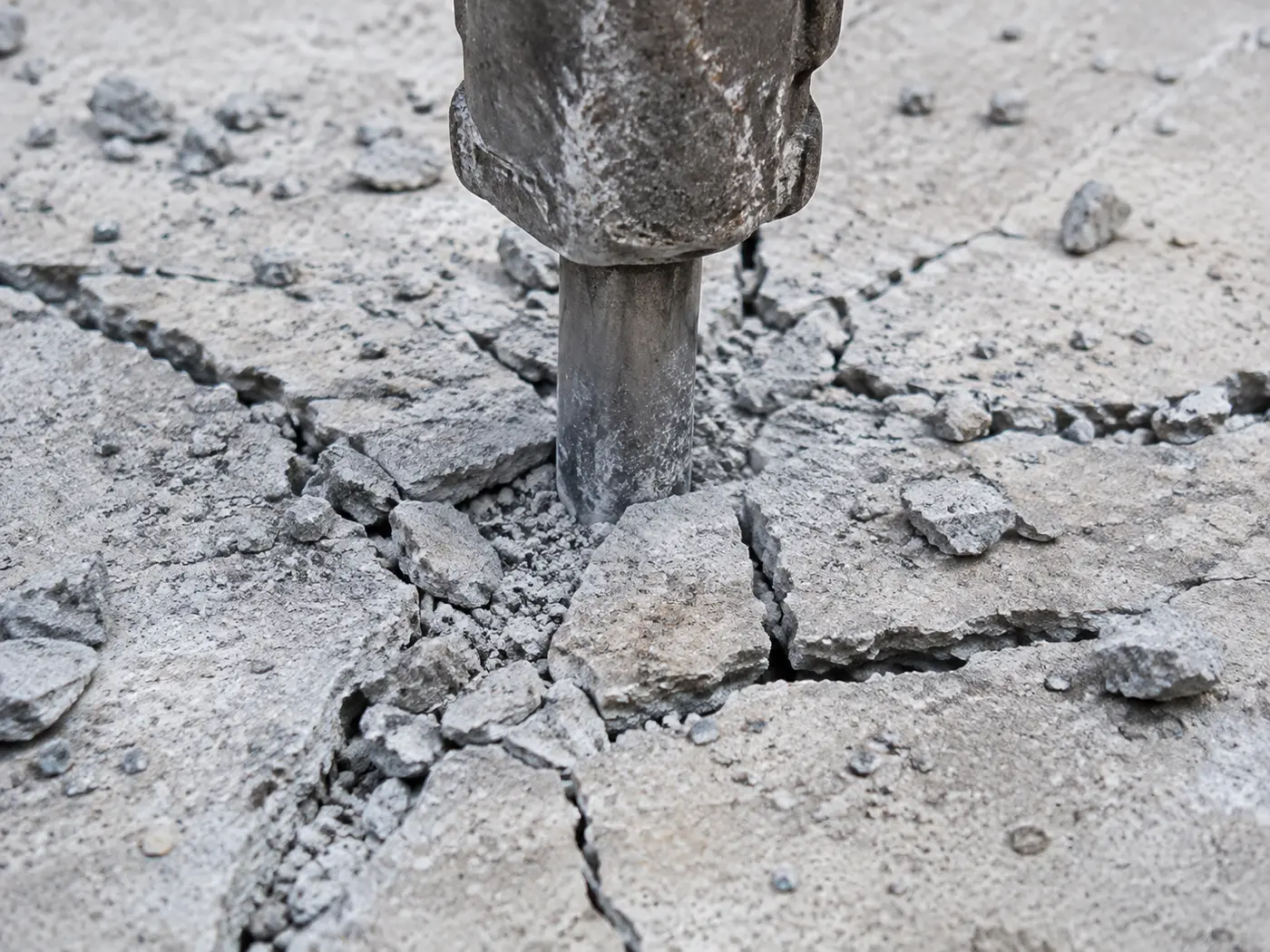
Excavator-mounted breaker, skid-steer loading and haul-off to a Polk County recycling facility where the material is crushed into reusable base aggregate, followed by rough grading of the exposed sub-grade.
Interlocking brick and concrete pavers on a geotextile-stabilised base with polymeric joints, set in herringbone for driveway traffic.
Hot-mix asphalt over 6 in of compacted base rock, for long rural approaches and acreage access where a poured slab is hard to justify.
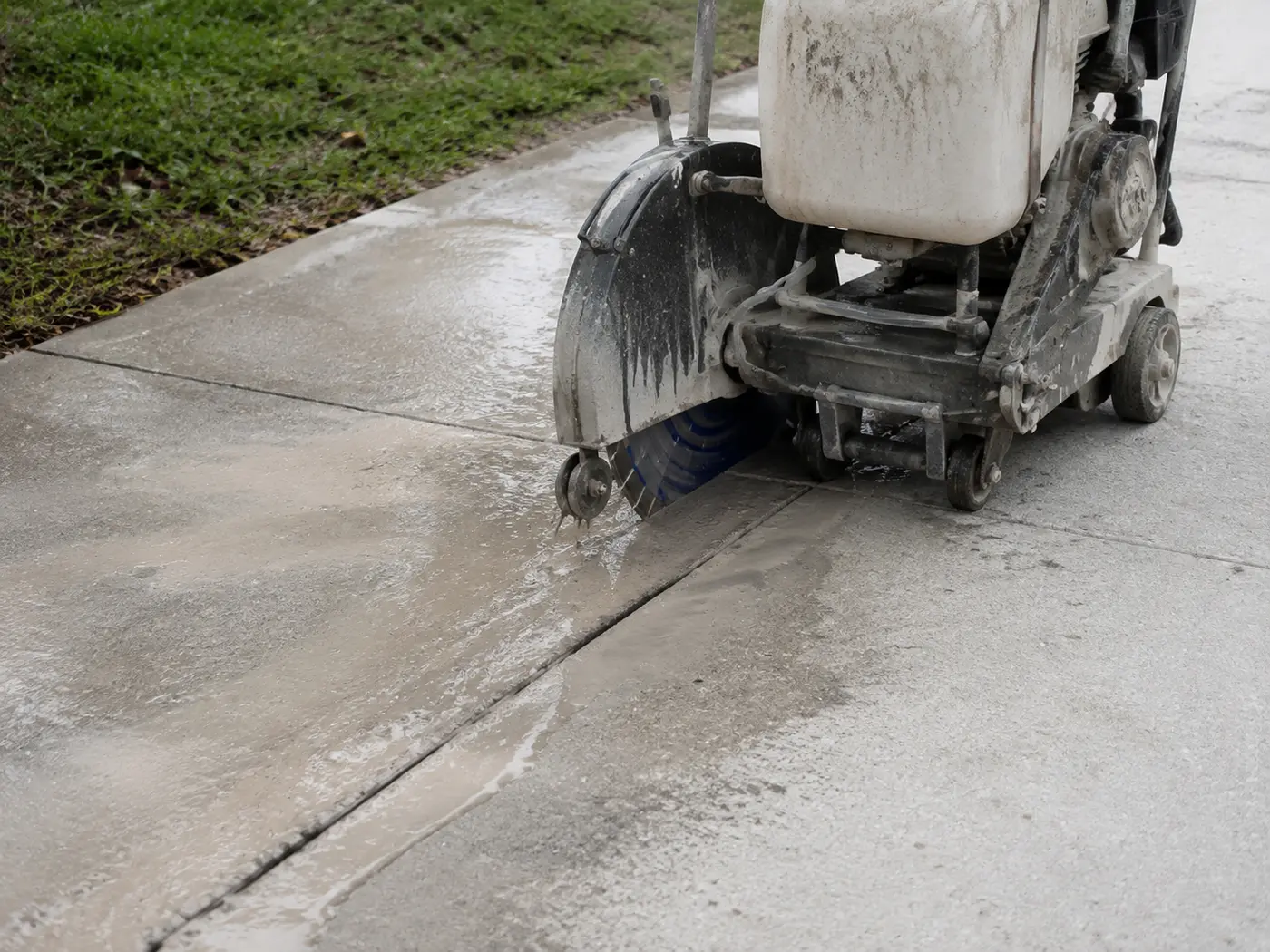
Targeted panel repours where only part of the driveway has failed: full-depth saw cutting on the existing joint lines, base correction beneath, and a matched structural pour.
If you need concrete driveway repair or restoration, our crews bring a tired, cracked or sunken driveway back to a surface that looks and performs like new, usually without tearing anything out: routed and sealed crack repair, polyurethane slab lifting for settled panels, spalling and pothole repair, bonded resurfacing that changes the whole appearance, and protective sealing. It runs at a fraction of replacement and takes days rather than weeks, because you keep the slab you already paid for. The dividing line is simply whether the problem sits on the concrete or under it. Our free sound test settles that: we tap for hollow areas, straight-edge the cracks for vertical displacement, and check the joints and edges, then recommend the smallest job that genuinely fixes it.
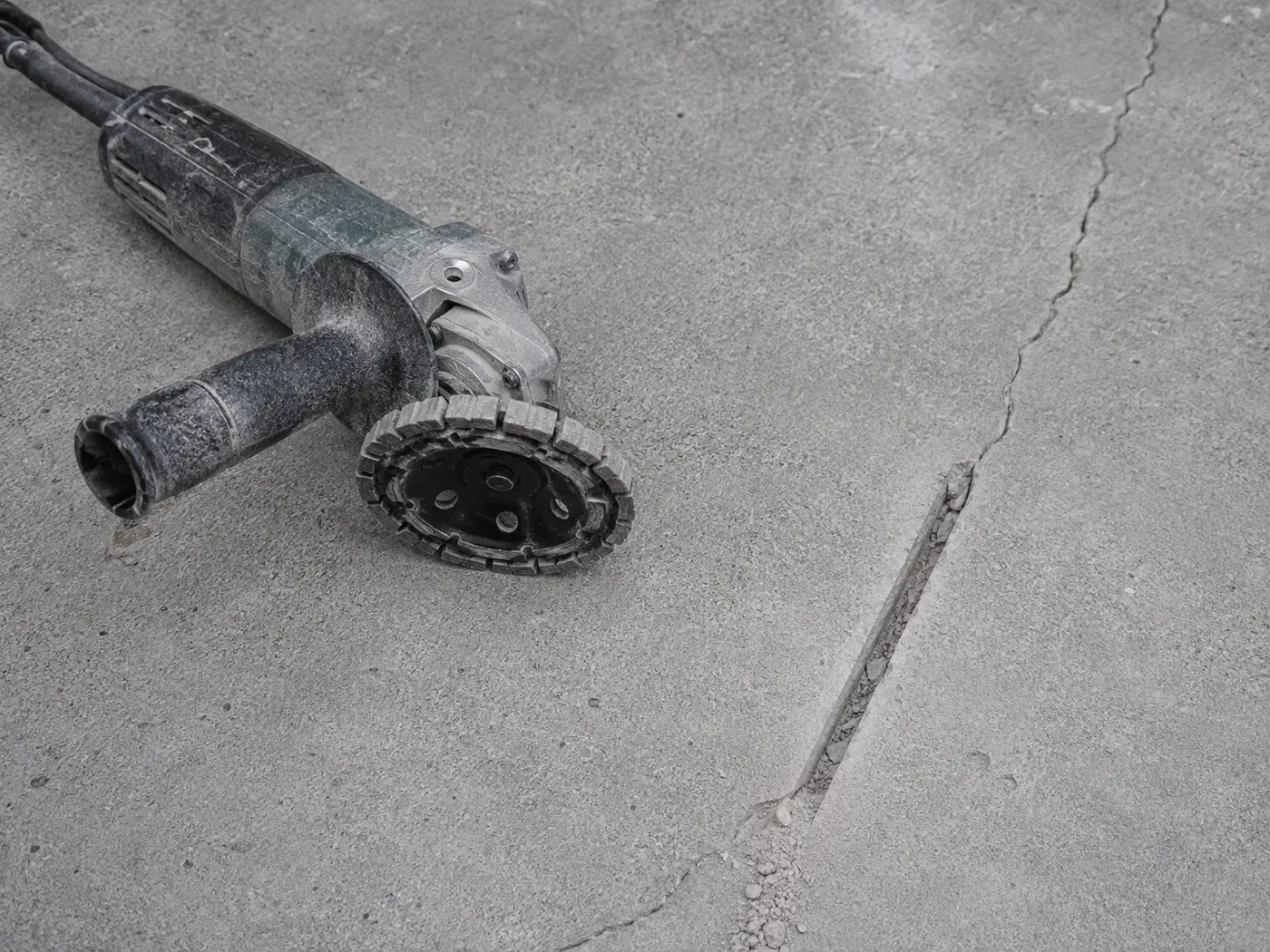
Cracks routed to a 1/4 in wide by 1/2 in deep channel, cleaned by compressed air, backed with closed-cell rod and filled with polyurethane or polyurea elastomeric sealant rated for roughly ±25 percent joint movement.
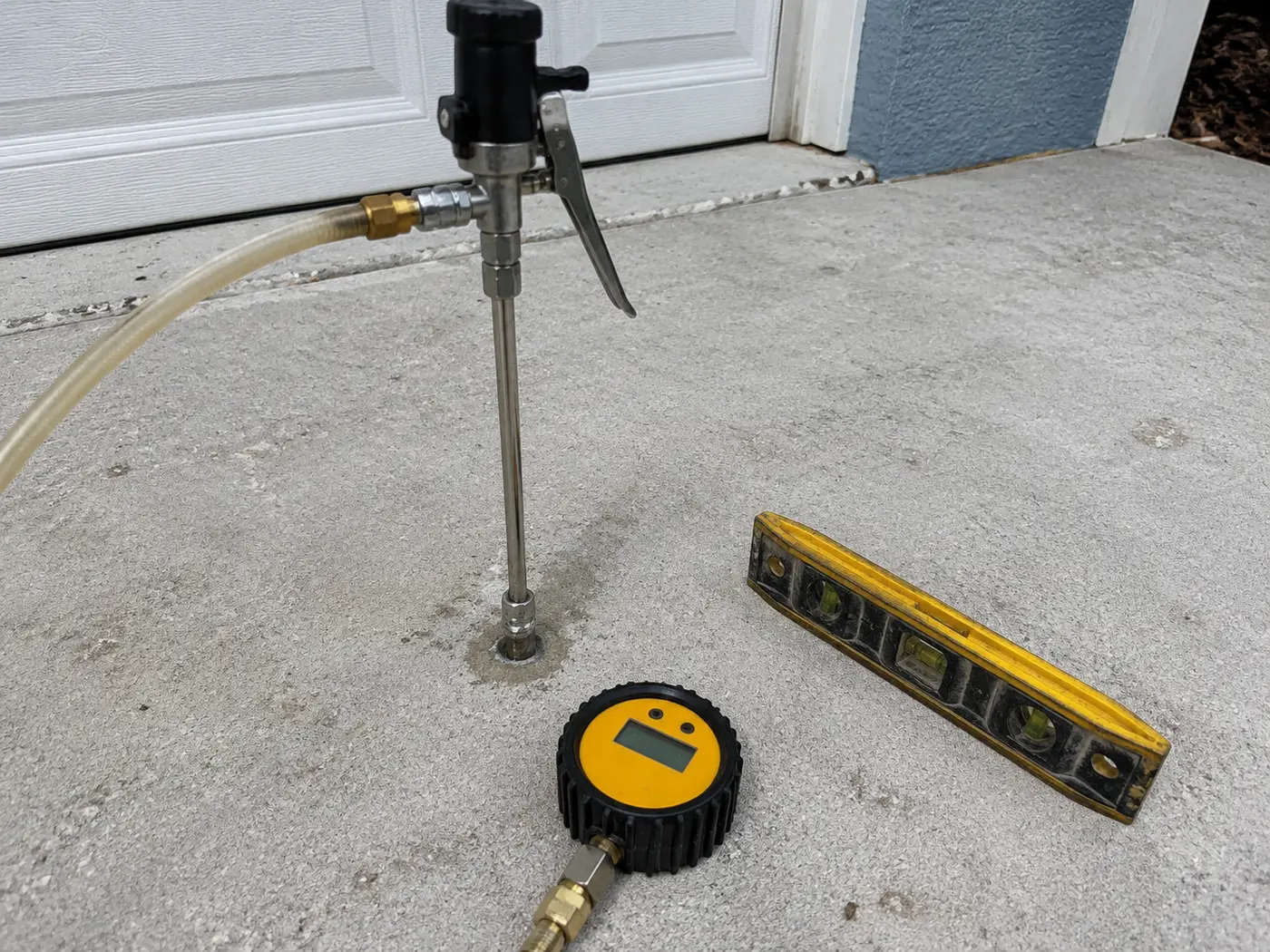
Settled panels lifted through 5/8 in ports with 2.5 to 4 lb/ft³ polyurethane foam, monitored to 1/8 in on a laser, filling the void that caused the settlement and back in service within about fifteen minutes.
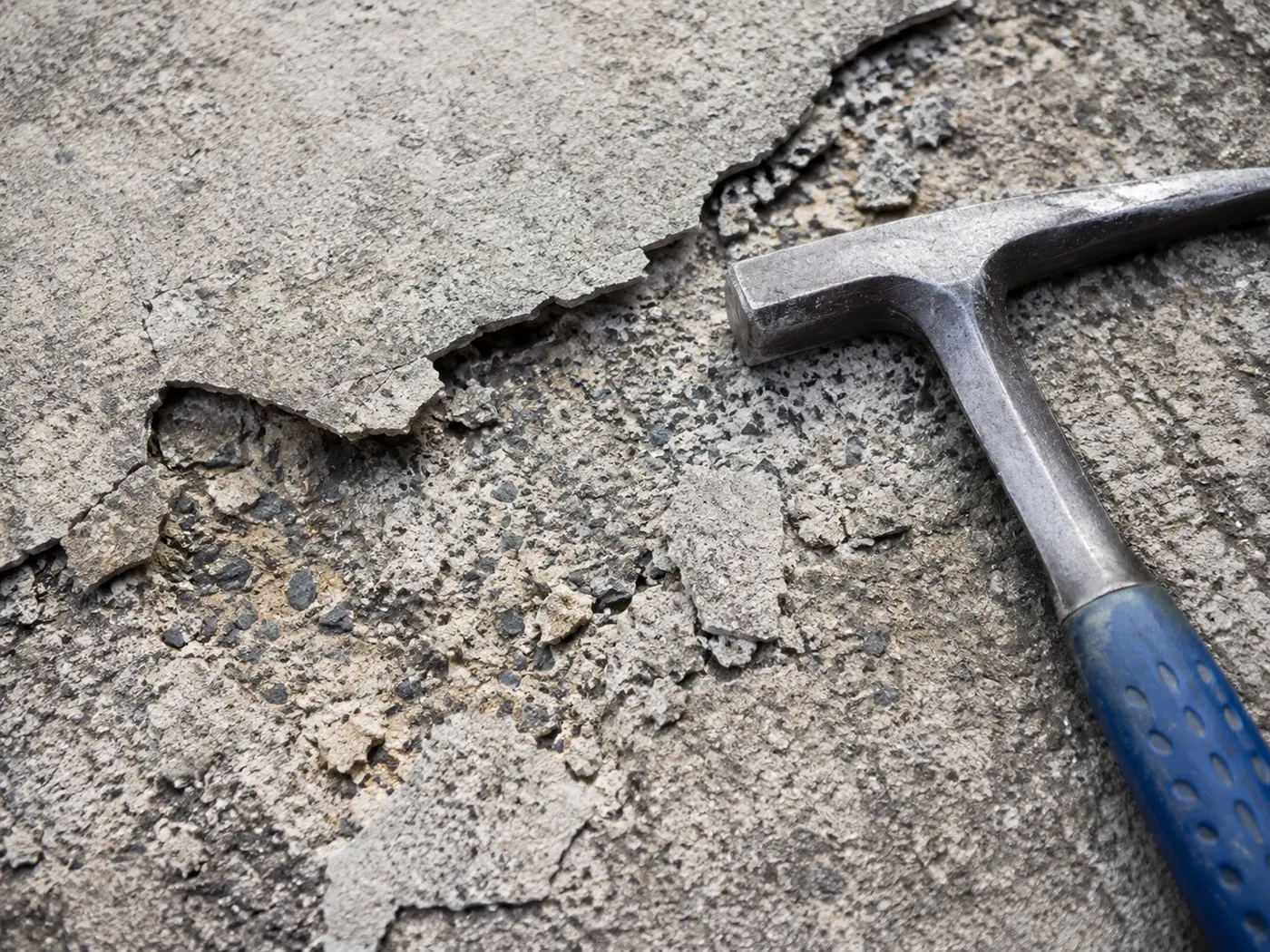
Delaminated surface layer sounded, marked and mechanically milled back to solid concrete, then re-capped with a polymer-modified cementitious compound over a scrubbed-in bonding slurry.
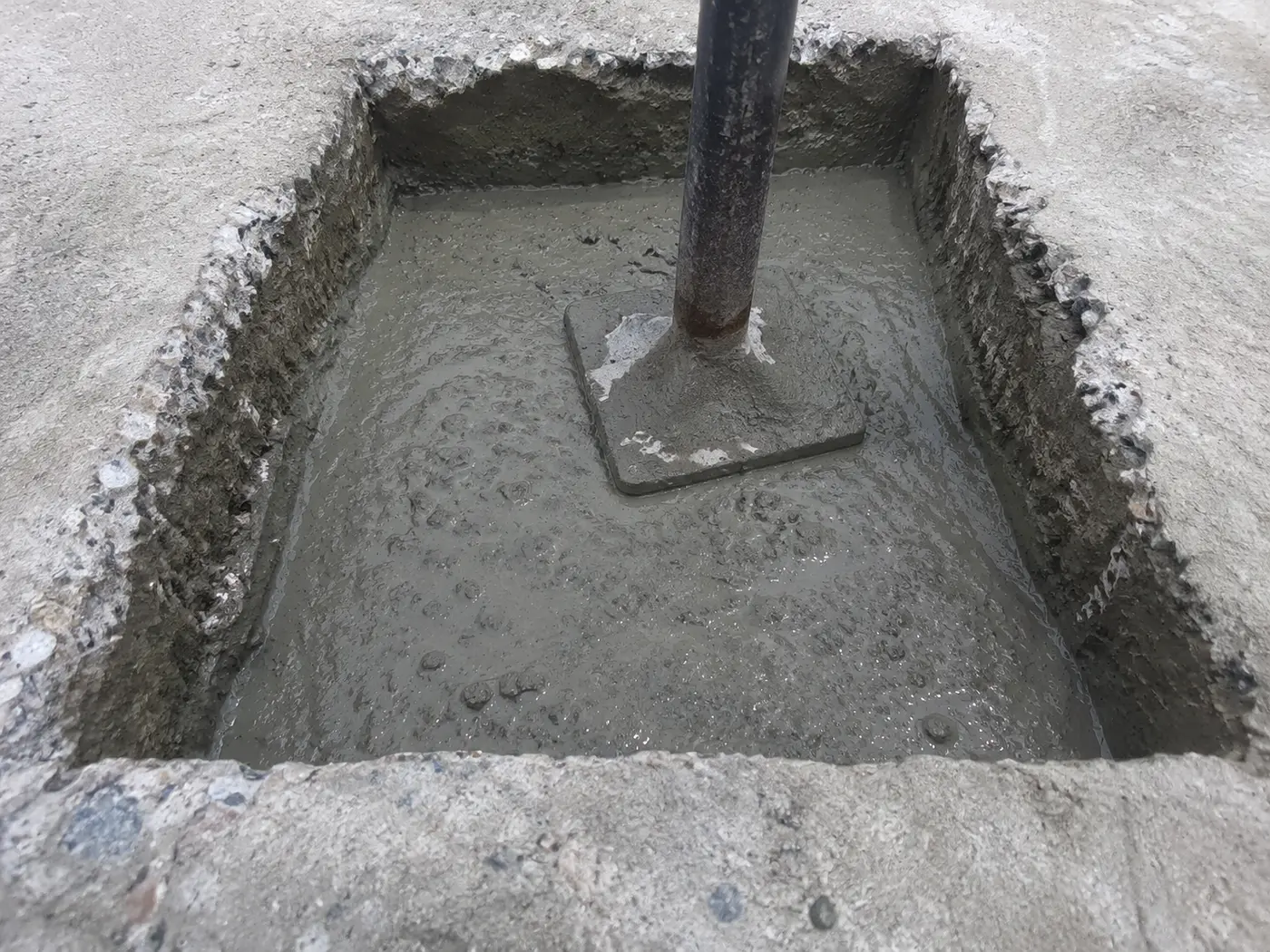
Failure squared out to vertical faces at least 2 in deep, excavated to sound base, bonded and filled with rapid-setting 5,000 PSI structural concrete that takes traffic in four to six hours.
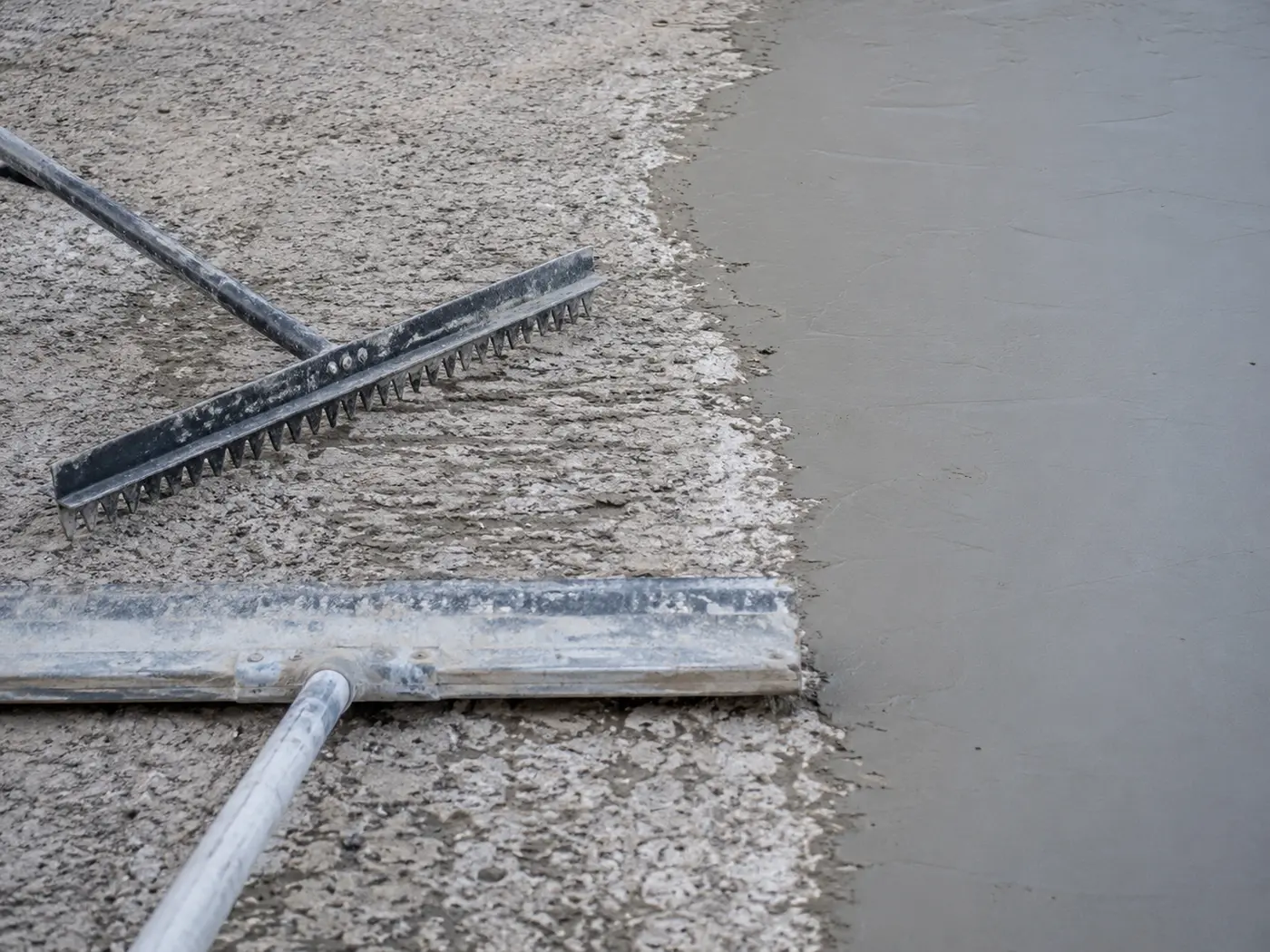
A 1/4 to 3/8 in polymer-modified cementitious overlay bonded to a mechanically scarified slab at CSP 3–4, with every existing control joint carried through so it cannot reflect a crack.
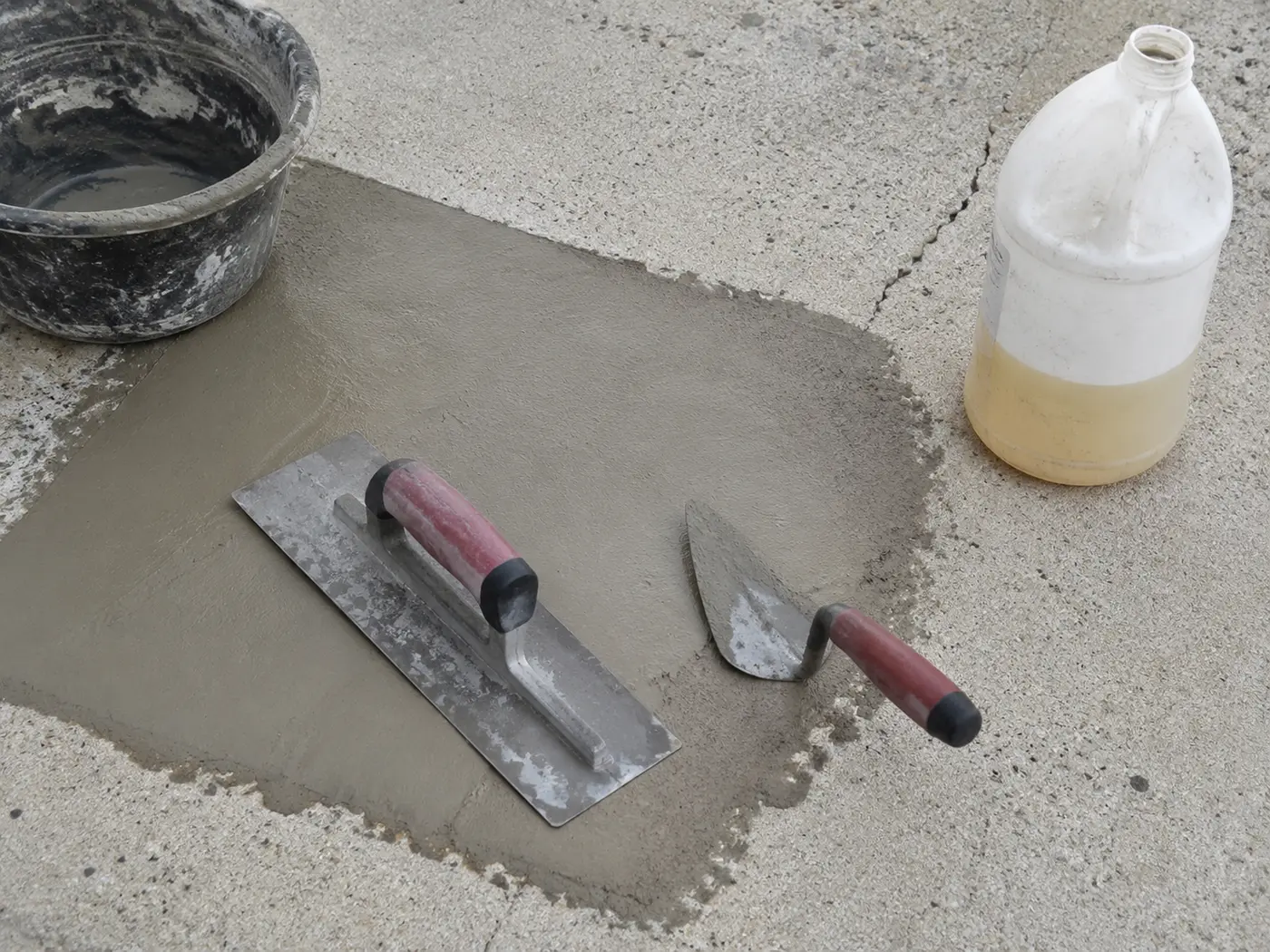
Structural polymer mortar patching, epoxy injection for stable cracks and undercut edge rebuilds, all squared out with vertical edges rather than feathered, which is why the patches are still there in five years.
Decorative concrete is an innovative approach that elevates ordinary concrete into a visually striking and genuinely versatile material. Through techniques like stamping, staining, colour hardening, exposed aggregate wash-out and diamond polishing, a plain slab is transformed into something that emulates natural stone, brick, cobble, tile or even timber plank, at a fraction of what those materials cost to lay and with none of the sand joints that weed and wash out in a Florida summer.
Our design team enjoy pushing what is possible here, working the pattern, colour and border layout around the stone veneer, roof tile and brick already on your house so the finished driveway looks designed rather than ordered from a card. Every decorative finish sits on the identical structural slab we would build for a plain driveway, the base, the steel and the joint spacing do not change, only the surface does.
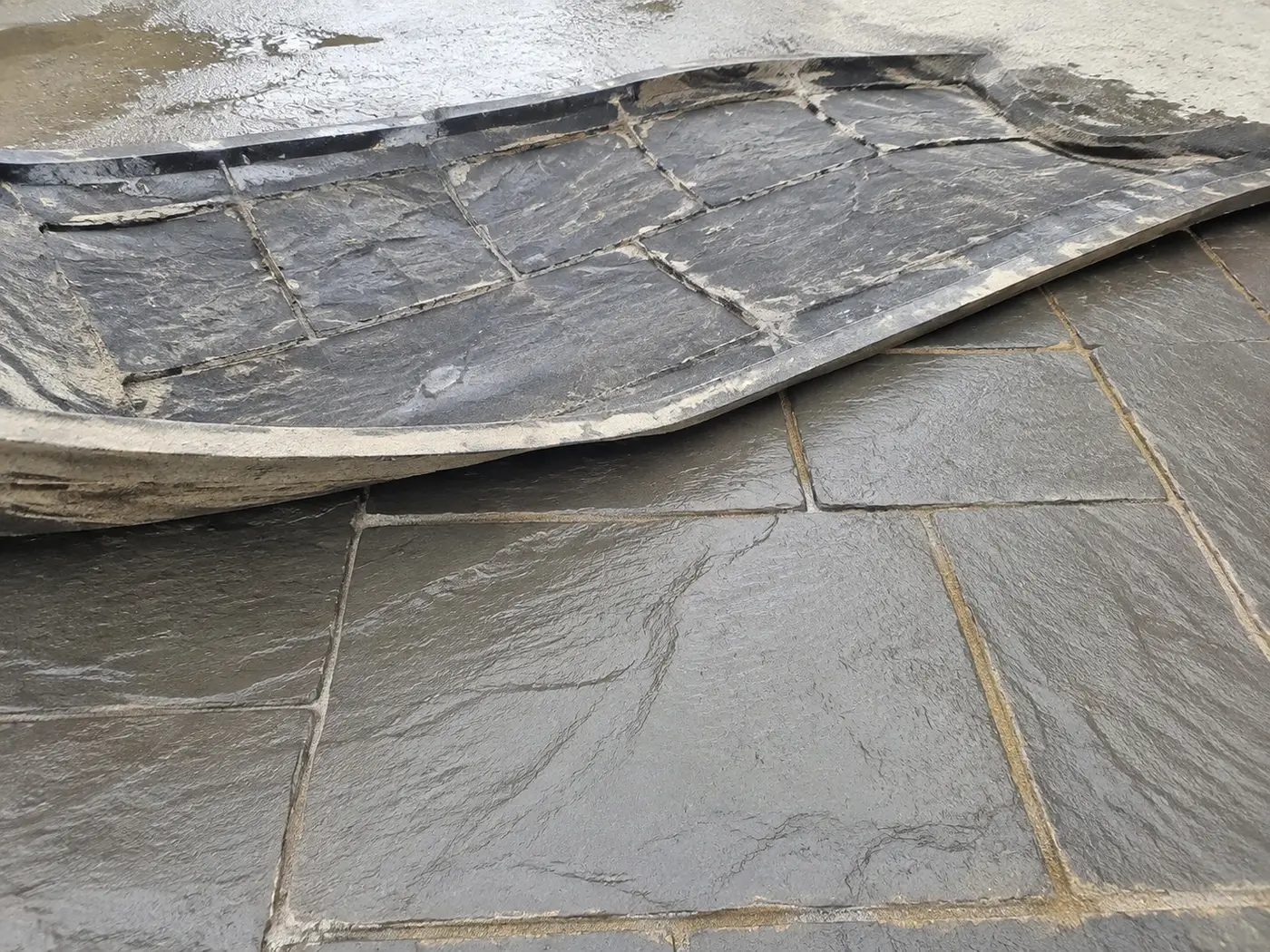
Ashlar cut slate, Roman cobblestone and random sandstone pressed into a 4,000 PSI slab with 3/8 in pea gravel for impression depth, broadcast colour hardener and antique release, sealed with UV-stable acrylic.
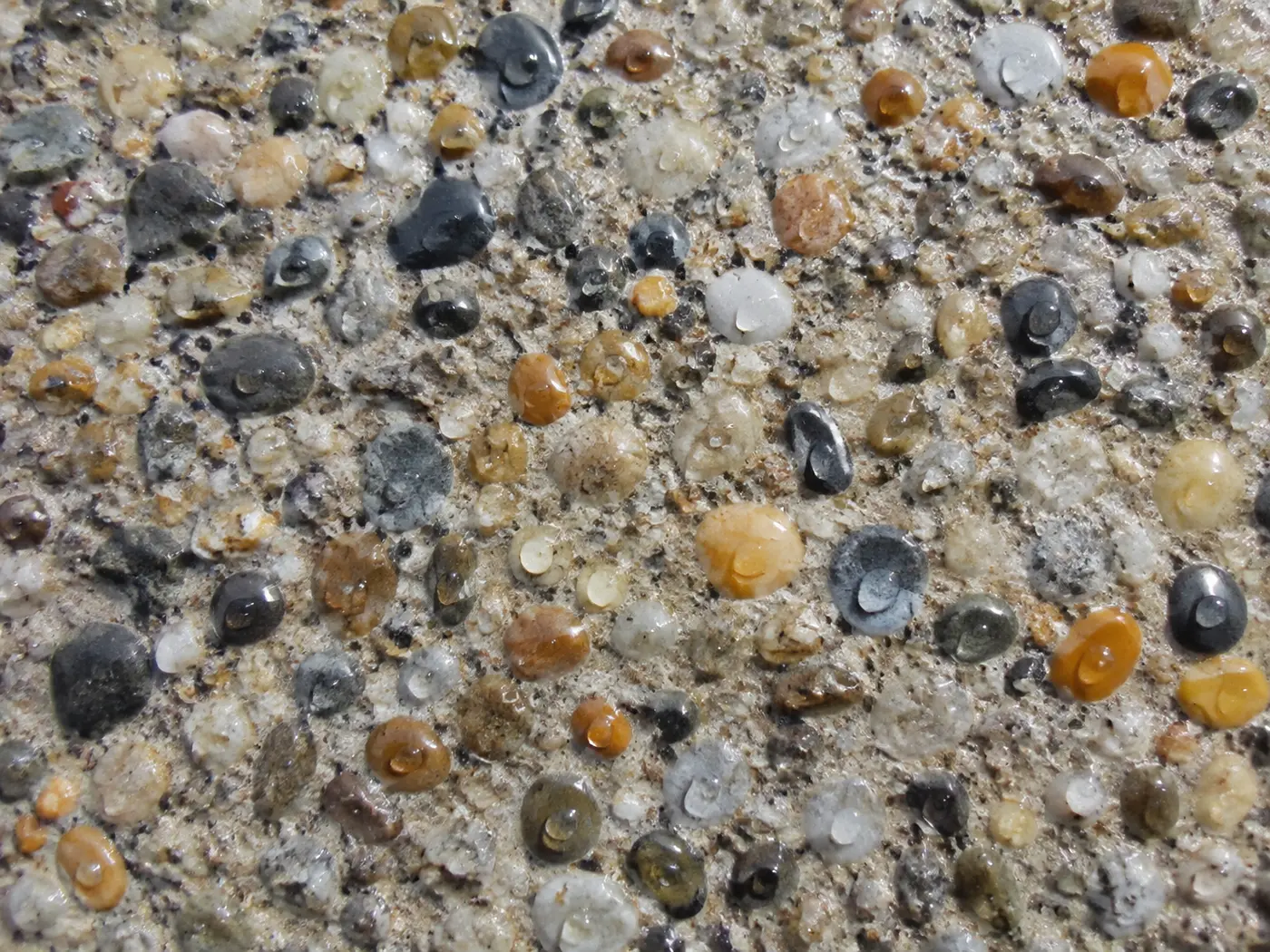
River rock, pea gravel or crushed granite revealed by a top-surface chemical retarder and a 2,000–3,000 PSI wash-out, giving the highest wet traction of any finish we offer.
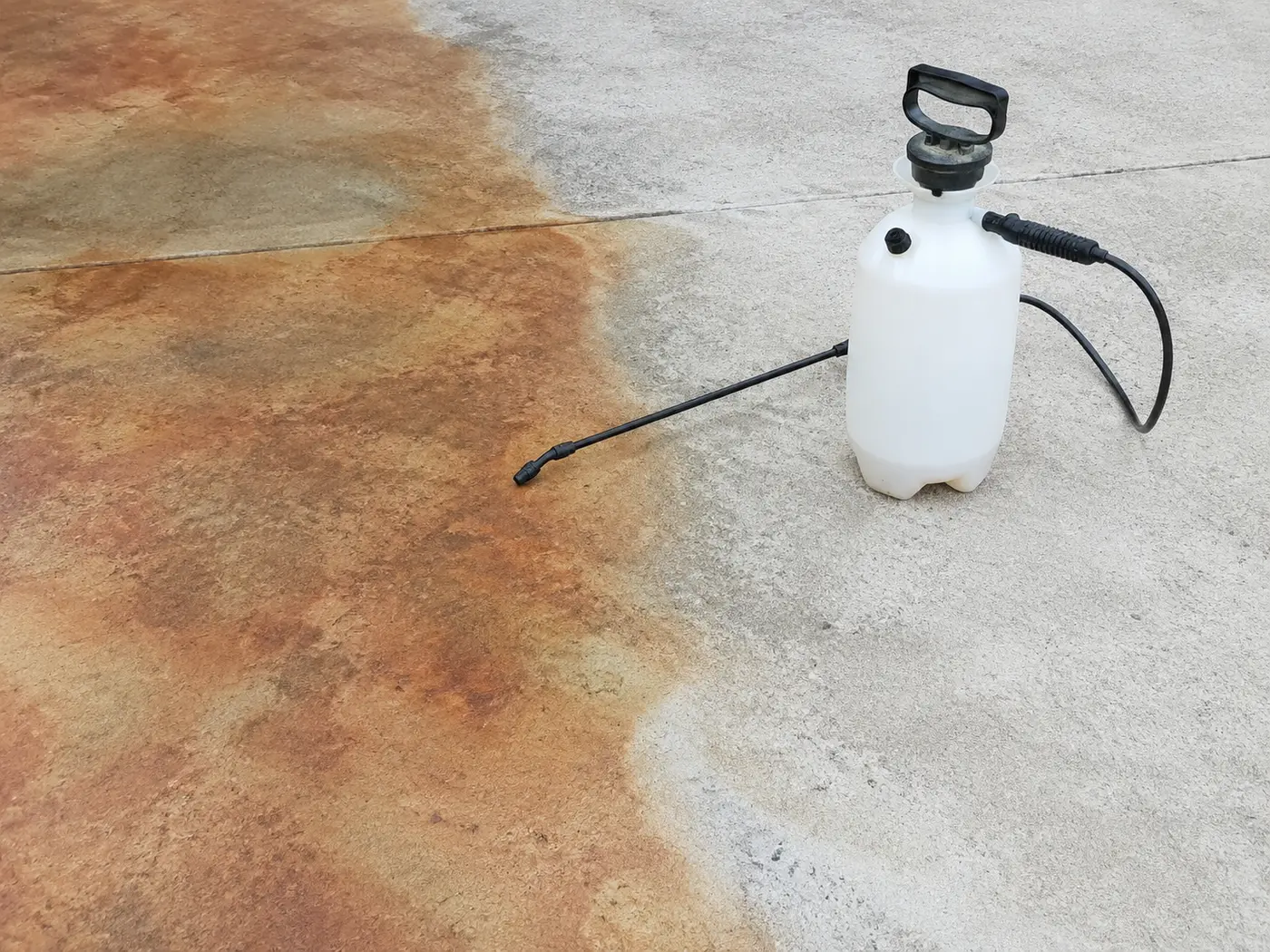
UV-stable synthetic iron oxide batched through the mix, acid stain reacting with free lime in the cured slab, or water-based acrylic stain, each with a different honest lifespan under Florida sun.
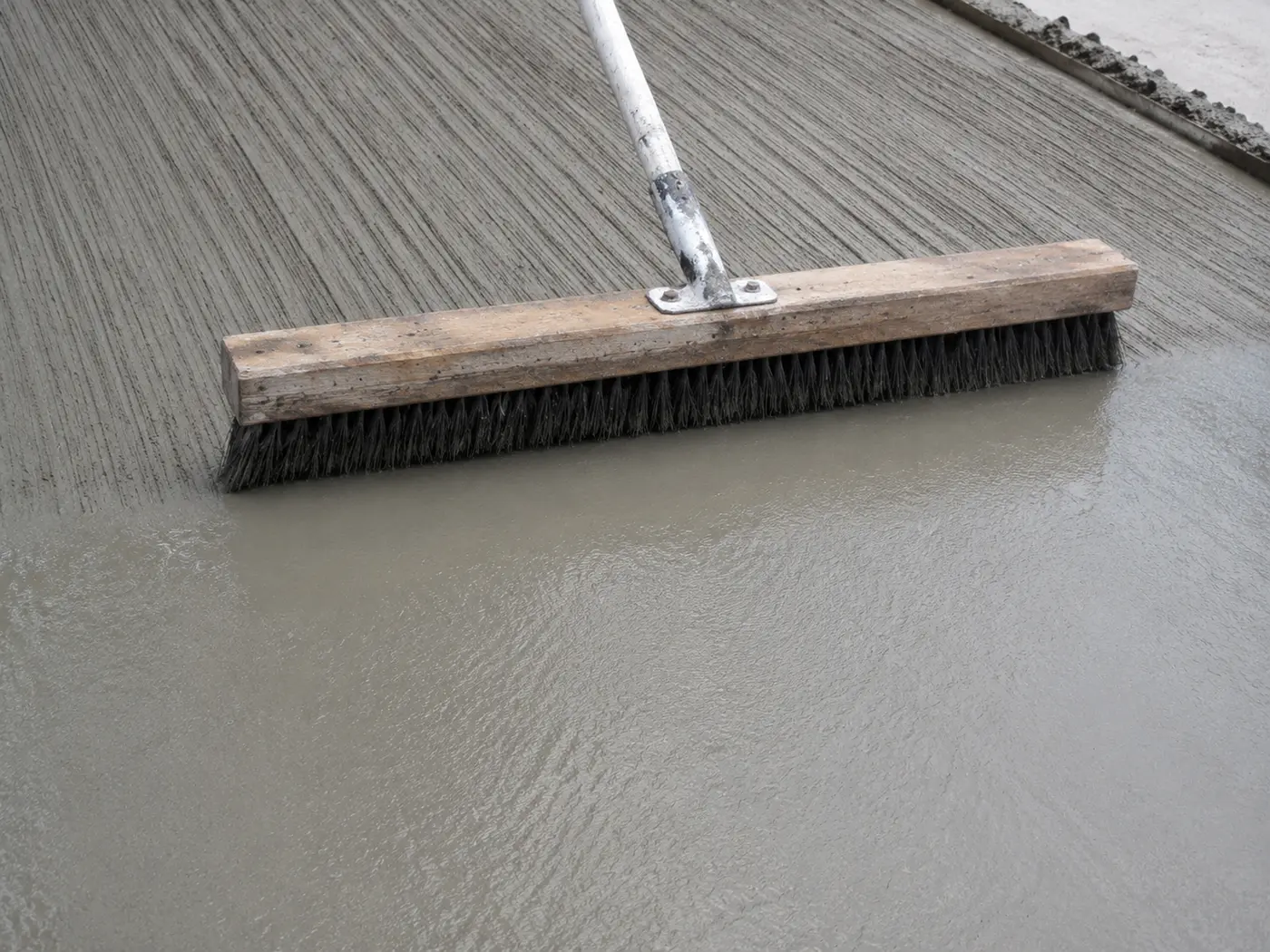
The Florida standard done properly: 3,000–4,000 PSI, medium wire or horsehair striations drawn across the slope, tooled edges and joints cut at least 1 in deep within twenty-four hours.
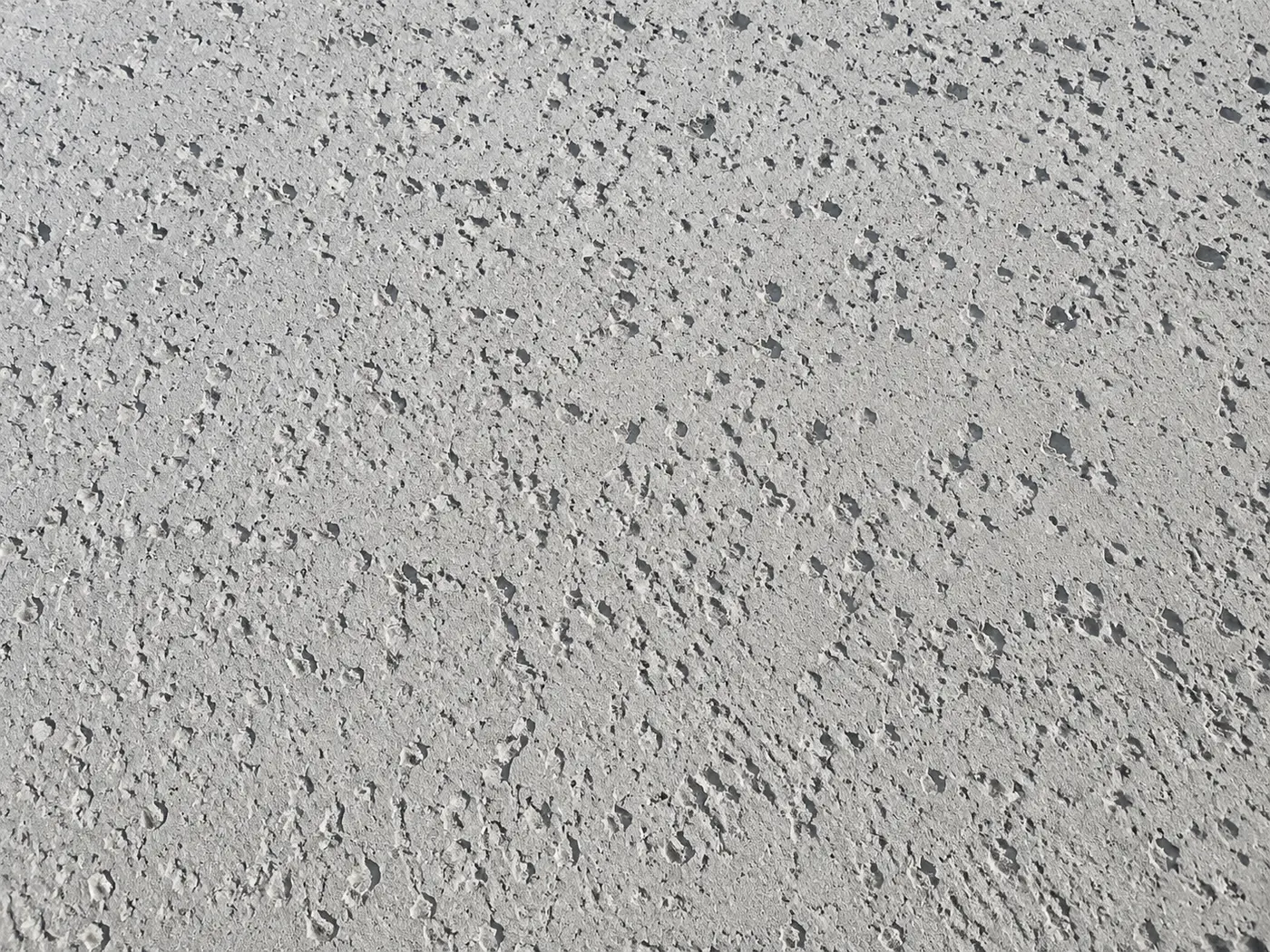
Coarse rock salt broadcast at 3 to 12 lb per 100 sq ft and washed out for shallow pitting, or swirl-float and slate-skin texturing worked by hand inside the set window.
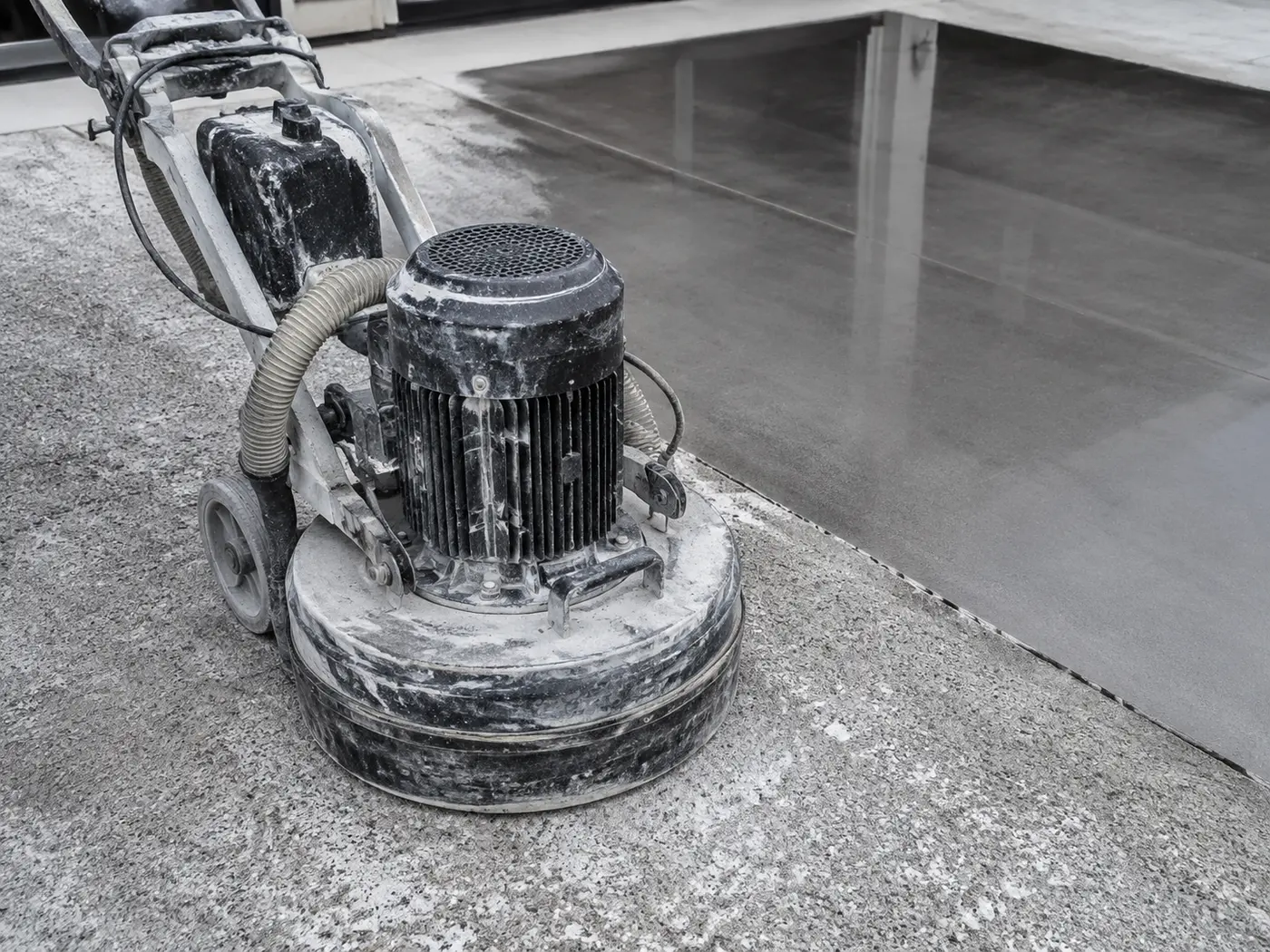
Multi-stage diamond grinding from 50 to 800 grit with lithium silicate densifier, or monolithic slabs stamped in herringbone and cobble patterns with no sand joints to weed or re-sand.
Specialty and structural concrete is where the load case or the jurisdiction writes the specification rather than preference. A Class-A motorhome can exceed thirty thousand pounds and a loaded trailer concentrates much of its weight onto a jack foot, so RV and boat pads step up to 4,500 PSI, six inches deep, over six inches of compacted base. Right-of-way aprons are built to municipal standard because every delivery and refuse truck crosses them. Commercial paving moves to 5,000 PSI with rebar mats and dowelled joints that transfer load between panels.
The materials change with it: heavier Grade 60 steel at tighter centres, deeper limerock or recycled crushed concrete bases, polymer channel drains piped to a legal outfall, semi-rigid polyurea joint fill, and bent radius reinforcement on curved work. What to consider before starting is what actually parks on the slab, whether the work touches a right-of-way or drainage easement, and how setback and lot coverage limits affect the footprint you can build.
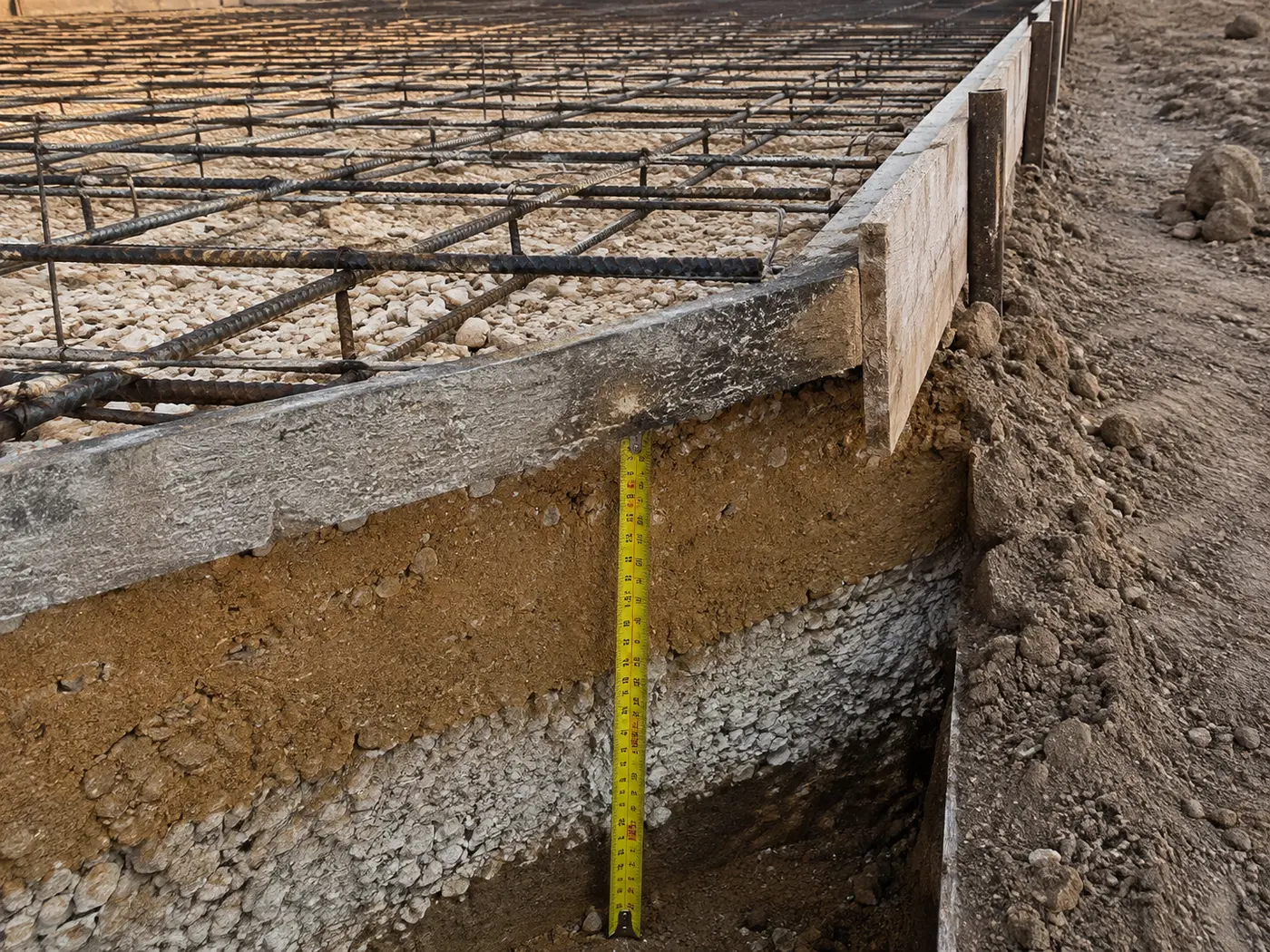
6 in slabs at 4,500 PSI with 8 in thickened edges, #4 Grade 60 rebar on 12 in centres over 6 in of compacted limerock, sized to the actual vehicle including slide-outs and jack positions.
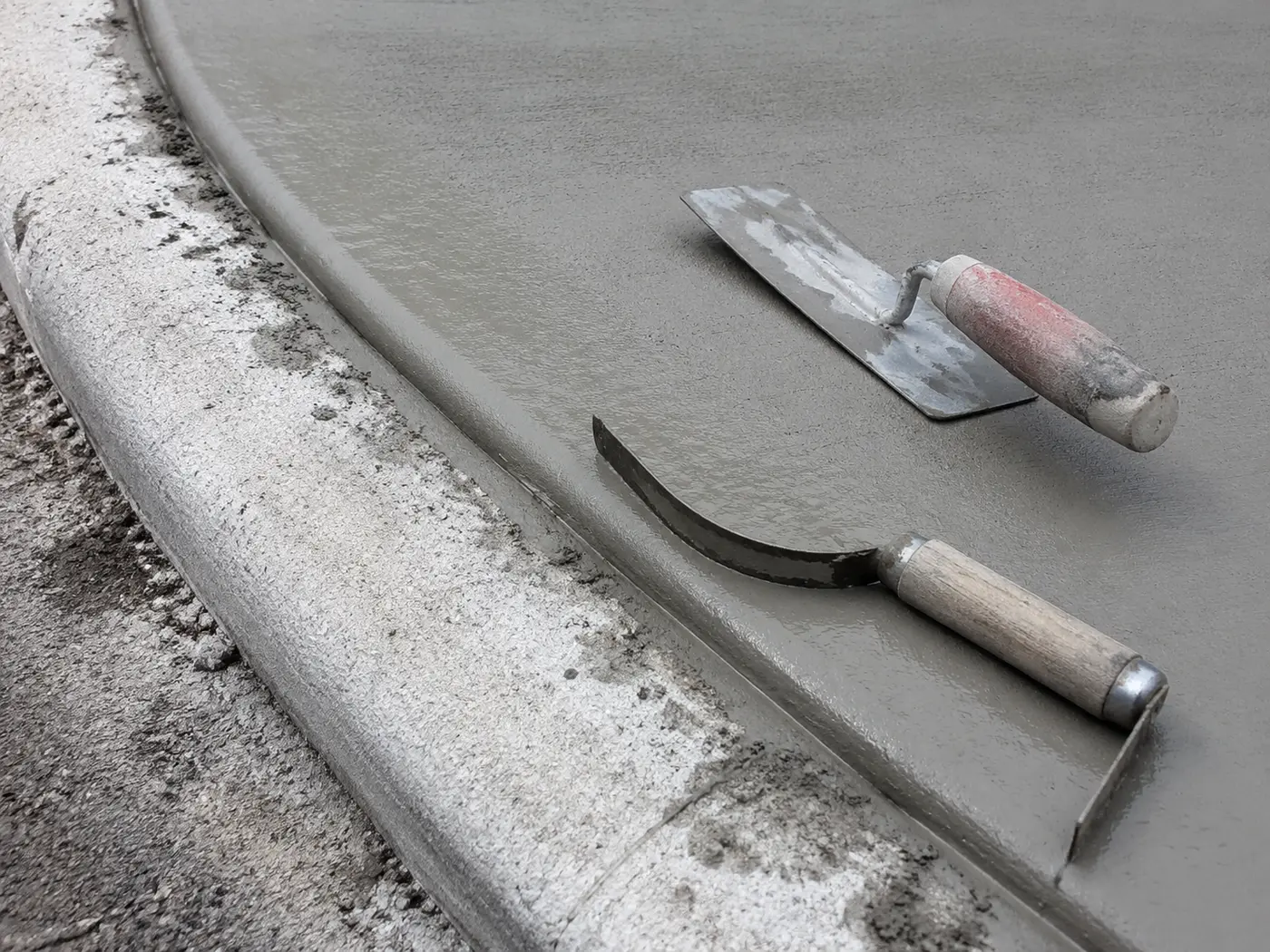
Built to City of Lakeland and Polk County standards at 6 in minimum thickness, 3,000–4,000 PSI with fibre mesh or steel, and a full-depth expansion joint at the property line.
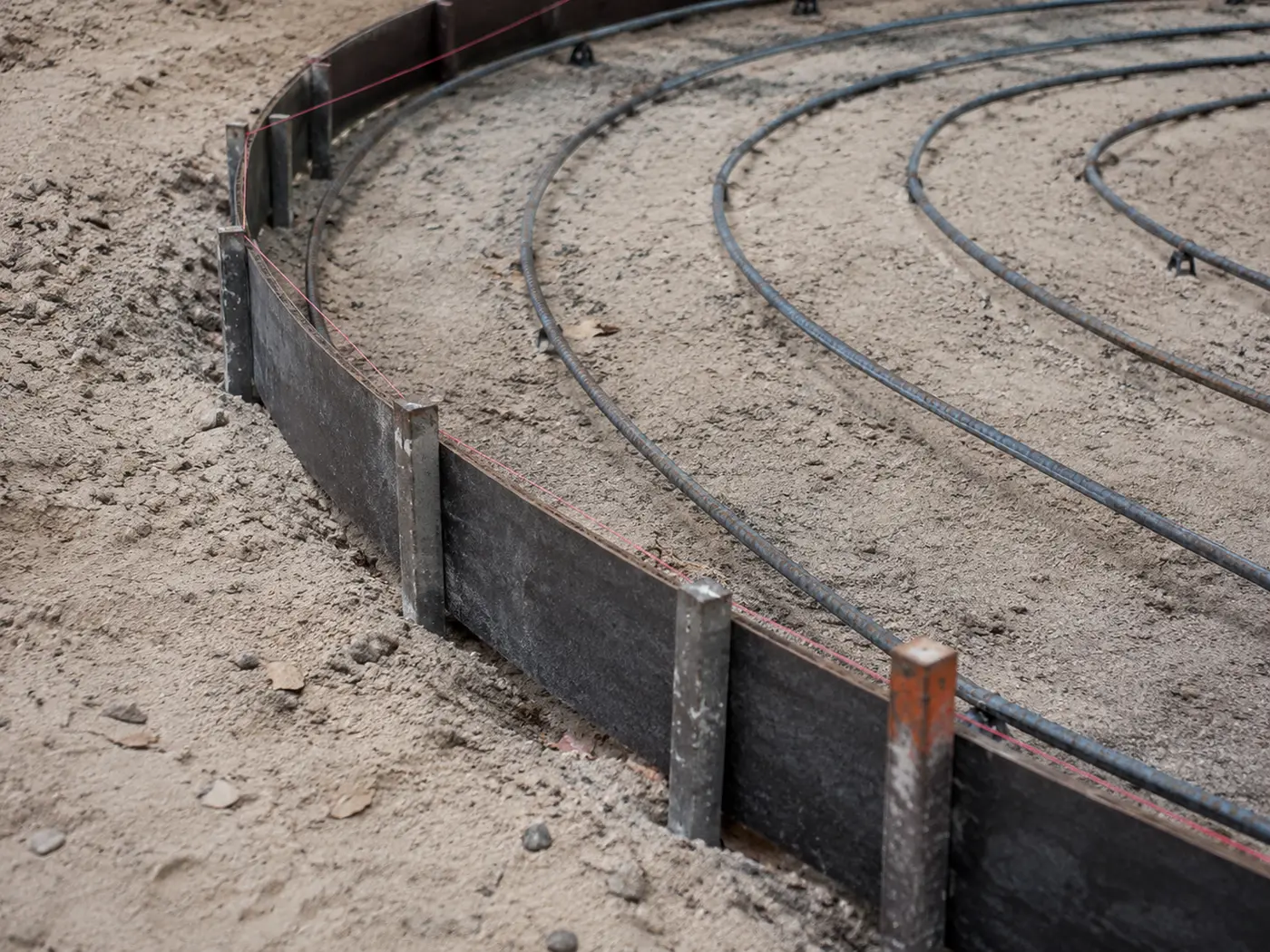
5 in structural depth through the curve with #4 rebar bent to the radius, flexible bender-board forming, a 24 ft minimum inner radius and radial joints cut perpendicular to the line of travel.
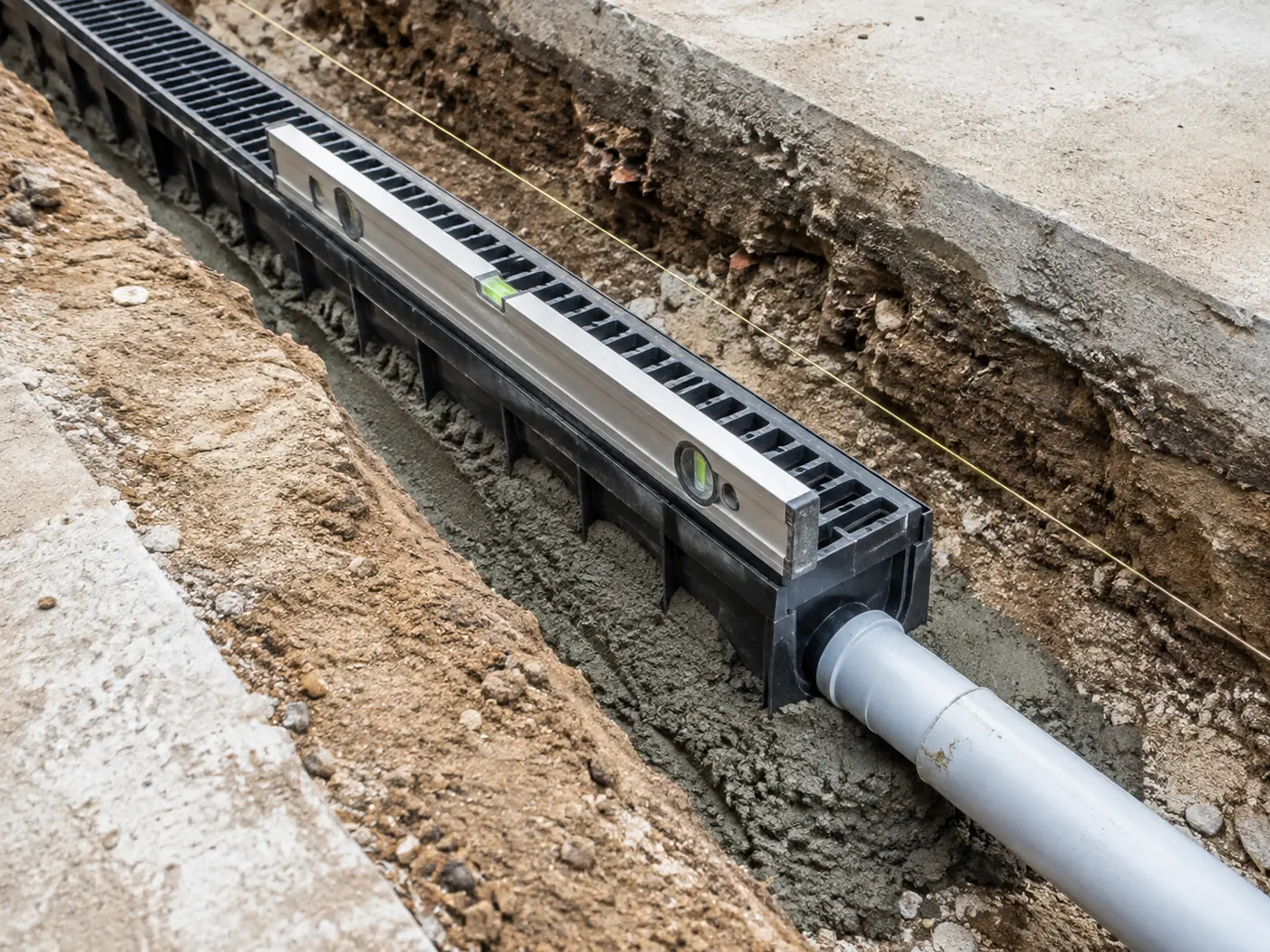
Polymer channel drains, catch basins with sediment sumps and flush slot drains cast into the slab, piped in solid PVC at 1 percent minimum fall to a swale or approved outfall.
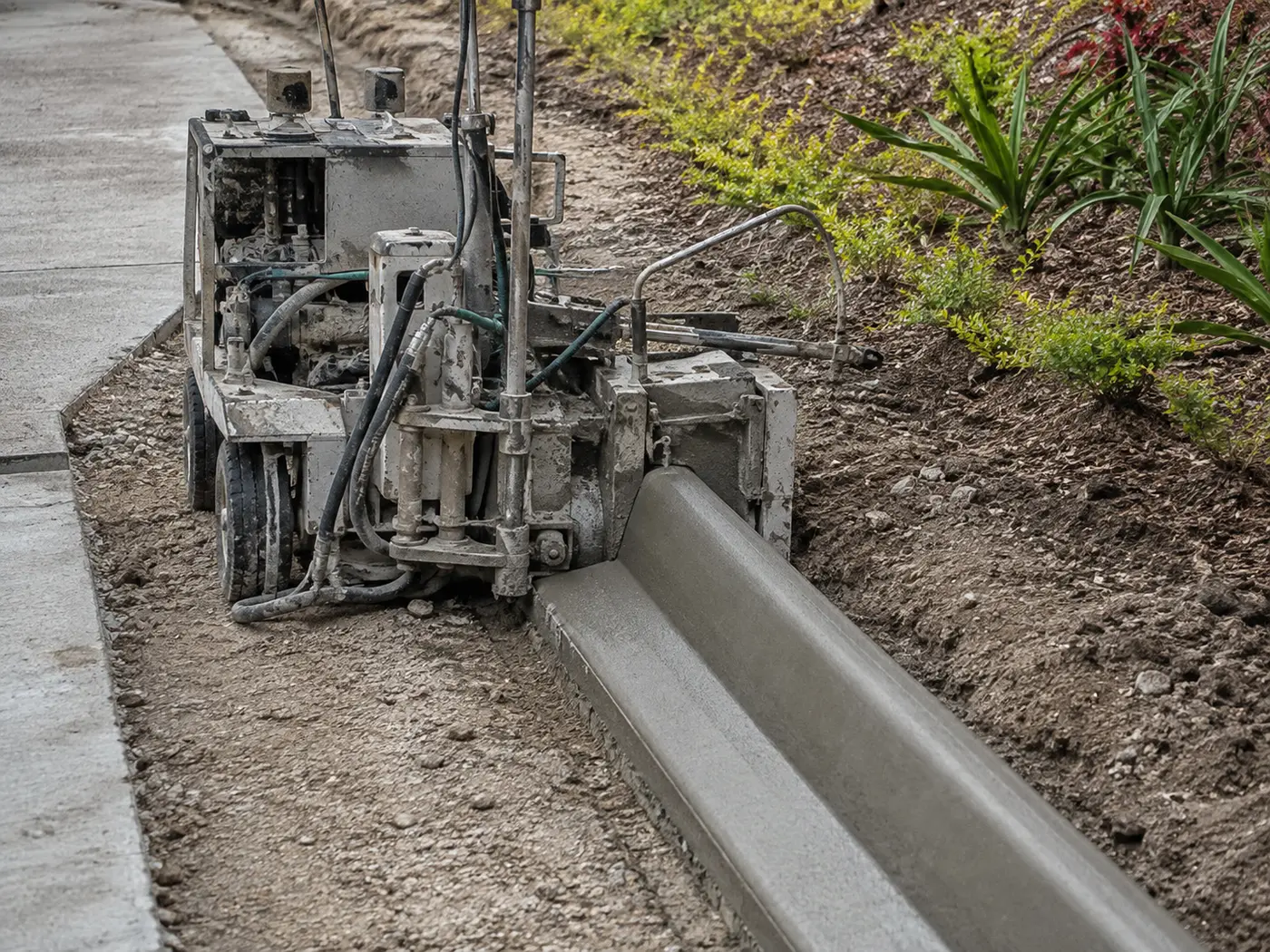
Continuous machine-extruded 3,500 PSI curbing in slant, mower, ribbon and square profiles, tooled at 3 to 4 ft, holding sub-base sand back from an otherwise unsupported slab edge.
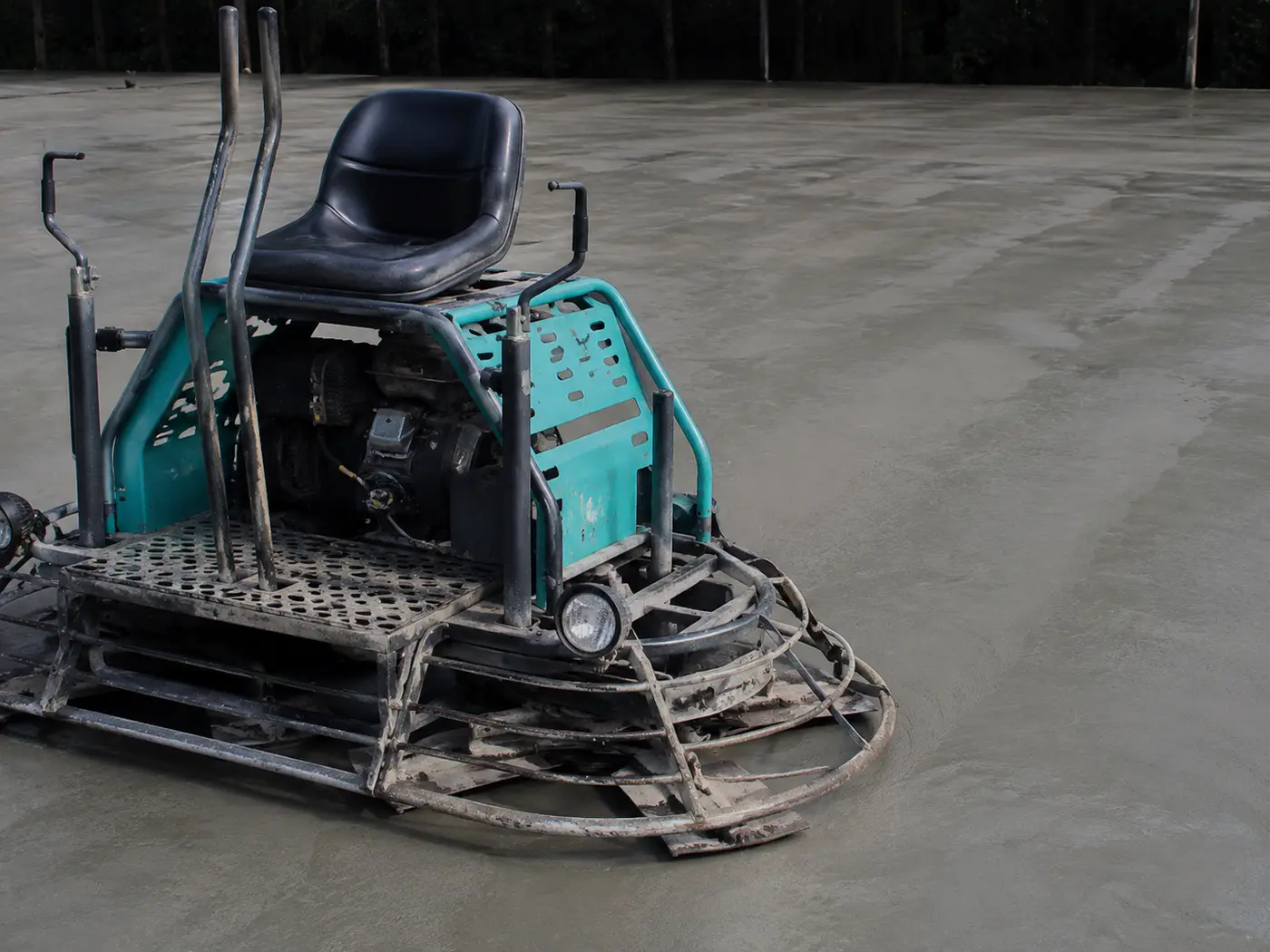
5,000 PSI at 6 to 8 in with #4 or #5 rebar mats on 12 in centres, dowelled construction joints for load transfer, laser screed placement and semi-rigid polyurea joint fill.
These are the figures a residential driveway is normally built to in Central Florida, and they are worth having in front of you when you compare quotes. A low square-foot rate almost always means one of them has been reduced, usually base depth, or a steel grid swapped for fibre in the mix.
Ask any contractor to confirm which of these they are working to, including us. The figures that matter most are base depth, whether compaction is checked, the reinforcement type and where it sits in the slab, and when the control joints get cut. None of those are inspectable once the concrete is down.
Does Florida weather crack concrete driveways? Does the heat matter? Why do driveways here go green, and why does sealer stop working after a few years? These come up on nearly every quote, and the answers all trace back to the same handful of site conditions.
Central Florida is the design condition rather than an afterthought. Sandy sub-grade that drains fast and migrates readily, Bone Valley clay and organic pockets toward Mulberry and Bartow, a seasonally high water table around the Lakeland lakes, near-continuous UV, microburst rainfall that delivers inches in an hour, and thermal contraction when an afternoon storm hits a slab at 140°F. Between them they set the base depth, the reinforcement, the joint spacing, the cross-slope and the re-sealing interval on every driveway we pour.
Well-draining, high-friction sands across most of Lakeland. Standing water is rarely the problem; sand migration washing support out from beneath slab edges is, which is why every perimeter is thickened to 6 in.
Expansive clay and high-organic soils around Mulberry, Bartow and south Lakeland have genuinely low bearing capacity. Those areas are over-excavated and rebuilt on engineered base rather than poured on native sub-grade.
Around Lakes Hollingsworth, Mirror and Morton, seasonal groundwater drives wet-dry soil contraction. Unreinforced slabs on that ground crack longitudinally down the length of the drive.
Near-continuous ultraviolet exposure chalks unsealed topical colour and degrades sealer films, which is why decorative finishes here run a two to three year re-seal cycle rather than the five quoted on national packaging.
Microburst rainfall delivers several inches in an hour. Drainage is sized for peak intensity, and the 2 percent cross-slope away from the structure is what stops water pooling at the garage threshold.
A slab at 140°F hit by an afternoon thunderstorm contracts fast. Control joints spaced at two to three times the slab thickness in inches give that movement a planned line to travel on.
Roughly eighty percent of a driveway is groundwork. What decides whether it is still flat in twenty-five years happens before any mixer truck arrives on site.
We measure the area, check the fall from the garage to the street, look at where water currently goes in a storm, and identify sub-grade risk before pricing anything.
Applications go to the City of Lakeland or Polk County as applicable, and 811 Sunshine State One Call marks buried services before a machine touches the ground.
Topsoil, organics and any existing slab come out. We dig to firm bearing material rather than a fixed depth, and soft or organic pockets are removed and replaced rather than compacted in place.
Limerock or recycled crushed concrete placed in lifts and compacted in lifts to a 95% Modified Proctor target, graded to hold the finished 2 percent cross-slope before any steel is set.
2x6 forms staked every 4 ft to a string line, then the rebar grid tied on 18 in centres and lifted on 2 in chairs so the steel sits in the middle third of the slab.
Concrete placed, screeded, bull floated and finished to the specified texture, control joints saw cut within twenty-four hours, then a seven day wet cure before vehicles.
Lakeland FL Concrete Driveways is the driveway contractor Lakeland and Polk County homeowners and businesses call first. Twelve years of concrete, asphalt and paver installation, replacement, repair, decorative and specialty work across Lakeland, Winter Haven, Bartow, Auburndale, Plant City, Mulberry, Haines City, Davenport and the surrounding communities. Skilled craftsmen, premium materials, and every build meeting or exceeding Florida Building Code and local requirements.
Concrete is unusually hard to compare on price, because two quotes for the same driveway can differ by thousands and the difference is almost entirely in what disappears under the slab: excavation depth, whether the base was compacted, whether there is a tied steel grid on chairs or just fibre in the mix, and when the control joints were cut. So we publish the numbers and itemise them, which means a low square-foot rate cannot quietly hide a two-inch base. We also say when not to spend, because repair, resurfacing and slab lifting are frequently better value than replacement.
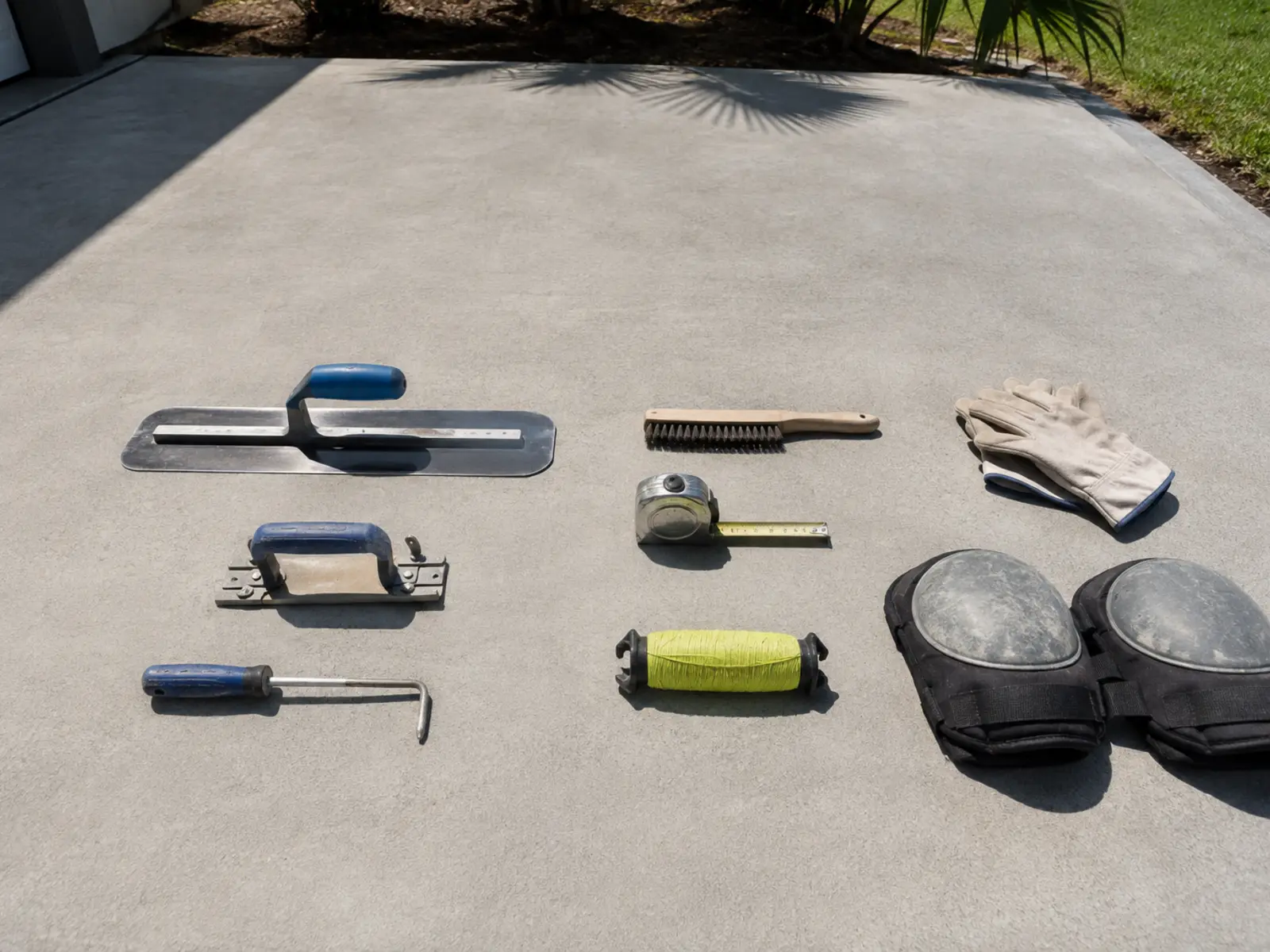
Trowel, edger, groover, brush and string line. Most of what decides a driveway happens before any of these come out.
Straight answers, including the ones that talk you out of spending money.
Far more depends on what is under the slab than on square footage. Clean sand takes a standard four-inch compacted base; an organic pocket or clay layer needs over-excavation and imported fill, which is real cost and should be its own line. Demolition, slab thickness, reinforcement and truck access all move the figure.
Four inches over a compacted four-inch limerock base for cars and light trucks, five to six where an RV, boat trailer or delivery truck crosses. Right-of-way aprons require six inches regardless. Edges are thickened to six on every pour, because sandy sub-grade means edges fail before middles.
For most jobs, yes. Whether a permit is required depends on the scope of the work, and one is needed separately for anything affecting a right-of-way, drainage easement or setback. We prepare and submit the application and attend the final inspection.
Both. Polypropylene micro-fibre controls plastic shrinkage cracking in the first hours and does it well, but carries no structural tensile load and cannot hold crack faces together. A Grade 60 rebar grid on chairs does. Be cautious of fibre offered as a substitute.
The rough test is whether the problem is on the concrete or under it. Surface wear and shallow spalling on a flat slab are resurfacing jobs. Panels at different heights, cracks with vertical displacement, or a hollow sound underfoot mean the sub-base has failed.
Stamped, stained and coloured surfaces every two to three years, because the sealer protects pigment from a UV load that is effectively continuous here. Plain concrete with a penetrating repellent runs a four to five year cycle.
Based in Lakeland and working county-wide on the same specification and pricing.

Call for a free on-site measure and an itemised quote with the groundwork priced separately. No obligation, and we will tell you if a smaller job is the right one.
863-734-6623