
Coquina Shell
Cemented shell rock, cream through pale tan, with visible fragment structure.
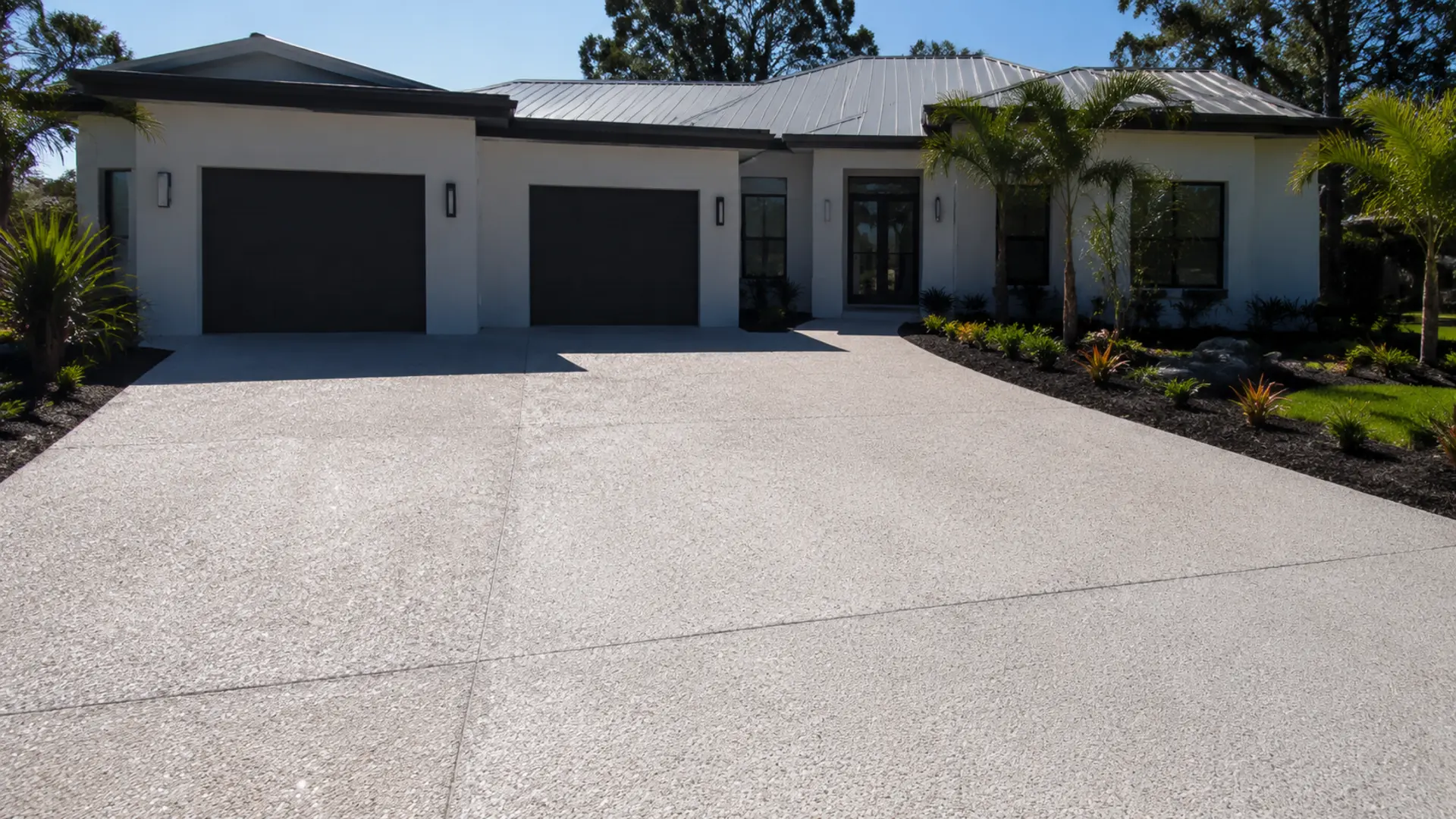
Lakeland Concrete Driveway Experts pour exposed shell concrete driveways and entry courts for homeowners across Lakeland and Polk County. Our reputation rests on delivering every project we take on, using the right aggregate and exposure method for the material, meeting or exceeding Florida Building Code, and specifying around the property and the Central Florida sun it has to stand up to.
Exposed shell is the same technique as exposed aggregate with a distinctly Florida material, and it is handled differently because coquina is softer and more brittle than granite. Wash pressure comes down, the tip changes and the exposure runs shallower, or whole shells lift out of the matrix instead of being revealed. We have poured full shell frontages on unshaded lots where the temperature difference mattered, and shell borders framing plainer fields where a full coastal look was too strong. Below covers the shell and matrix options, why it suits a Florida frontage, working with a softer aggregate and living with it.
The finished look of an exposed shell driveway is a combination of the shell blend and the colour of the paste it sits in. Coquina reads cream through pale tan, crushed oyster and clam bring more iridescence, and a buff pigmented matrix closes the gap between shell and background for a softer, sandier result.
Cemented shell rock, cream through pale tan, with visible fragment structure.
Larger flatter fragments with more iridescence and visual movement.
Shell mixed with rounded stone for a more varied and slightly tougher surface.
Standard cement paste. Highest contrast against pale shell, the most graphic result.
A warm paste that closes the gap between shell and background for a sandier tone.
A shell perimeter framing a broom or troweled centre, at a fraction of the cost.
Exposed shell concrete suits a Florida frontage for reasons well beyond the coastal look. Pale shell reflects rather than stores solar radiation, so the driveway runs measurably cooler underfoot on an unshaded lot. The colour is the shell itself so nothing fades, the texture grips in the daily summer storm, and the sealing cycle is longer than stamped work.
Pale shell reflects solar radiation instead of storing it, unlike a grey slab.
Irregular exposed fragments give real traction during the daily summer storm.
The colour is the shell itself, so UV has no pigment to bleach out of it.
Three to four years rather than the two to three stamped concrete needs.
Reads correctly against white stucco, weatherboard and pale tile roofs.
Where a driveway wraps to a deck, the temperature difference genuinely matters.
Coquina is a sedimentary shell rock and behaves nothing like granite, so working with it changes the exposure stage compared to a standard exposed aggregate pour. Fragments are brittle and a pressure washer held too close lifts whole shells out of the matrix rather than washing paste off them.
Reduced from standard, because coquina fragments lift rather than clean at high pressure.
Never a concentrated jet, which will strip whole shells out of the matrix.
Enough to read the shell clearly, shallow enough that fragments do not stand proud.
A small section opened and checked before the full slab is washed out.
Watched more closely than river rock, and shortened in high summer heat.
Not at installation and not in future cleaning, which we will tell you clearly.
This is the mix, exposure method and aftercare for an exposed shell concrete driveway. The figure that differs most from standard exposed aggregate is wash pressure, which is deliberately reduced because shell is softer and more friable than river rock.
An exposed shell driveway is a standard pour with the exposure happening the following morning. A chemical retarder holds the top paste soft overnight, then a test area is opened first to confirm depth before the full slab is washed at reduced pressure.
Shell type and matrix colour looked at on site against the house and landscaping.
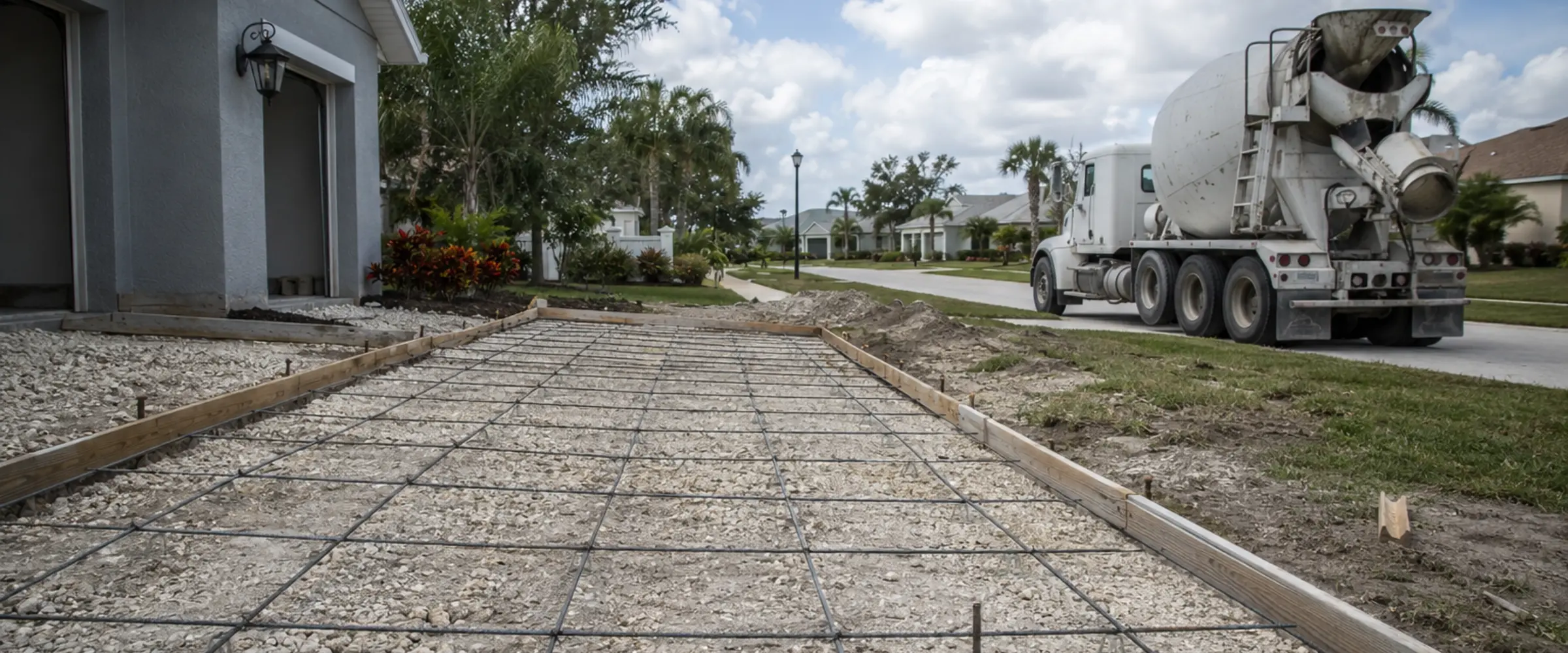
Compacted limerock base, rebar tied and chaired, forms set to a two percent fall.
The mix placed, screeded and floated with the shell evenly distributed through it.
Chemical retarder sprayed over the surface, holding the top paste soft overnight.
A small area opened first to confirm depth, then the slab washed at reduced pressure.
Control joints saw cut, then a high-solids clear acrylic once the slab has cured.
Living with an exposed shell concrete driveway means accepting a trade-off alongside the temperature benefit: a pale surface shows things a dark one hides. Green algae is far more visible on cream shell than charcoal aggregate, so under oak canopy plan on an annual wash rather than every eighteen months.
The temperature benefit is real and so is the character, but a pale surface shows things a dark one hides. Green algae is far more visible on cream shell than on charcoal aggregate, so under live oak canopy plan on an annual wash rather than every eighteen months. Oil drips also show more, which is worth thinking about if a vehicle on the drive is prone to leaving them.
Straight answers, including the ones that talk you out of spending money.
Yes, because the shell is not carrying the load. The structural work is done by the 4,000 PSI slab and rebar grid beneath, and the shell is a surface layer embedded in the matrix. Individual fragments can chip over many years, which reads as normal weathering on a textured surface.
Noticeably. Pale surfaces reflect much more solar radiation than grey concrete. It will not feel cool the way shade does, but on an unshaded July afternoon the difference between shell and a grey slab is something you feel through your shoes.
Not if the exposure depth was right. Fragments come loose when the paste has been washed too deep and less than half the shell stays embedded. Because coquina is softer than river rock we deliberately run lower pressure and a shallower exposure.
Yes. A buff pigmented matrix brings the background closer to the shell colour for a much softer, sandier result. Blending shell with pea gravel also tones it down. Or run shell only as a border and apron band around a plain field.
Rinse annually, more often under oak canopy since algae shows clearly on a pale surface. Reseal every three to four years with a high-solids clear acrylic. Never use a close-range turbo nozzle, which will damage the shell fragments.
We will bring shell and matrix samples out and show you how it reads against your house before you decide.
863-734-6623