
Light Broadcast
Sparse pitting, barely above a smooth finish. Keeps the driveway visually calm.
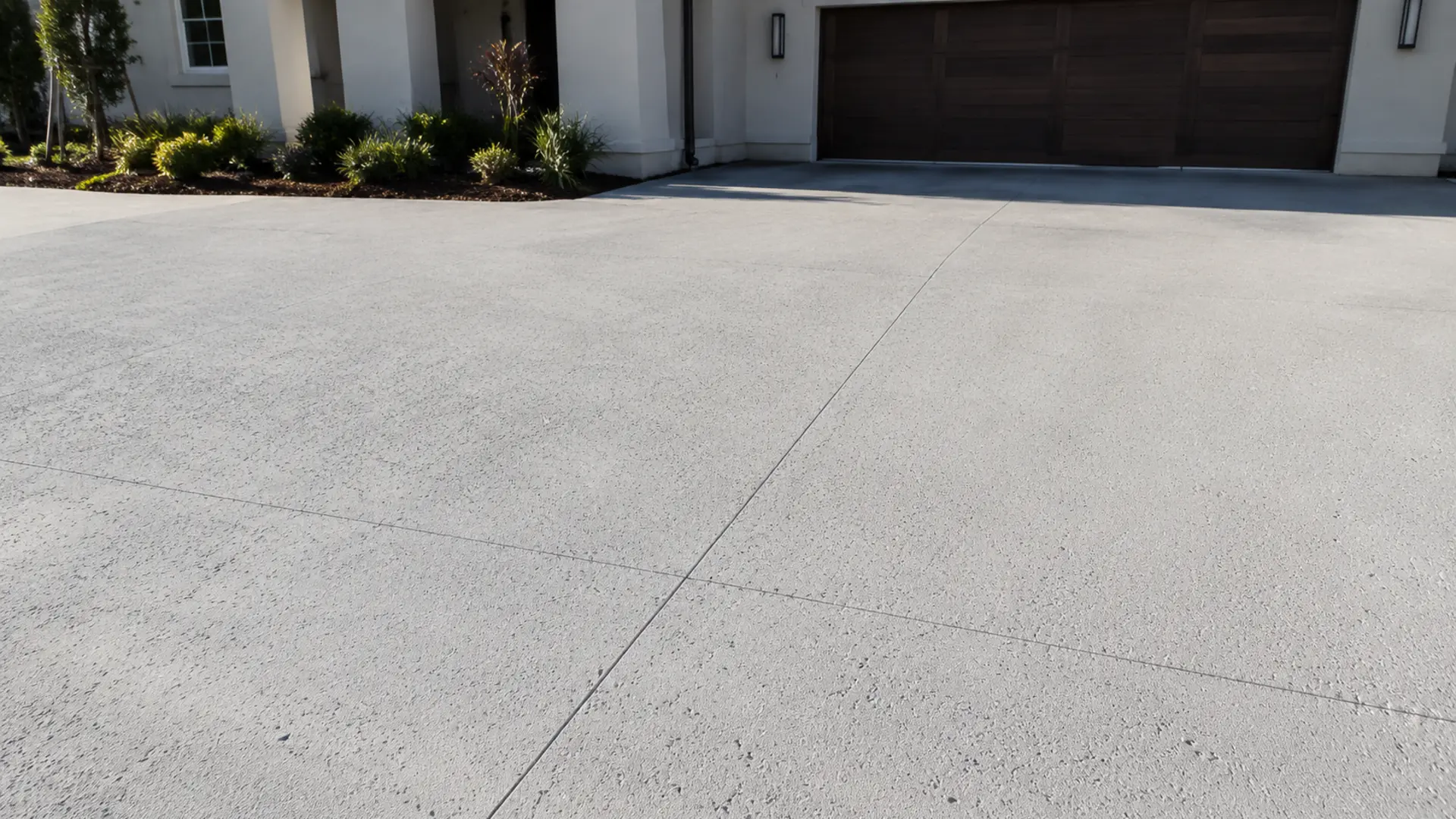
Lakeland Concrete Driveway Experts pour salt finish concrete driveways, paths and entry courts for homeowners across Lakeland and Polk County. We have built our reputation on delivering every project we take on, using the right materials for the application, meeting or exceeding Florida Building Code, and writing each specification around the property and the Central Florida conditions it has to survive.
Salt finish is a Sun Belt technique, and it works here for a specific reason: the shallow pits hold water, and anywhere that freezes they would blow the surface apart within a few winters. With no meaningful freeze cycle in Polk County the finish behaves exactly as intended. It also cannot be ordered by name, because broadcast rate changes the surface completely, we have laid light-texture drives that read almost flat and heavy-texture approaches with real grip. Below covers controlling the texture, why it suits this climate, living with it and where it sits on cost.
The same salt finish technique produces very different concrete surfaces depending on how heavily the salt is broadcast and how deeply it is rolled in. Light gives a hint of relief on an almost flat slab; heavy gives a densely weathered look with more grip and more sand to sweep out. Medium is the standard specification.
Sparse pitting, barely above a smooth finish. Keeps the driveway visually calm.
The standard specification. Even pitting, useful wet grip, still easy to clean.
Dense, deeply weathered look with more traction, though it collects more sand.
Integral pigment so the pits read darker than the field, exaggerating the texture.
A troweled band framing the pitted area for a defined, finished edge.
Walkways poured and finished the same day so texture and colour tie together.
Salt finish concrete has a genuine geographic constraint, and Central Florida sits on the right side of it. The shallow pits hold water, and anywhere with a sustained freeze that water expands and blows the surface off in sheets. With no meaningful freeze cycle here, the failure mode simply does not apply and the finish lasts as long as the slab.
The pits hold water. Nowhere that freezes can use this finish; Central Florida can.
Pitting grips in every direction, which suits areas where cars turn on the slab.
The texture is mechanical rather than a coating, so UV has no pigment to bleach.
Shallow relief means oak litter lifts off far more easily than deep aggregate.
Comfortable underfoot where a path or pool surround adjoins the drive.
A weathered texture that sits comfortably beside brick and period masonry.
Living with a salt finish concrete driveway is low maintenance rather than no maintenance, and most of it is simply keeping the texture clear. Sand and oak litter pack into the pits if left, which dulls the whole surface, and shaded drives hold moisture in them long enough for algae to take hold.
Sand and leaf litter pack into the pits if left, which dulls the whole surface.
A fan tip at moderate pressure. Never a turbo nozzle close to the surface.
If a sealer was applied at installation. Longer cycle than stamped work.
Under canopy the pits hold moisture, so treat rather than scrubbing it out.
A pitted surface holds a drip longer than a smooth one before it soaks in.
Constant wetting on one strip will show as a permanently darker band.
These are the broadcast rates, pit depths and wash-out method behind a salt finish concrete driveway. Worth noting: the salt is a surface medium only. It sits on the slab while the concrete sets and is washed away entirely, so it never enters the mix and never reaches the reinforcing steel.
A salt finish is a standard concrete pour with one extra stage and a wash-out the following day. The salt is broadcast across the freshly floated slab, rolled so each crystal sits about half buried, then dissolved and brushed out once the concrete has set.
Compacted limerock base, rebar grid tied and chaired, forms set to a two percent fall.
The mix placed, screeded and bull floated flat, then left until bleed water clears.
Coarse rock salt scattered evenly across the surface at the agreed rate.
Pressed so each crystal sits about half buried in the concrete rather than on top.
Once set, the slab is flooded and brushed so the salt dissolves and lifts away.
Control joints saw cut, then sealed if a sealer has been specified.
Salt finish driveway cost sits a little above a broom finish and well below stamped work, because there is no colour hardener, no release agent and no crew racing a stamping window. Here is how it compares against the finishes people usually weigh it against on both price and character.
Salt finish costs a little above a broom finish and well below stamped work. There is no colour hardener, no release agent and no stamping crew working against a set window, just one additional broadcast stage and a wash-out the next day. That makes it one of the better value ways to get a driveway that does not look like plain grey concrete.
Straight answers, including the ones that talk you out of spending money.
No. It sits on the surface while the slab sets and is washed away completely afterwards. It never goes into the mix and never gets near the steel. That is quite different from de-icing salt applied to cured concrete, which genuinely does cause damage.
Freeze-thaw. Each pit holds a little water, and in a freezing climate that water expands and spalls the surface off in sheets. Central Florida has no sustained freeze, so the finish performs as designed for the life of the slab.
Marginally. The pits hold fine sand and organic debris more than broom striations do, so a leaf blower gets more use. It is considerably easier to keep clean than a deep exposed aggregate surface.
Not directly, because the texture is created in plastic concrete. It needs either a new pour or a polymer overlay applied to a sound existing slab and treated the same way. The slab has to pass a soundness check first.
Comparable but different in character. Broom striations give directional grip across the slope; salt pitting grips in every direction, which is slightly better where cars turn on the slab rather than just driving straight up it.
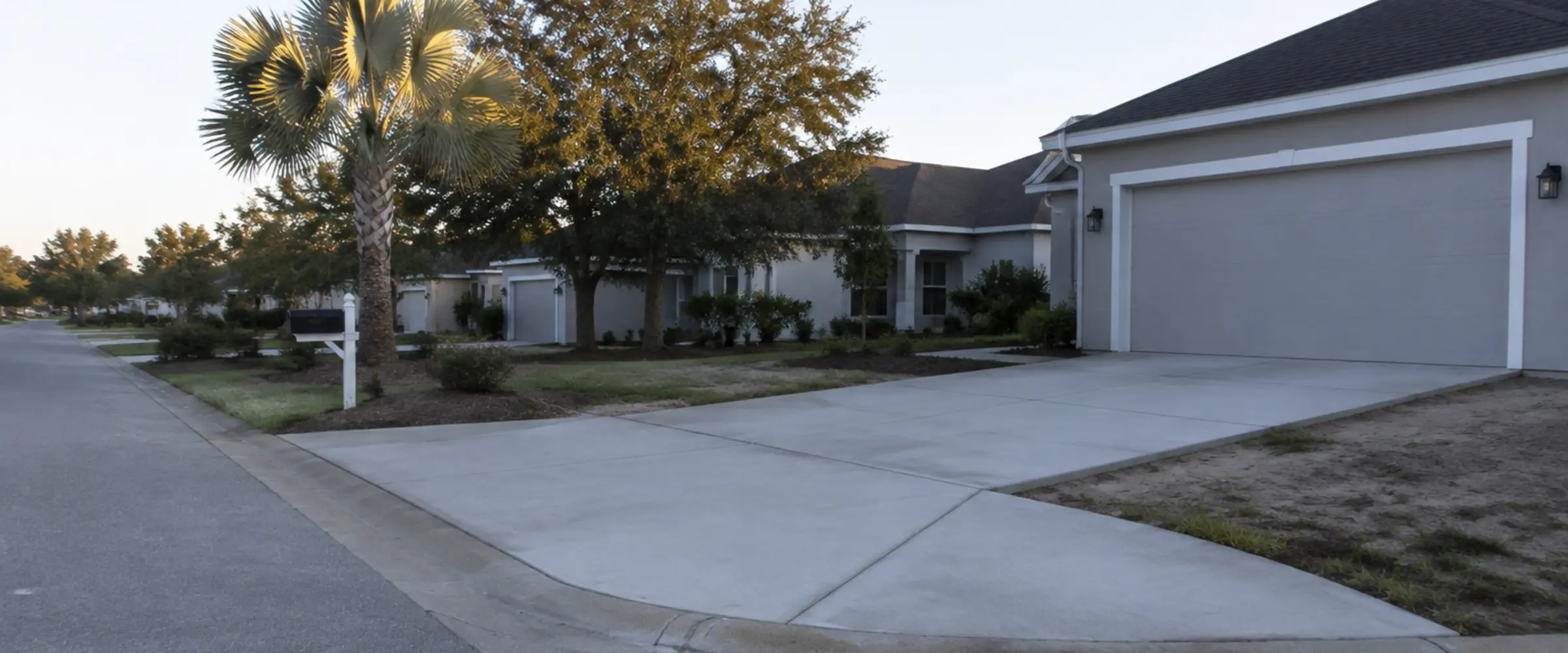
Salt finish gives a weathered look on a longer sealing cycle. We will show you light, medium and heavy samples.
863-734-6623