
Hairline, No Height Difference
Shrinkage from curing. Cosmetic, worth sealing to keep water out of the base.
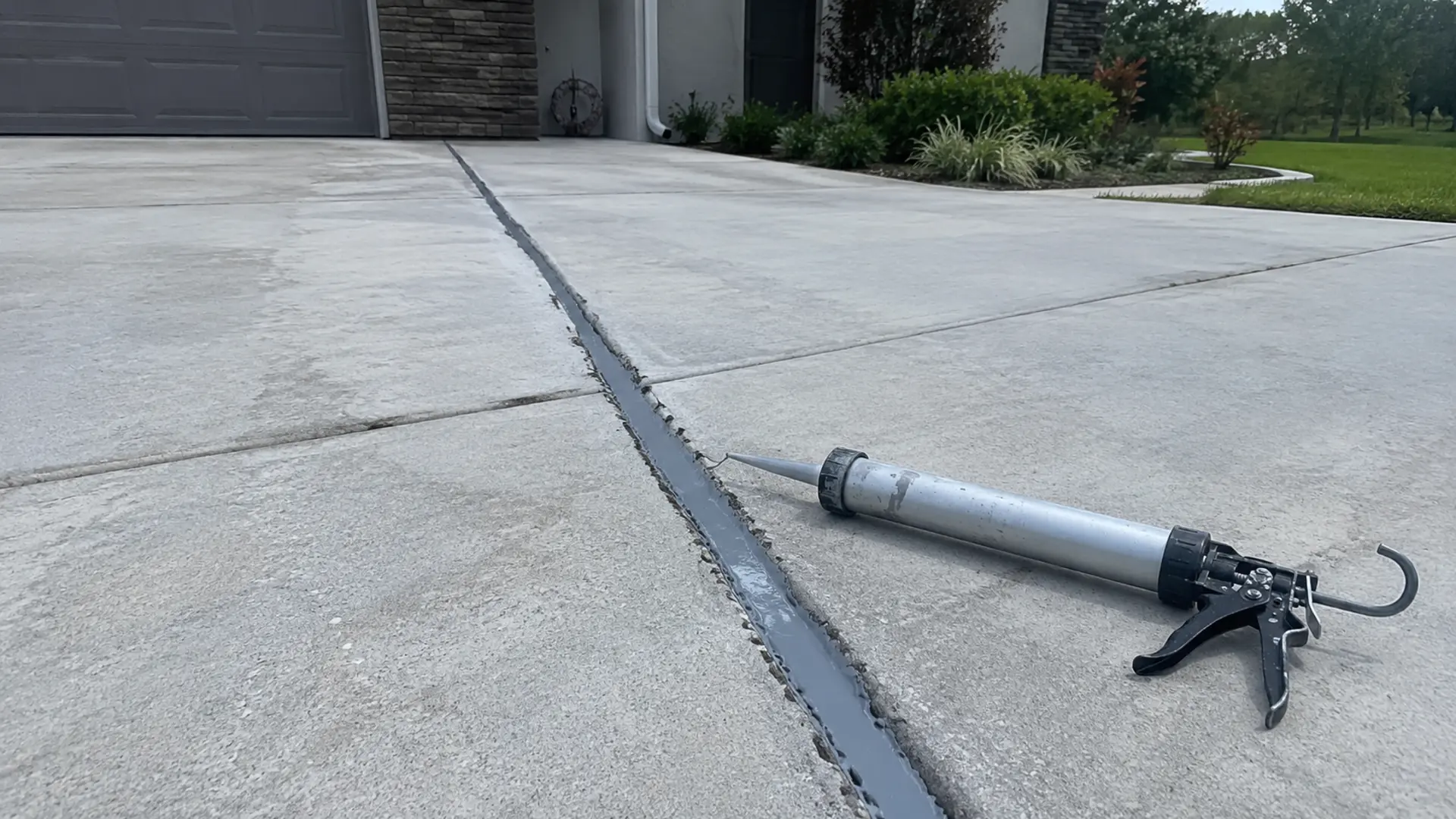
Lakeland Concrete Driveway Experts repair cracked concrete driveways for homeowners and commercial owners throughout Lakeland and Polk County. Our reputation here rests on delivering every job we take on, matching the repair method to the actual failure, building to meet or exceed Florida Building Code and local requirements, and specifying around your slab and the ground beneath it rather than a standard fix.
Every concrete driveway cracks eventually, and no two cracks want the same treatment. What matters is whether it still moves, whether one side has dropped, and whether water is getting through into the base. We have routed and sealed seasonal cracks on slabs above the high water table near the Lakeland lakes, epoxy-injected stable cracks back to structural continuity, and told people plainly that a crack with a lip on it needed lifting rather than filling. The sections below cover how to read your own cracks, why driveways crack here, how each type is repaired and what it costs.
You can tell a great deal about your own concrete driveway cracks with a coin and a straight edge, and it shapes the conversation before we arrive. What matters is not how wide the crack is but whether one side sits higher than the other, and whether it opens and closes between the wet and dry seasons. Those two answers decide the repair method.
Shrinkage from curing. Cosmetic, worth sealing to keep water out of the base.
Route and fill with a flexible sealant. The most common repair we carry out.
Same treatment, but worth understanding what caused it before it widens further.
The slab has moved. Filling will not stop it. This needs lifting or panel replacement.
Seasonal soil movement. Rules out any rigid filler completely.
Surface crazing from the original finish. Cosmetic, and not a structural concern.
Two mechanisms cause most of the driveway cracking we see in Polk County, and neither is really about the concrete. Seasonal wet-dry soil movement flexes anything resting on it, particularly near the Lakeland lakes where the water table sits high. Thermal contraction does the rest when an afternoon storm hits a slab at 140°F.
Ground near the Lakeland lakes swells and shrinks, flexing anything resting on it.
A slab at 140°F hit by an afternoon storm contracts fast and has to relieve that stress.
If joints were not cut deep enough or spaced close enough, the slab makes its own.
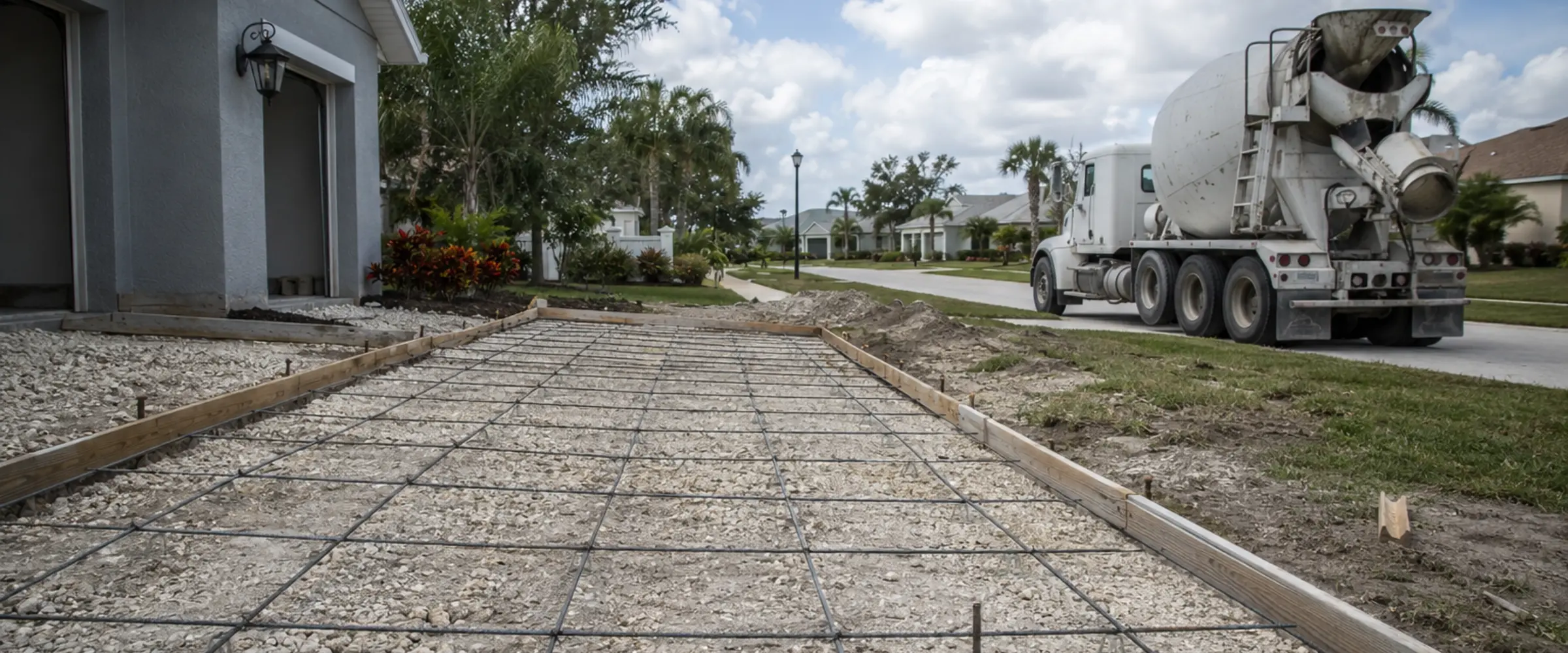
Without a rebar grid there is nothing holding the crack faces together once one forms.
Water through a joint carries fine sand away until part of the slab is unsupported.
Live oak surface roots lift a panel unevenly, and it recurs unless the root is dealt with.
Matching the method to the crack is what determines whether a driveway crack repair holds for a decade or fails in a season. A crack that still moves needs an elastomeric filler with room to flex; one that has stopped can be epoxy injected to restore structural continuity. Getting that choice wrong in either direction shortens the repair life considerably.
Chased to about a quarter inch wide by half an inch deep so the sealant has bond area.
Compressed air and vacuum. Sealant will not bond to concrete dust, and this step gets skipped a lot.
Set in deeper cracks to control depth, so the sealant has room to stretch rather than tearing.
Polyurethane or polyurea, tooled flush, handling roughly a quarter of the joint width in movement.
For stable cracks, injected through ports to bond the two faces back into one slab.
Fine sand worked into the wet sealant so the repair blends with a broom finish.
These are the materials and dimensions we work to on a concrete driveway crack repair. The figure that matters is aspect ratio: sealant needs roughly twice as much width as bonded depth to flex properly, which is precisely why a crack is routed into a channel rather than filled as it was found.
Most residential concrete driveway crack repairs are a single day on site. The step that gets skipped more than any other is cleaning the routed channel, sealant will not bond to concrete dust, and no amount of quality product compensates for a dusty substrate.
Straight edge across the crack and a look at the wider slab. This decides the method.
An angle grinder with a crack-chasing wheel opens it to a clean, consistent channel.
Air and vacuum until the channel is free of dust and loose material.
Closed cell rod placed in deeper cracks to give the sealant the right depth to work.
Elastomeric sealant gun-applied and tooled flush or slightly below the surface.
Fine sand broadcast into the wet sealant where the surrounding surface is textured.
Concrete driveway crack repair is one of the cheapest interventions available and one of the highest value, because it stops water getting under the slab and washing the base away. Here is where the money goes and, just as importantly, the point at which crack repair stops being the right job at all.
Crack repair is one of the cheapest interventions available and one of the highest value, because it stops the fastest deterioration mechanism there is: water getting through the slab and washing out the base beneath. Any crack wide enough to take a filler is worth sealing on that basis alone, regardless of how it looks. Expect eight to ten years from a properly routed and filled crack, and effectively permanent from an epoxy-injected stable one.
Straight answers, including the ones that talk you out of spending money.
No, and be wary of anyone promising it. A tooled sealant repair reads as a fine grey line, far less noticeable than the crack was. Broadcasting fine sand into the wet sealant helps it blend into a broom finish.
When one side sits higher than the other. Vertical displacement means the slab has moved, which is a ground problem rather than a concrete problem. The same applies if the slab sounds hollow near the crack.
It stops the fastest mechanism, which is water washing out support from beneath. That alone makes it worth doing. It will not stop soil or thermal movement, and it is not meant to.
Usually plastic shrinkage or inadequate jointing. Concrete shrinks as it cures, and if joints were cut too late, too shallow or too far apart, the slab relieves that stress on its own line. Micro-fibre in the mix and joints cut within twenty-four hours are what prevent it.
Eight to ten years for a routed and flexibly filled crack before the sealant needs renewing. Epoxy injection on a stable crack is effectively permanent. Both assume the underlying cause has been understood.
Send a photo or call. We will tell you whether it is a seal-and-forget job or something underneath that needs dealing with.
863-734-6623